
Friction (resistive force between contacting surfaces)
Friction is the resistive force that opposes relative motion between surfaces. It converts mechanical energy to heat and sound, has several types, and is central to engineering, nature, and everyday life.
Overview
Friction is the force that resists the relative motion or attempted motion between two contacting bodies. When surfaces slide or try to slide past each other, friction dissipates mechanical energy, typically producing heat and sometimes sound. At a microscopic level this resistance arises from the electromagnetic interactions and mechanical interlocking of surface irregularities, so the behaviour of friction depends on material properties, surface roughness, and the presence of lubricants or contaminants.
Image gallery
5 Images


Types of friction
Several forms of friction are commonly distinguished:
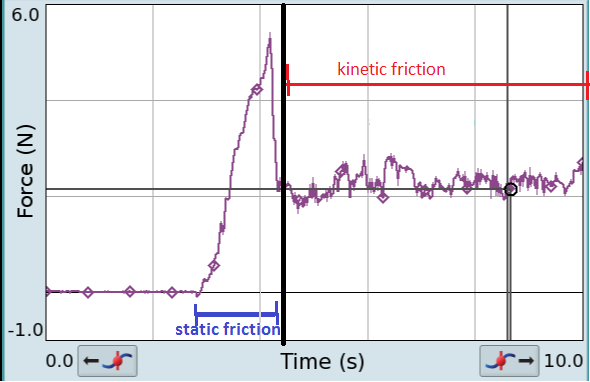
- Static friction: the force that must be overcome to start relative motion between surfaces at rest; it adapts up to a threshold value.
- Kinetic (sliding) friction: the force opposing motion once sliding has begun; it is usually slightly less than the maximum static friction.
- Rolling friction: resistance to motion when an object rolls over a surface; it is generally much smaller than sliding friction for the same materials.
- Fluid friction: resistance experienced by an object moving through a fluid (air or liquid), governed by viscosity and flow conditions.
Physical characteristics and simple laws
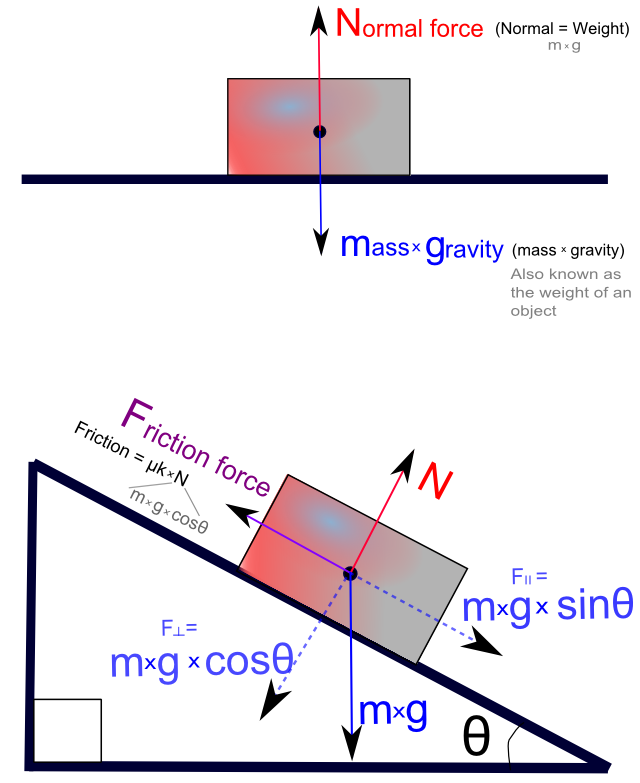
Engineers and physicists often describe friction using a coefficient of friction, a dimensionless parameter that characterizes the ratio of frictional force to the normal force pressing the surfaces together. Classical empirical rules, known from early experiments, state that frictional force is approximately proportional to normal load and relatively independent of apparent contact area for dry, rigid surfaces. However, these rules are approximations: real-world friction depends on surface chemistry, temperature, speed, and the actual microscopic contact area formed by surface asperities.
History and the study of friction
Systematic study of friction goes back centuries, with early investigators formulating empirical laws that guided later refinements. The multidisciplinary study of friction, wear and lubrication is known as tribology. Over time, experimental work and theoretical models have linked macroscopic frictional behaviour to microscopic mechanisms, including adhesion, ploughing of asperities, and energy dissipation in surface layers.
Applications and examples
Friction is essential to many technologies and everyday activities. It provides the traction needed for walking, driving and braking, and it enables clamping, machining, and effective seals. At the same time, friction causes wear, reduces mechanical efficiency in engines and bearings, and generates unwanted heat. Common engineering responses include selecting materials with suitable frictional properties and applying lubricants or surface treatments to reduce or control friction where needed.
Notable facts and distinctions
Friction can be both beneficial and problematic: without it we could not walk or stop a vehicle, yet excessive friction leads to energy loss and component wear. Rolling elements such as ball bearings convert sliding friction into lower rolling resistance. In geological contexts, friction on faults controls earthquake behaviour. Modern research continues to explore friction at nanoscale contacts, advanced lubricants, and surface engineering to tailor friction for specific applications.
Questions and answers
Q: What is friction?
A: Friction is a force that acts to stop the movement of two touching things.
Q: How is the energy lost to friction turned?
A: The energy lost to friction is turned into sound and heat.
Q: What are the two kinds of friction?
A: The two kinds of friction are static and kinetic.
Q: What is static friction?
A: Static friction is when the friction is strong enough to stop movement between two objects.
Q: What is kinetic friction used for?
A: Kinetic friction is used when the frictional force is not strong enough to stop all motion.
Q: What is an effect of kinetic friction?
A: An effect of kinetic friction is heat production.
Q: What are some everyday mechanisms that use friction?
A: Many everyday mechanisms that use friction include car brakes, suitcases, and shoes. Even a person sliding across the floor uses a form of friction.
Related articles
Author
AlegsaOnline.com Friction (resistive force between contacting surfaces) Leandro Alegsa
URL: https://en.alegsaonline.com/art/36699