
Zaha Hadid — Iraqi‑British architect known for fluid neo‑futurist designs
Iraqi‑born British architect Zaha Hadid (1950–2016), a pioneer of neo‑futurist and parametric architecture, was the first woman to win the Pritzker Prize and is known for bold, sweeping, fragmented forms.
Overview
Dame Zaha Mohammad Hadid (Arabic: زها حديد) (31 October 1950 – 31 March 2016) was an Iraqi‑born British architect noted for daring, fluid forms that reshaped contemporary architectural practice. Born in Baghdad, she later settled in London and established Zaha Hadid Architects, a practice that completed major cultural and civic buildings worldwide. Her work combined theoretical drawing, experimental forms and advanced computational techniques to realise complex geometries and dynamic spatial sequences.
Image gallery
10 Images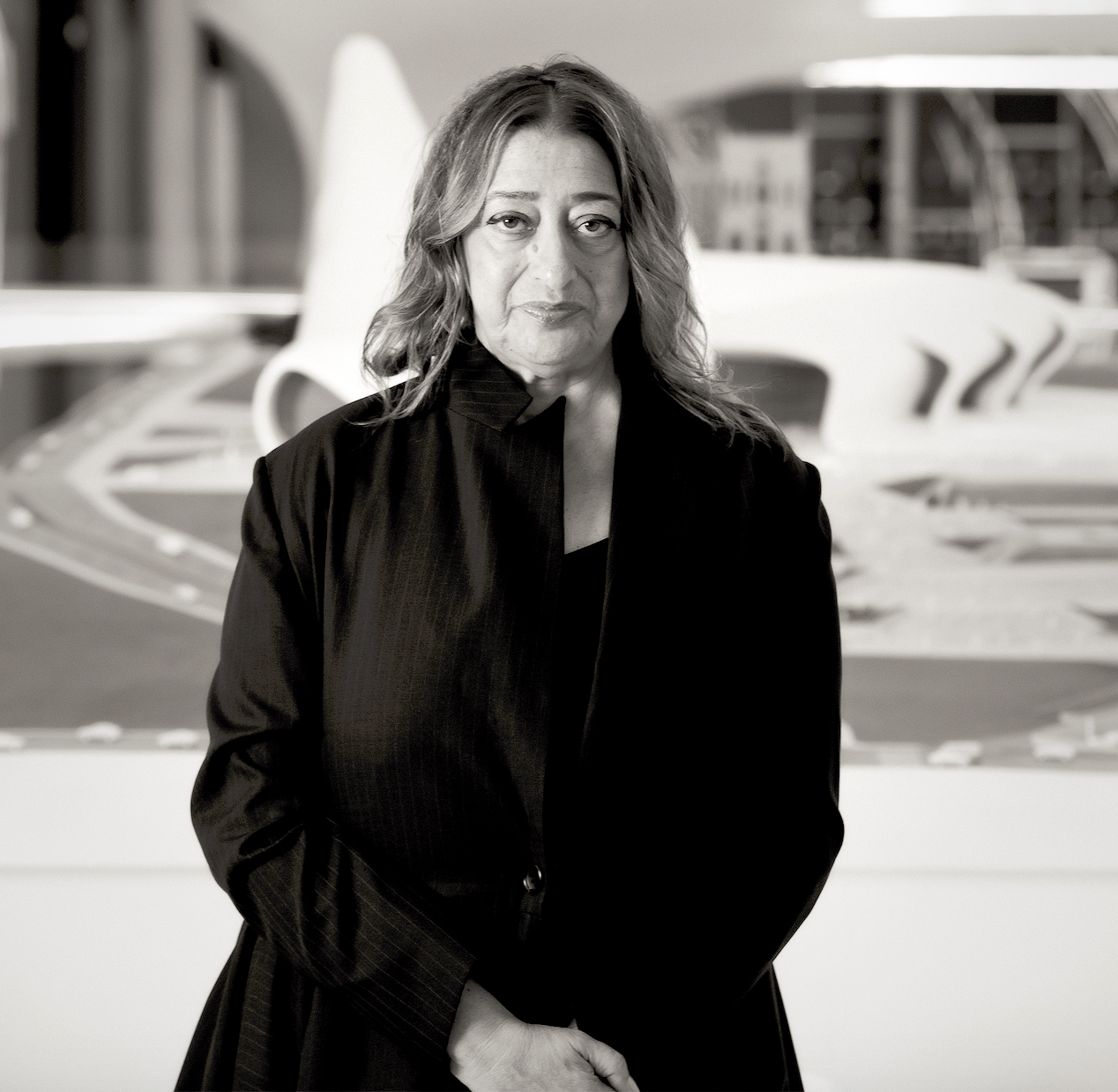



Early life and education
Hadid grew up in Baghdad and initially studied mathematics before turning to architecture. She trained at the Architectural Association in London, where she encountered experimental architects and theoreticians of the late 20th century. Early in her career she produced visionary designs and conceptual masterplans, some of which remained unbuilt for years but established her reputation as an innovator in urban and formal thinking. Her background and international life informed both the breadth and ambition of her commissions (Baghdad, British).
Career and notable works
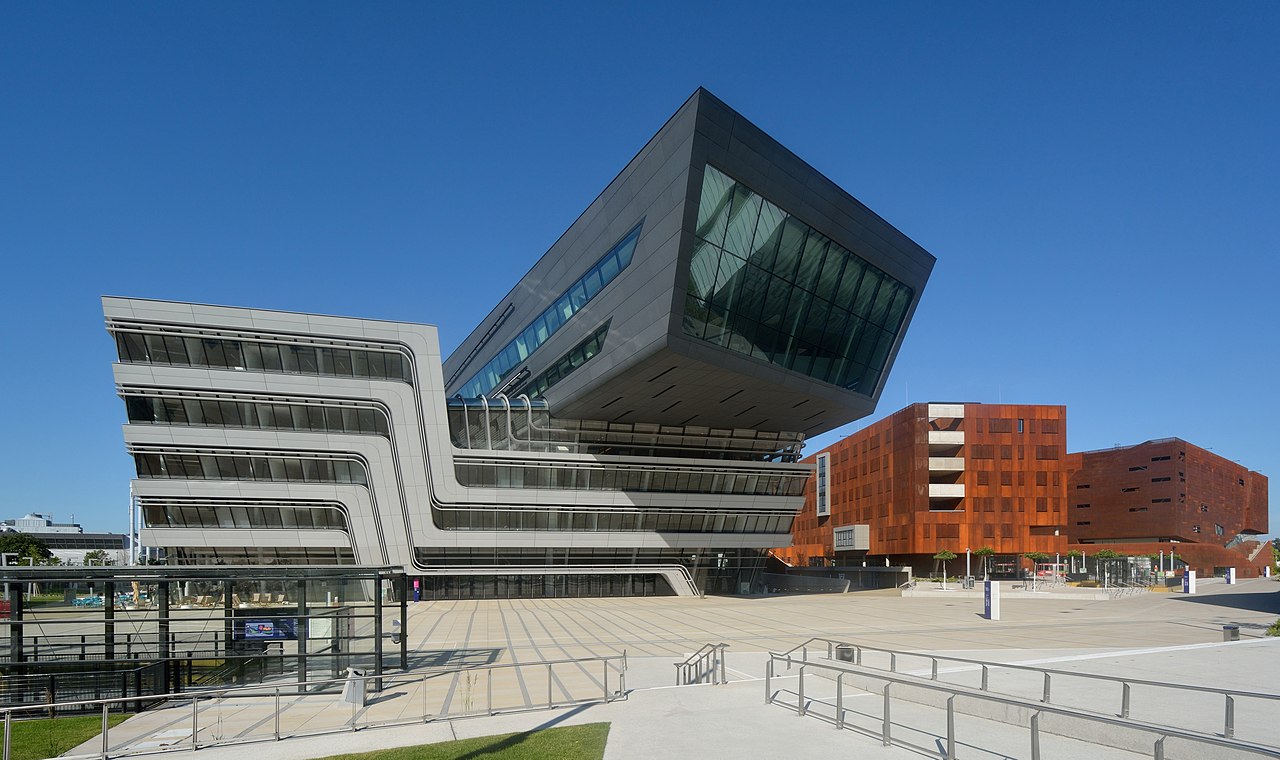
Hadid founded her practice in the late 1970s and, after an initial period of competition proposals and academic work, began to see major commissions realised from the 1990s onward. Her built portfolio includes civic, cultural and infrastructure projects. Signature completed buildings that brought her international attention include the Vitra Fire Station in Germany, the MAXXI museum in Rome, the London Aquatics Centre for the 2012 Olympics, the Heydar Aliyev Center in Baku and the Guangzhou Opera House. These projects illustrate her interest in sweeping, continuous forms and complex structural solutions.
Design approach and style
Hadid is frequently associated with neo‑futurism and with parametric and computational design approaches. Her buildings emphasise curving surfaces, intersecting planes and fragmented geometry to produce multiple perspectives and dynamic interior sequences. She collaborated closely with engineers and fabricators to translate ambitious drawings into buildable structures, and her office was an early adopter of digital modelling tools to resolve complicated forms and assemblies. Writers and critics have described her spatial language as seeking to evoke movement and the layered experience of contemporary cities (neo‑futurism, geometry and fragmentation).
Awards and recognition
Hadid received many of architecture’s highest honours. She was the first woman awarded the Pritzker Architecture Prize (2004) and was elected a Royal Academician in 2005 (Royal Academy). She won the Stirling Prize more than once and was created a Dame Commander of the Order of the British Empire in 2012. In 2015 she became the first woman to be awarded the RIBA Gold Medal in her own right. These distinctions acknowledge both theoretical innovation and the scale of her realized work.
Criticism and influence
Critical responses to Hadid’s work were varied. Many praised the formal audacity, technical innovation and ability to expand architectural possibilities; others raised questions about cost, environmental performance or user experience in particular projects. Such debates are common for high‑profile, complex works, but Hadid’s influence is clear: she normalised ambitious digitally driven forms in practice, helped open professional pathways for women architects, and inspired subsequent generations of designers and engineers.
Death, posthumous work and legacy
Hadid died on 31 March 2016 while receiving treatment in Miami (Miami) for bronchitis (bronchitis); reports indicated a heart attack as the immediate cause (cause of death). After her death, Zaha Hadid Architects continued to complete projects that had been in design or construction, and the firm remains active internationally. Her legacy endures through a wide body of built work, extensive publications, museum exhibitions and the continuing study of her contributions to form‑finding, computation and urban design.
Further reading and resources
- Neo‑futurism and contemporary movements
- Geometry, fragmentation and Hadid's design methods
- Arabic name and biographical sources
- Royal Academy profile
- Nationality and professional context
- Baghdad and early life
Selected brief facts: born 31 October 1950; founded Zaha Hadid Architects; first woman Pritzker laureate (2004); Dame Commander of the Order of the British Empire (2012); RIBA Gold Medal 2015. For comprehensive lists of projects, exhibitions and publications consult institutional catalogues and the resources linked above.
Related articles
Author
AlegsaOnline.com Zaha Hadid — Iraqi‑British architect known for fluid neo‑futurist designs Leandro Alegsa
URL: https://en.alegsaonline.com/art/110341
Sources
- bbc.com : "Dame Zaha Hadid awarded the Riba Gold Medal for architecture"
- designmuseum.org : "Zaha Hadid Profile"
- bbc.com : "Architect Dame Zaha Hadid dies after heart attack"