
Zarina (artist) — Zarina Hashmi, printmaker and minimalist artist
Zarina Hashmi (1937–2020), known as Zarina, was an Indian-American artist whose sparse paper works, prints and sculptures explored home, memory, maps and displacement.

Zarina Hashmi (16 July 1937 – 25 April 2020), who worked professionally as Zarina, was an Indian-born artist and printmaker best known for concise, intimate works that investigate home, migration and memory. She lived and worked for many years in New York City, and her practice combined printmaking, drawing, paper reliefs and small-scale sculpture. Although often aligned with Minimalism for its restraint and reduced vocabulary, her art conveys personal and political resonances rather than pure formalism.
Image gallery
2 Images
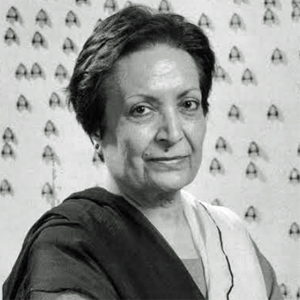
Artistic approach and materials
Zarina favored thin, handmade papers, carved woodblocks, intaglio techniques and delicate reliefs. Her works commonly use linear marks, stamped numbers, map-like grids and domestic motifs such as doors and windows to suggest routes, distances and vanished interiors. Gold leaf, pins and stitched paper occasionally appear, adding tactile and memorial qualities. The restrained surfaces invite close viewing and reflection rather than monumentality.
Themes and significance
Recurring themes in Zarina's work include the idea of home as both shelter and absence, displacement across borders, and the ways memory charts personal geography. She often titled pieces with place names, distances or questions, linking abstract marks to lived experience. These concerns have made her practice important to discussions of diaspora, feminist art, and how minimalist strategies can express subjective narratives.
Career and context
Zarina's career spanned decades of international exhibitions and collaborations. She served on the board of the New York Feminist Art Institute and participated in artistic communities that explored gender, migration and print media. Born in Aligarh in the region then called the United Provinces, British Raj, she later established a long-term presence in the United States while maintaining connections with South Asian visual cultures.
Characteristics at a glance
- Small scale, intimate works that reward close inspection
- Use of handmade paper, relief printing, pins and gold leaf
- Themes of home, exile, memory and mapping
- Formally spare but emotionally resonant—often linked to Minimalism
Zarina's practice left a distinctive voice in contemporary art, showing how minimal forms can carry personal histories and political weight. She died in London on 25 April 2020 from complications associated with Alzheimer's disease. Her works continue to be discussed for their quiet power and their sensitive interrogation of belonging, place and loss.
Related articles
Author
AlegsaOnline.com Zarina (artist) — Zarina Hashmi, printmaker and minimalist artist Leandro Alegsa
URL: https://en.alegsaonline.com/art/110412
Sources
- artic.edu : "Zarina: Paper Like Skin"
- nytimes.com : "Zarina Hashmi, Artist of a World in Search of Home, Dies at 82"
- scroll.in : "Artist Zarina Hashmi dies at 83"
- hindustantimes.com : "Artist Zarina Hashmi passes away in London"