
Royal Academy (Royal Academy of Arts)
Independent, self-governing institution for visual arts in London, known for its artist membership, exhibitions and schools since the late 18th century.
Overview
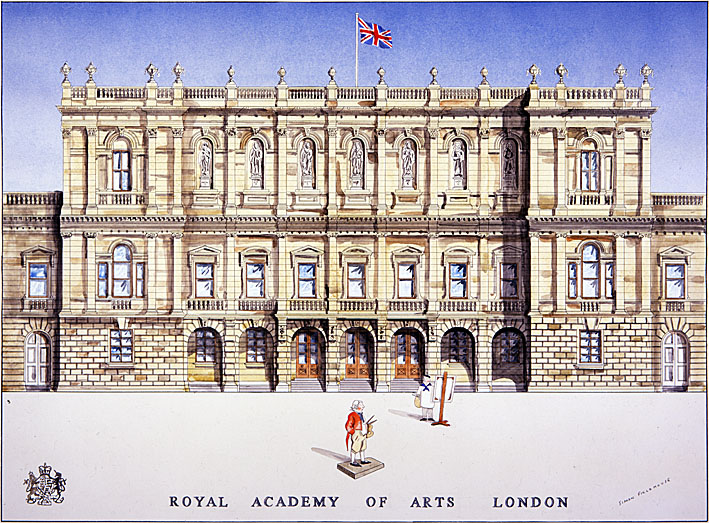
The Royal Academy, formally the Royal Academy of Arts, is a long-established independent institution devoted to the visual arts. Based at Burlington House on Piccadilly in central London, it functions as a membership body of leading practitioners and as a public-facing organisation that stages exhibitions, runs an artist training school and publishes research on art. The Academy occupies a prominent role in British cultural life and is widely known for its annual and touring exhibitions (exhibitions).
Image gallery
10 Images



Characteristics and functions
The Academy is governed by a fixed body of elected members called Royal Academicians. These are practising artists and architects whose selection is determined by their peers. Membership has traditionally been limited in number and the Academicians set policy, select exhibitions and oversee the institution's academic programmes. The organisation combines aspects of a professional club, an exhibition venue and an educational body: it maintains a collection, runs the Royal Academy Schools for training, and organises public events and publications about art.
History and origins
The Royal Academy was established in the late 18th century as an alternative to earlier artists' societies. Its creation followed disagreements among prominent architects and artists of the period; contemporary accounts note a leadership dispute between architects such as Sir William Chambers and James Paine, which helped prompt the formation of a new body supported by royal patronage. With backing from King George III the institution was founded in the late 1760s and formally launched shortly afterwards. Sir Joshua Reynolds served as the first president of the Academy and was succeeded by Benjamin West, two figures often associated with its formative identity (Sir Joshua Reynolds).
Membership and governance
Membership is composed of a limited number of practising artists — painters, sculptors, printmakers and architects — who are elected by ballot of the General Assembly of Academicians. The members are collectively responsible for appointing officers, shaping the programme of displays and managing the Academy's school and collections. The rules for election and the balance of artistic disciplines have evolved over time but the central principle of self-governance by elected artists remains central to the institution's identity. The early rivalry between leading architects is often cited in accounts of the Academy's founding (architectural dispute).
Activities, exhibitions and influence
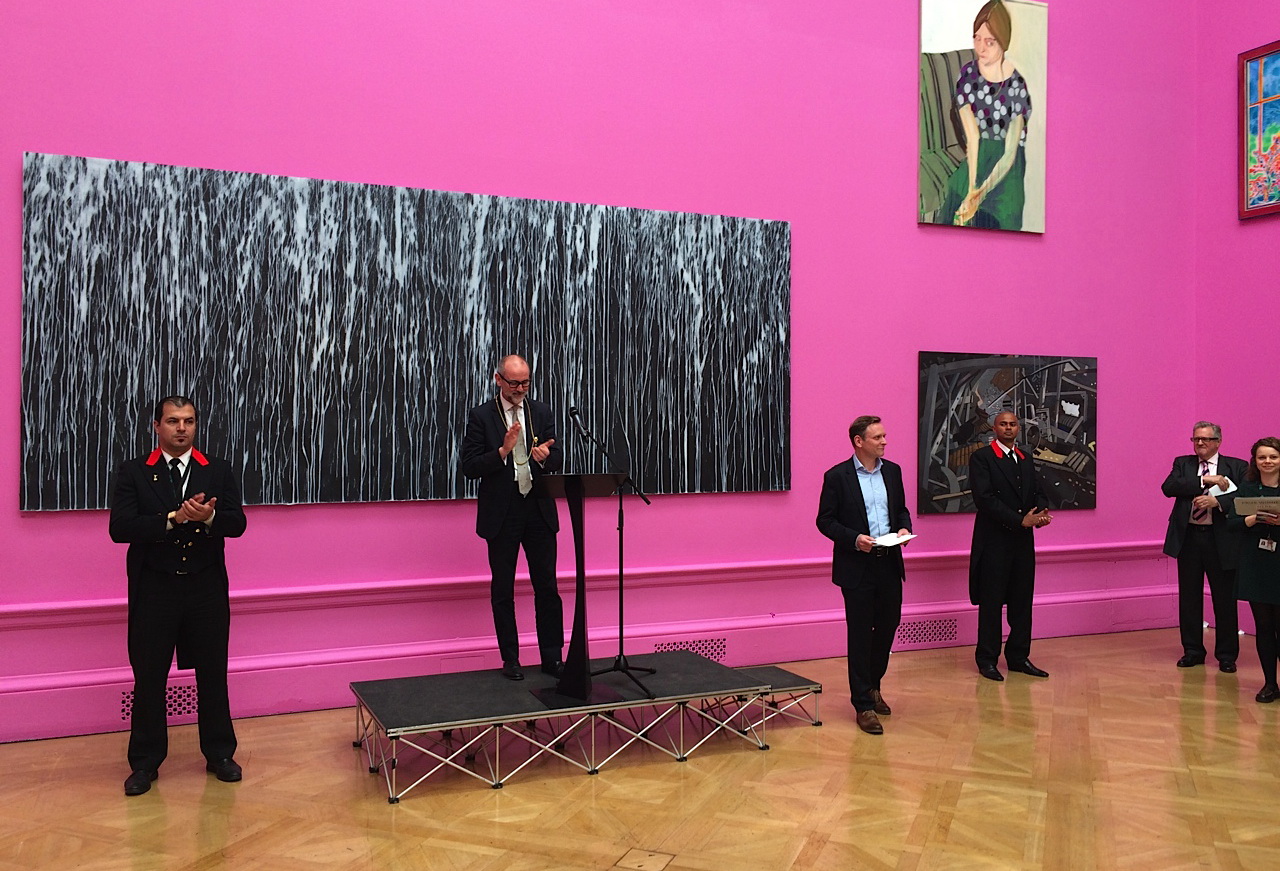
- The Academy stages large public exhibitions that mix historic loans, contemporary work and pieces from its own collection; these shows attract wide public and critical attention.
- It operates the Royal Academy Schools, a training programme that has educated generations of British artists and emphasizes studio practice and life drawing.
- The Academy publishes catalogues and educational resources and hosts lectures, workshops and outreach projects to broaden engagement with visual culture.
Through these activities the Royal Academy has played a formative role in shaping standards, taste and careers in British art. Its location at Burlington House on Piccadilly links it to a historic architectural setting and to wider networks of collectors, patrons and museums (Burlington House).
Notable facts and distinctions
The Royal Academy is distinctive for combining self-appointed artistic leadership with a public exhibition programme. It has long been associated with major figures in British art and continues to be a focal point for debates about practice, pedagogy and the display of contemporary and historic work. For more detailed histories and current programmes consult institutional resources and scholarly accounts (learn more about art, exhibition listings, historic presidents).
Practical visitor information, current exhibitions and educational offerings are published by the Academy and by partner organisations; interested readers can follow those sources for up-to-date schedules and policies (background on origins, site details).
Related articles
Author
AlegsaOnline.com Royal Academy (Royal Academy of Arts) Leandro Alegsa
URL: https://en.alegsaonline.com/art/84422
Sources
- npg.org.uk : Sir Joshua Reynolds