
Yucca — drought‑tolerant flowering plants of the Americas
Yucca is a genus of perennial shrubs and trees native to the Americas, known for sword‑shaped leaves, tall flower clusters, and a specialized pollination mutualism with yucca moths. Widely used in landscaping.
Overview
Yucca is a woody perennial genus of evergreen shrubs and trees, closely related to the agaves. Botanists recognize roughly 40–50 different species, which evolved in arid and semi‑arid landscapes. Most yuccas grow in hot, dry places across North America, Central America and parts of the Caribbean, although several species tolerate cooler climates.
Image gallery
10 Images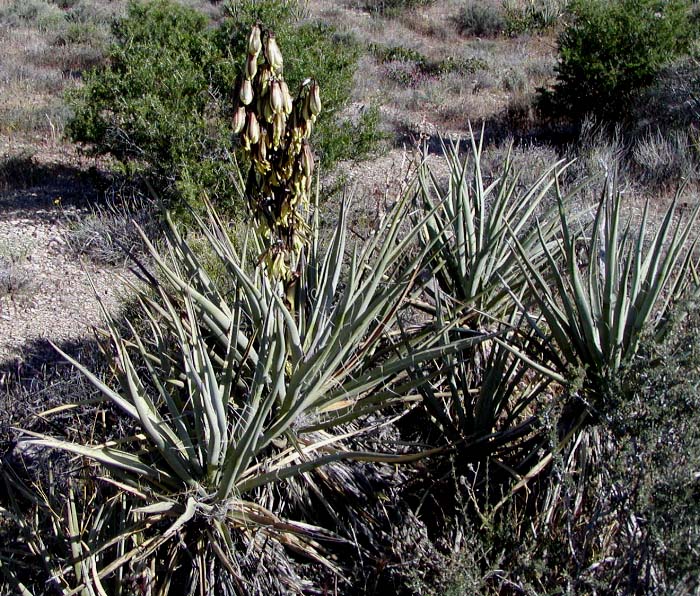


Description and biology
Yuccas characteristically form rosettes of stiff, sword‑like leaves that may be smooth or edged with fibers. In many species a stout stem or trunk supports the foliage. In season they produce tall stalks topped with pendulous, often white, bell‑shaped flowers arranged in large clusters. Fruit may be a dry capsule or a fleshier pod depending on the species, and seeds are typically relatively large and wind‑resistant.

Pollination and life cycle
Yucca reproduction depends on a tight pollination partnership with specialized insects. A few moth species, commonly called the yucca moth, deliberately transfer pollen and then lay their eggs in the flower ovary. The developing larvae feed on a portion of the plant's seeds, but not so many that the plant fails to reproduce. This obligate mutualism — in which both plant and moth rely on each other — is a classic example of coevolution.

Uses, cultivation and landscape value
Many yucca species are cultivated as drought‑tolerant ornamentals and for xeriscape gardens. They are prized for dramatic form and low maintenance, and some have edible or utilitarian uses in traditional cultures. Common practical notes include:
- Ornamental use: accent plants, borders, rock gardens and container specimens.
- Edible parts: flowers, fruit or young stalks are consumed in some cuisines; roots of certain species contain saponins historically used as soap.
- Propagation: by seed, by division of clumping offsets, or by stem cuttings; requires well‑drained soil and full sun to partial shade.
Species, notable facts and conservation
Some yuccas are small, clumping plants while others, like the well‑known Joshua tree, form large, tree‑like trunks. Popular horticultural species include several that tolerate coastal or temperate gardens. A number of island endemics and habitat‑restricted species face conservation pressures from land use change and invasive plants, so conservation assessments guide protection where needed.
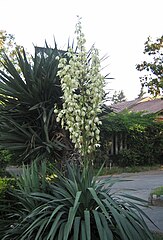
Yucca remains an important group for gardeners, ecologists and indigenous communities. Its striking architecture, ecological relationships and adaptability to dry environments make it a distinctive and widely appreciated component of the Americas' dryland flora.
Related articles
Author
AlegsaOnline.com Yucca — drought‑tolerant flowering plants of the Americas Leandro Alegsa
URL: https://en.alegsaonline.com/art/110160