
Zingiberales: the tropical order that includes gingers and bananas
Zingiberales is an order of monocot flowering plants including gingers, bananas, arrowroots and many ornamentals; primarily tropical, economically and ecologically significant.
Overview
The Zingiberales are an order of monocotyledonous flowering plants primarily found in tropical regions. Taxonomists have long recognized this group for its distinctive herbaceous forms and economic importance. For an introduction to the group as a whole see Zingiberales. Members range from small cultivated spices to large, banana-like plants that form important food crops.
Image gallery
10 Images





Key characteristics
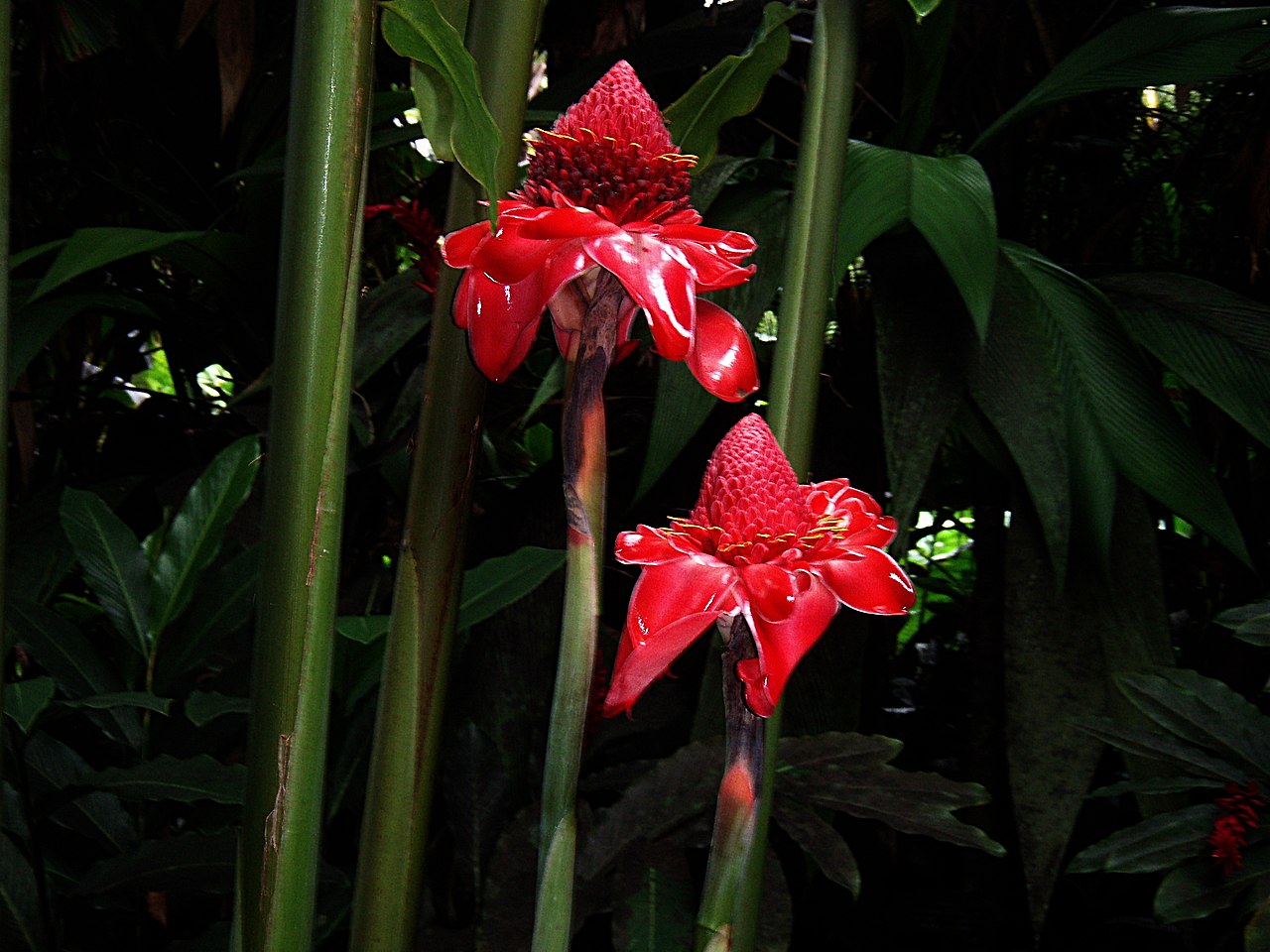
Plants in this order are usually perennial herbs with underground rhizomes or tubers and large, alternate, sheathing leaves. Flowers tend to be showy and often zygomorphic (bilaterally symmetrical); many species have modified stamens or petaloid staminodes that contribute to the floral display. As monocots they have parallel-veined leaves and a single cotyledon in the seedling. Most species are adapted to warm, humid habitats.
Families and notable genera
The order contains several families, several of which are familiar for food, spice, or ornamentals. The ginger family, Zingiberaceae, includes culinary and medicinal plants such as ginger, cardamom, turmeric and galangal. The banana family, Musaceae, provides bananas and plantains. The arrowroot family, Marantaceae, includes species cultivated for starchy rhizomes and for foliage grown as ornamentals. Other families contain heliconias, cannas and bird-of-paradise relatives frequently used in horticulture.
History and distribution
Zingiberales are most diverse in tropical Asia, Africa and the Americas, with centers of diversity reflecting long evolutionary histories in humid forests. Fossil pollen and molecular studies indicate the group diversified alongside other tropical monocots, adapting to understory and gap environments where large leaves and rhizomes are advantageous.
Economic and ecological importance
Several Zingiberales species are staples or valuable crops: edible rhizomes and spices (for flavoring and traditional medicine), and fruits such as bananas that are central to diets worldwide. Many members serve as ornamentals in tropical and temperate gardens for their striking flowers and foliage. Ecologically, they provide food and habitat for insects, birds and mammals, and some species are important components of understory plant communities.
Distinctions and notable facts
- They are part of the commelinid monocots, a lineage distinct from grasses and lilies.
- Floral structure often involves reduction of fertile stamens and development of showy sterile organs.
- Many species are cultivated and bred for improved yields, flavors or ornamental traits.
For further reading on classification, morphology and uses consult specialized botanical references and databases at Zingiberales and related family pages such as Zingiberaceae or resources on bananas and spices like ginger.
Related articles
Author
AlegsaOnline.com Zingiberales: the tropical order that includes gingers and bananas Leandro Alegsa
URL: https://en.alegsaonline.com/art/110638