
Welsh Marches: the historic borderlands between England and Wales
Region along the England–Wales frontier shaped by early medieval earthworks, Norman marcher lords, and later legal union; noted for castles, shifting boundaries and a mixed cultural landscape.
Overview
The term Welsh Marches refers to the borderland that lies between England and Wales. It is a loosely defined zone rather than a precise political boundary, and its extent has changed over centuries as frontiers, loyalties and administrative arrangements shifted. The Marches include uplands, river valleys and market settlements that historically served as contact points and defensive lines between the two realms.
Image gallery
6 Images



Early frontier features
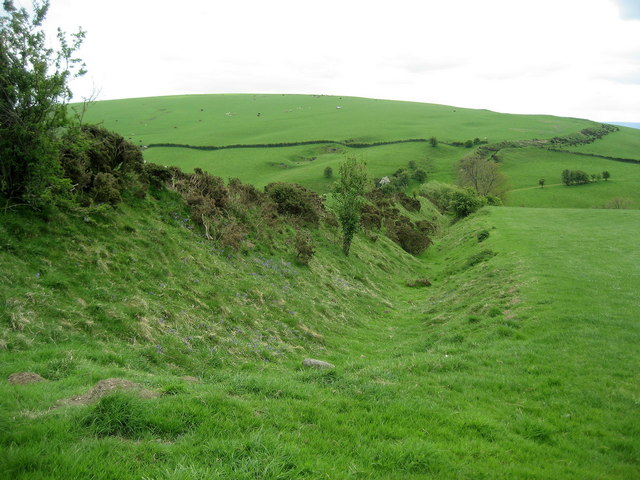
On the English side much of the territory was once part of the old kingdom of Mercia. Two large linear earthworks — Wat's Dyke and Offa's Dyke — mark attempts in the early Middle Ages to control movement and assert frontier limits. These dykes, visible as long banks and ditches across the landscape, are among the most tangible reminders of early tensions and negotiations along the border.
The Marches also contained important trading and defensive settlements: a network of market towns developed to serve local rural economies, and towns such as Shrewsbury and Hereford were often garrisoned or fortified to deter raids and to control trade routes.
Norman conquest and the marcher lordships
The phrase "March of Wales" appears in records such as the Domesday Book. After the Norman Conquest, crown policy created semi-independent border magnates known as Marcher Lords and established a string of fortified manors and castles. These earldoms and lordships were given extensive rights to administer, punish and defend their territories, and dozens of small stone keeps and ringwork castles were constructed in the 12th and 13th centuries to project power into contested areas.
Legal change and county formation
In the 16th century the English crown sought to regularise the governance of Wales and the border. The Laws in Wales Acts (1535–1542) under Henry VIII abolished many marcher privileges and integrated Welsh and border territories into the legal framework of the English state. Former marcher areas were reconstituted as counties, including Denbighshire, Montgomeryshire, Radnorshire, Brecknockshire, Monmouthshire and Carmarthenshire, creating a more standardised set of jurisdictions.
Characteristic features and importance
- Military landscape: dense networks of castles, baileys and fortified towns built to control movement and deter incursions.
- Legal distinctiveness: marcher lords exercised unusual autonomy until the Tudor reforms.
- Cultural contact zone: the Marches have long been places where English and Welsh languages, laws and customs met and mixed.
Modern legacy
Today the old border is largely open and administrative boundaries are settled, but the Marches retain a distinctive identity in archaeology, place names and local culture. Many earthworks, ruined castles and medieval street plans survive as heritage assets and attract visitors. Language and signage remain visible features: official notices and road markings in parts of the area reflect bilingual practice and the persistence of the Welsh language alongside English. The Marches therefore illustrate how a contested frontier evolved into a landscape of layered history, blending defensive architecture, market economy and cross‑border cultural exchange.
Notable facts include the shifting nature of the border (towns and parishes have at times fallen under different administrations) and the ongoing interest of historians, archaeologists and conservationists in preserving both the physical remains of frontier defences and the social stories they represent.
Questions and answers
Q: What is the Welsh Marches?
A: The Welsh Marches is the area around the boundary between England and Wales. It has changed over time, with some towns on one side or the other at different times.
Q: Who built Wat's Dyke and Offa's Dyke?
A: Wat's Dyke and Offa's Dyke were built by Mercian kings on the English side of the border.
Q: What was the purpose of building castles in the 12th and 13th centuries?
A: Castles were built in this area during this period to help patrol and defend against Welsh raiders and rebels.
Q: When did Henry VIII abolish rule by marcher lords?
A: Henry VIII abolished rule by marcher lords in 1536 under his Laws in Wales Acts 1535–1542.
Q: How many new counties were created as a result of abolishing marcher lordships?
A: Six new counties were created as a result of abolishing marcher lordships - Denbighshire, Montgomeryshire, Radnorshire, Brecknockshire, Monmouthshire, and Carmarthenshire.
Q: Is it easy to tell when crossing from England into Wales today?
A: No, it is not easy to tell when crossing from England into Wales today because there are no obvious signs indicating that you have crossed the border. The only indication may be painted words such as "Arif" on roads on the Welsh side.
Q: Are official messages printed in both English and Welsh throughout Wales?
A: Yes, official messages are printed in both English and Welsh throughout Wales.
Related articles
Author
AlegsaOnline.com Welsh Marches: the historic borderlands between England and Wales Leandro Alegsa
URL: https://en.alegsaonline.com/art/107236