
Vitruvian Man: Leonardo da Vinci’s study of human proportion
Leonardo da Vinci's Vitruvian Man is a late-15th-century drawing that explores ideal human proportions, geometry, and classical architectural theory derived from Vitruvius.
Overview
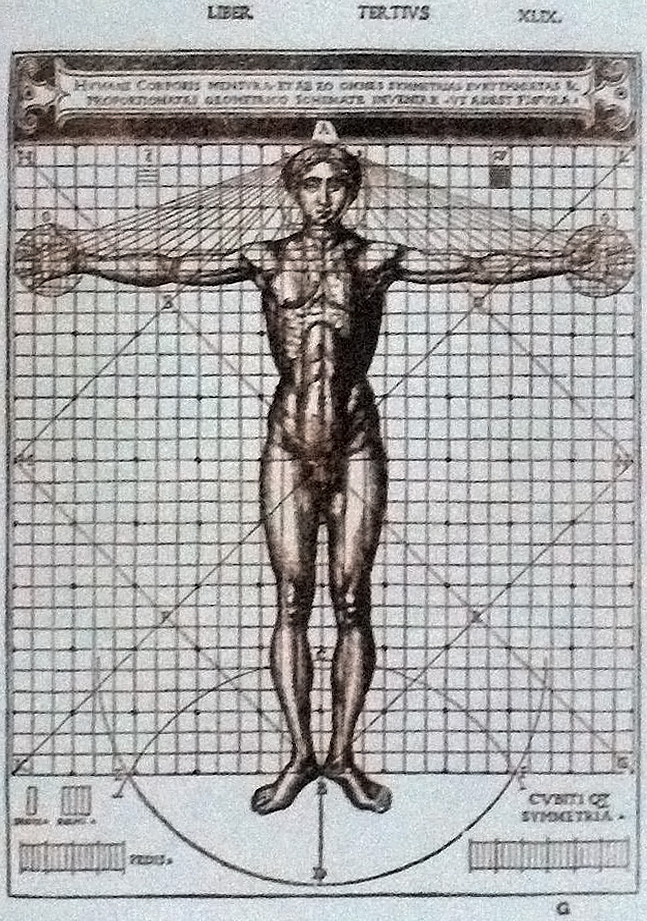
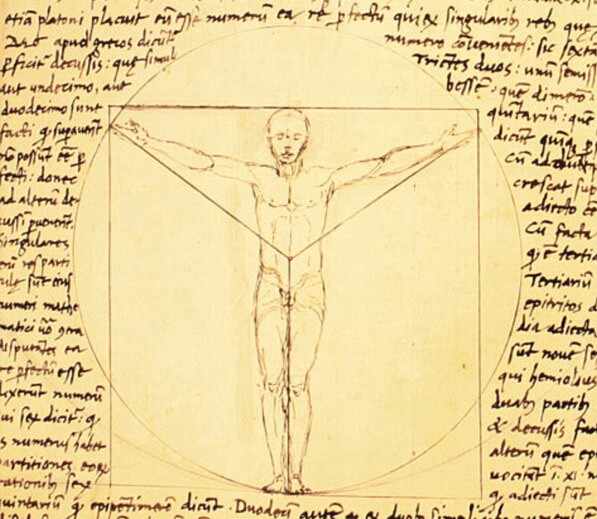
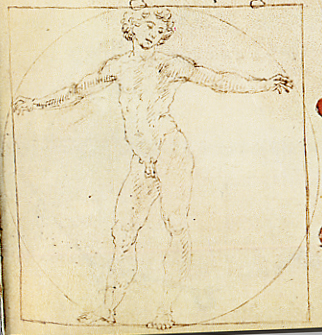
The Vitruvian Man is a pen-and-ink study by Leonardo da Vinci created around 1490 that visually interprets the classical ideas of the Roman architect Vitruvius. The image shows a male figure in two overlapping poses, inscribed simultaneously within a circle and a square. Accompanying the sketch are handwritten notes that record proportional rules and observations adapted from Vitruvius’s architectural treatise De architectura, together with Leonardo’s own commentary.
Image gallery
8 Images


Composition and materials
Leonardo executed the study using pen and ink on paper. The drawing’s distinctive double posture—arms and legs shown in two positions—creates the superimposed figures often described as superimposed. The circle and square highlight relationships between the body and basic geometric forms, a visual attempt to reconcile natural proportions with mathematical order.
Proportions and principles
The work translates Vitruvian prescriptions for the ideal proportions of the human body into a single image, illustrating how particular measurements relate to the whole. Some of the ideas emphasized include the correspondence between arm-span and height and the use of head-lengths as a unit of measure. Leonardo’s notes echo Vitruvius’s conviction that human proportions can inform architectural harmony and that the human figure is a model for the Classical orders.
Historical context and significance
Produced during the Italian Renaissance, the drawing reflects the period’s revival of classical learning and the fusion of art, science and geometry. Leonardo combined close anatomical observation with geometric construction to create a synthesis of empirical study and inherited theory. The image became emblematic of Renaissance humanism, which placed the human being—not divine mystery—at the center of intellectual inquiry. It remains a symbol of the confluence of art, anatomy and mathematical proportion.
Uses, influence and preservation
The Vitruvian Man has been widely reproduced and referenced in discussions of art, architecture, anatomy and design. It is frequently used as an emblem of scientific curiosity and the unity of form and function. The original sheet is part of the collection of the Gallerie dell'Accademia in Venice and, because of its fragility, is exhibited only occasionally under controlled conditions. Scholars study both the image and the marginalia—written in Leonardo’s characteristic mirror script—for insights into Renaissance measurement systems and artistic method.
Notable facts and distinctions
- The drawing is often referred to as the Canon of Proportions or Proportions of Man.
- It ties bodily measurement to geometry, using simple shapes to make proportional relationships visible.
- The sheet combines Vitruvian theory with Leonardo’s observational corrections and annotations, creating a dialogue between ancient authority and Renaissance empiricism.
- For further visual and textual discussion see references to the image itself at the drawing and to broader background resources on classical proportion at human proportion studies and Vitruvian writings.
Today the Vitruvian Man remains one of the most recognizable expressions of how artists and thinkers sought to link the measurable human body with universal order.
Additional reading and related resources: materials and technique, Leonardo’s drawing practice, paper and preservation, visual analysis of pose, compilations of proportional rules, mathematical geometry, classical architectural orders.
Related articles
Author
AlegsaOnline.com Vitruvian Man: Leonardo da Vinci’s study of human proportion Leandro Alegsa
URL: https://en.alegsaonline.com/art/105672
Sources
- leonardodavinci.stanford.edu : "The Vitruvian man"
- witcombe.sbc.edu : "Da Vinci's Code"