
Typhon: the monstrous challenger of Zeus in Greek myth
Typhon, a primeval monstrous figure of Greek myth, is variously described as a many‑headed, serpentine giant who battled Zeus and was imprisoned beneath volcanic peaks; sources and traditions differ.
Overview
Typhon is one of the great monstrous figures of ancient Greek tradition. Presented in different texts as Typhoeus, Typhaon, or Typhos, he stands at the boundary between gods and chthonic forces. In many accounts Typhon is the last offspring of the earth goddess Gaia and represents a catastrophic challenger to the order established by the Olympian gods in Greek mythology. His struggle with Zeus ends with his defeat and confinement beneath a mountain—often identified with Mount Etna—and his story has been used to explain geological and meteorological phenomena as well as to dramatize the victory of sky-gods over older, chthonic forces.
Image gallery
7 Images



Name, sources and variations
Ancient poets and mythographers offer varying portraits of Typhon. Early epic and didactic poets portray him as a terrifying, multi‑headed, fire‑breathing being; later prose compilers preserve variant genealogies and episodes. Different regions and authors preserve alternate details—how many heads he had, whether he was born of Gaia alone or with a male partner, and which monsters are described as his children. These discrepancies reflect the composite nature of his myth and the range of local traditions that were later brought into literary accounts.
Parentage and offspring
Typhon is commonly described as a child of the earth. In many traditions he is married to the half‑woman, half‑serpent Echidna, and is credited as progenitor or associate of several famous monsters. Various sources link him to creatures such as the Nemean lion, Cerberus, and the Gorgons, though ancient lists differ. These connections mark Typhon as a patriarch of the dangerous, liminal creatures that heroes and gods must confront.
Appearance and attributes
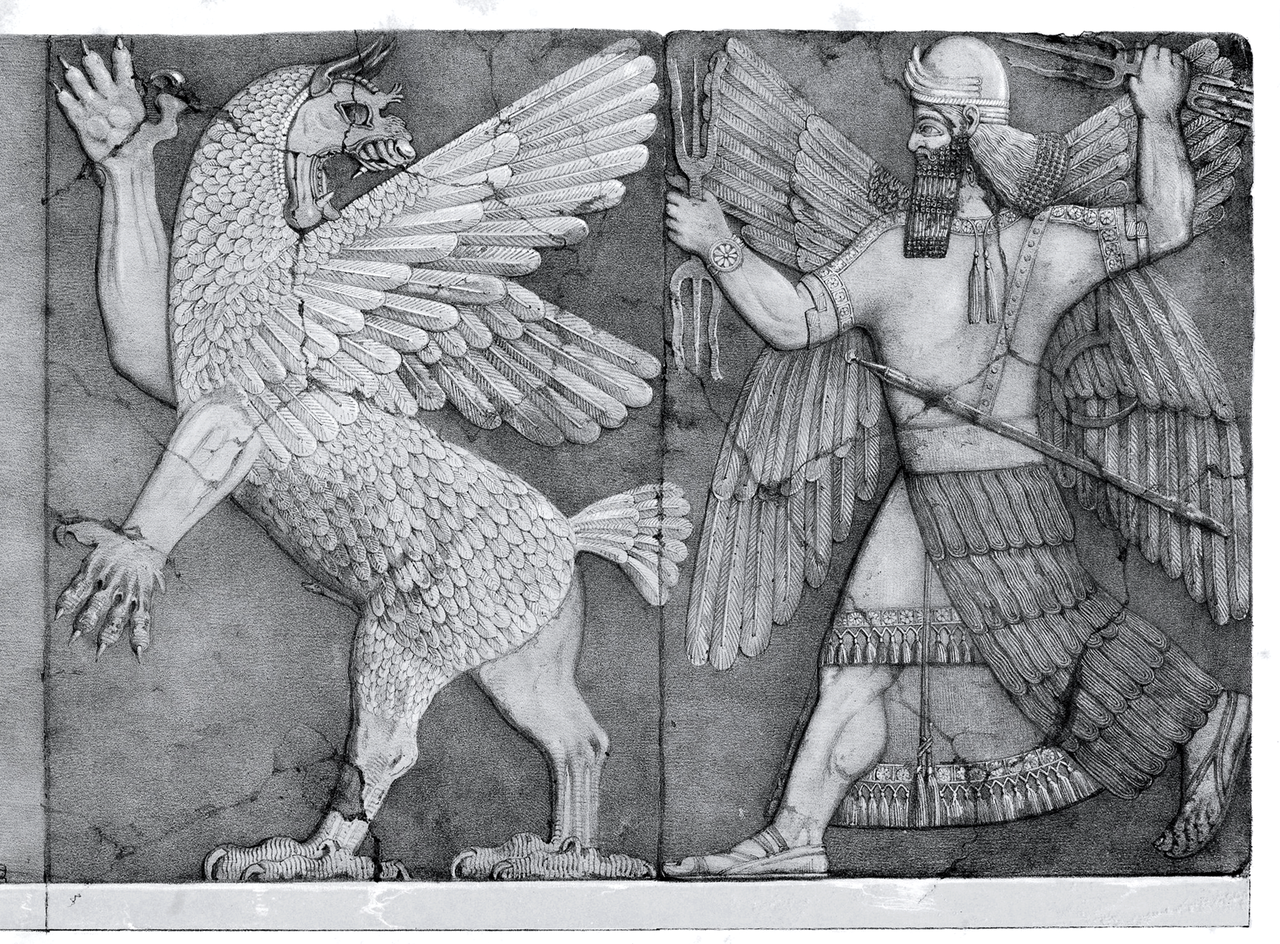
Descriptions emphasize hybridity and scale: a humanoid torso combined with serpentine elements, countless heads or snake‑heads, wings, blazing breath, and terrifying eyes. Legs are often said to be coiling serpents or multiple snake‑forms, and his voice or roar is described as a cacophony of animal noises. Some traditions stress volcanic associations—fire, ash, and earthquakes—rather than precise anatomical detail; such imagery underpins later poetic identifications of Typhon with eruptions and storms.
The battle with Zeus and exile
One of the central episodes in Typhon's story is his assault on the Olympian order. After the Titanomachy (the imprisonment of the Titans), Typhon rises to challenge Zeus for control of the cosmos. The conflict is depicted as cosmic and elemental: thunder and lightning against fire and earth. Zeus ultimately prevails in most literary traditions and casts Typhon down; the monster is trapped under a mountain, commonly named as Etna or other volcanic peaks. Some narratives add that while the gods fled, Hermes or other deities played special roles in protecting or concealing the divine community.
Legacy, symbolism and cultural impact
Typhon functions on several levels: as a mythic explanation for natural disasters (earthquakes, eruptions, storms), as a symbolic remnant of pre‑Olympian, chthonic religions, and as a literary antagonist that dramatizes Zeus's sovereignty. Artists, poets and later allegorists drew on his terrifying figure to evoke chaos or the subterranean forces of nature. Modern scholarship treats Typhon as a composite figure whose many names and traits reflect the assimilation of regional myths into pan‑Hellenic literature.
- See also: genealogical lists of monsters and accounts of the Titanomachy.
- For contrasting local versions and later interpretations consult specialized commentaries and comparative studies.
For introductions and primary‑source summaries, follow links to major editions and translations cited in scholarly surveys: name forms, parentage, mythic context, principal opponents, geographical identifications, monster offspring A, monster offspring B, monster offspring C, Echidna, roles of other gods.
Related articles
Author
AlegsaOnline.com Typhon: the monstrous challenger of Zeus in Greek myth Leandro Alegsa
URL: https://en.alegsaonline.com/art/102364