
Urðarbrunnr — the Well of Urðr in Norse Mythology
Urðarbrunnr is a sacred well beneath Yggdrasil in Norse myth. Associated with the Norns and divine councils, it symbolizes fate, law, and the sustaining waters of the world-tree.
Overview
Urðarbrunnr (commonly rendered "Well of Urðr") is a mythic spring in Norse tradition described in the medieval Eddas. Located beneath the great world-tree Yggdrasil, it is closely connected with the beings who govern destiny and with the assemblies of the gods. Sources portray it as a place where the cosmos is sustained and the affairs of gods and men are weighed.
Image gallery
5 Images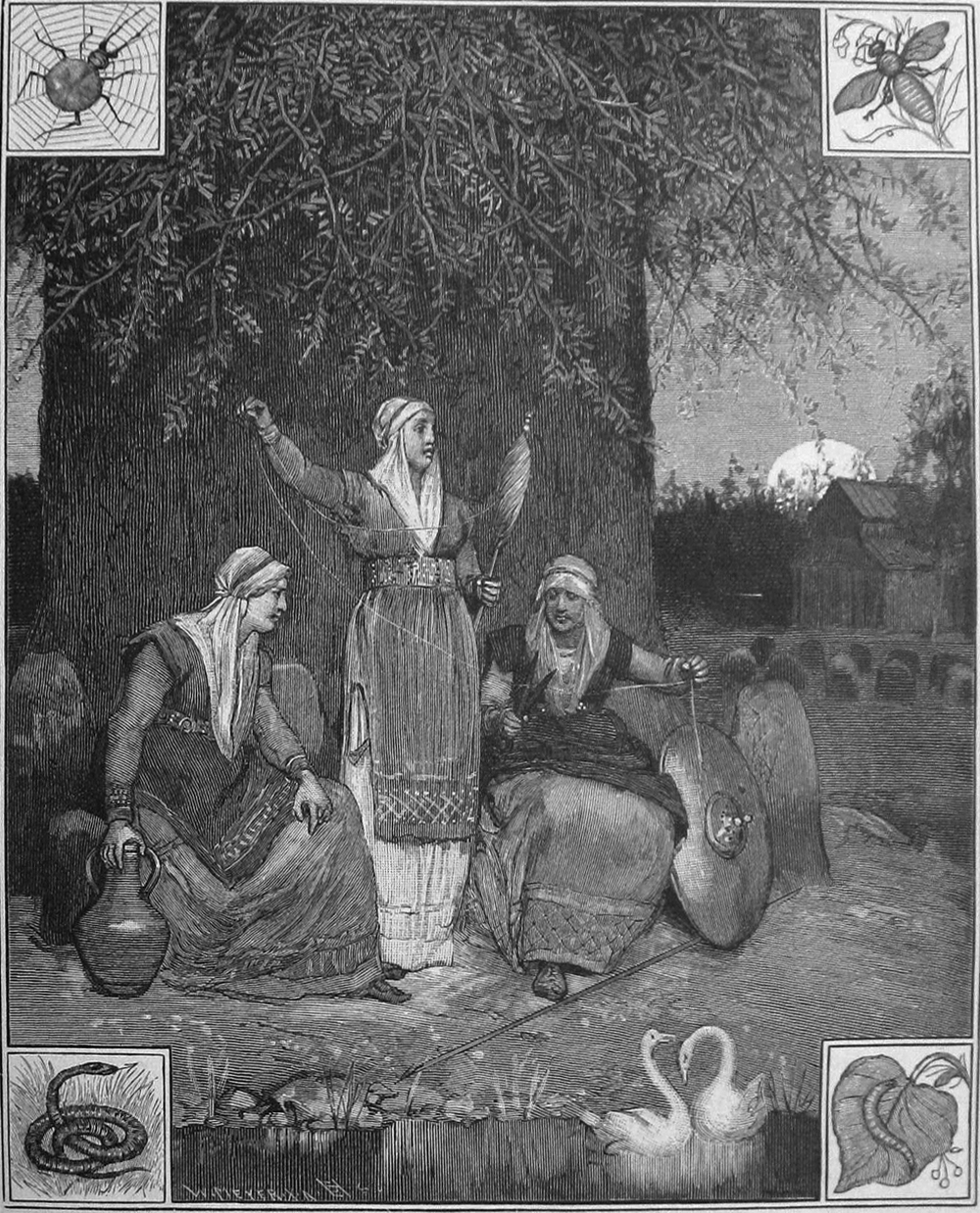


Location and characteristics
The well lies at the root of the ash-tree that connects the nine worlds. It is often depicted as deep, ancient, and life-giving: its waters keep the tree verdant and are used in rites and judgments. In poetic and prose descriptions the well is set apart from other mythic springs such as Mímisbrunnr or Hvergelmir, though all form part of a wider network of sacred waters in Norse cosmology.
Role in myth and ritual
The well is associated with the Norns—the female figures of destiny often named Urðr, Verðandi and Skuld—who tend the tree and draw water to nourish it. Gods are said to come to the spring to hold council; medieval texts describe deities crossing the rainbow bridge Bifrost to reach the place, except for Thor, who travels by other means. At Urðarbrunnr important decisions, laws and pronouncements about fate and order are made.
Associated figures and motifs
- Norns and fate: the well is central to notions of destiny and temporal weaving.
- Law and order: assemblies at the well reflect divine adjudication and the source of cosmic norms.
- Love and war: poets link the spring to the full range of human and divine concerns decided at council.
History and interpretation
Accounts of Urðarbrunnr survive mainly in the Poetic and Prose Edda, compiled in medieval Iceland. Scholars have read the site both as a literal feature of mythic geography and as a symbolic locus for ideas about time, memory and social order. Comparative work links the spring to broader Indo-European motifs of world-trees and life-giving waters.
Notable distinctions and legacy
Urðarbrunnr is frequently contrasted with other wells that specialize in wisdom or the origin of rivers. Its lasting cultural role appears in later literature, art, and modern retellings of Norse myth, where it remains a potent image of judgment, continuity and the hidden springs that support the cosmos. For introductory translations and commentary, see editions and studies that discuss the Eddic poems and the Old Norse terminology surrounding the well.
For more reading and resources on the sources and interpretations of these motifs, consult general treatments of Norse mythology and works that survey mythic geography and the symbolism of the world-tree. Primary-text editions and scholarly commentaries remain the best way to explore competing readings of Urðarbrunnr and its place in the Norse imaginative world.
Related articles
Author
AlegsaOnline.com Urðarbrunnr — the Well of Urðr in Norse Mythology Leandro Alegsa
URL: https://en.alegsaonline.com/art/103543