
Gorgon (Greek mythology): monsters, Medusa, and cultural legacy
Gorgons are legendary female figures in Greek myth—snake‑haired creatures whose gaze could petrify. This article summarizes their traits, classical sources, mythic history, iconography and later cultural influence.
Overview
The Gorgons are a group of monstrous sisters from ancient Greek myth, best known for their hair of living snakes and a petrifying gaze. Classical authors and later artists treated them both as literal beings within mythic narratives and as symbolic images used on objects and architecture. The most famous of the Gorgons is Medusa, the only one described as mortal in surviving Greek sources.
Image gallery
10 Images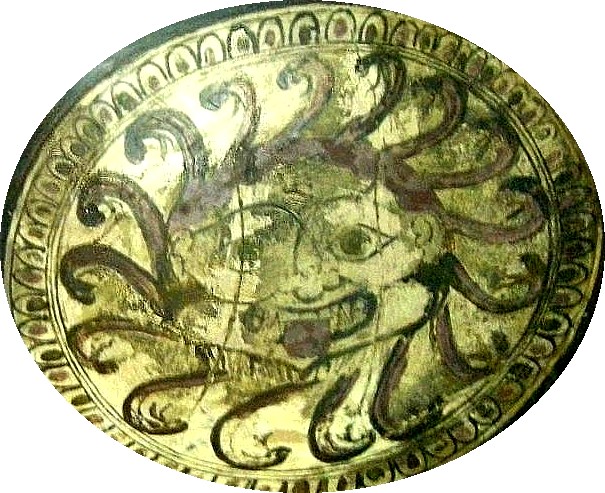


Characteristics and appearance
In literary and artistic descriptions the Gorgons combine human and monstrous features: female faces with protruding fangs, bronze or metallic claws, and a crown or mass of serpents where hair would be. Looking directly at a Gorgon could turn a person to stone. These traits are emphasized differently in various periods, from archaic vase‑painting through classical sculpture to later Roman and medieval depictions.
Principal figures and family
Ancient sources usually name three sisters: Stheno, Euryale and Medusa. Hesiod records the three and gives brief epithets for each; Homeric references are less specific and sometimes refer to a single Gorgon figure. Mythic genealogies commonly make the Gorgons daughters of the primordial sea deities Phorcys and Ceto, placing them among a wider family of strange and dangerous sea creatures.
Mythic narratives and variations
The best‑known story concerns Perseus, who, aided by divine gifts, beheads Medusa and later presents her severed head to Athena; the head retains its petrifying power and becomes an apotropaic emblem. Classical writers and later traditions place the Gorgons at the edges of the known world—variously in the far west (near Atlas) or in regions of North Africa—while Hellenistic and folkloric developments produced local variants that recast gorgon‑like beings as water spirits, guardians, or maritime dangers.
Iconography, function and cultural importance
Images of the Gorgon’s face, the gorgoneion, are common in Greek art: painted on shields, helmets, and rugs, carved on temple pediments and used on amulets. These depictions served a protective purpose, reflecting a belief in apotropaic magic that turned away evil and misfortune. Over centuries the Gorgoneion evolved stylistically from grotesque, bulging faces to more stylized, even beautiful, renditions as the figure was assimilated into decorative programs.
Distinctions and notable facts
- Medusa is unique among the sisters in being mortal and the focus of the Perseus episode.
- Classical literature treats the Gorgons differently: Hesiod names three; Homer frequently speaks as if only one exists.
- Gorgon imagery functions both as a mythic motif and as a protective symbol in material culture.
Further reading and related references
- Greek mythology — general context for the Gorgons.
- female figures in myth and art.
- monsters of the ancient Mediterranean.
- fanged imagery in archaic iconography.
- serpents for hair as a recurring motif.
- bronze and metalwork representations.
- claws and hybrid anatomy in mythic beasts.
- Stheno, one of the named sisters.
- Euryale, often paired with Stheno and Medusa.
- Medusa, the mortal sister whose head retained power.
- Perseus, hero associated with Medusa’s death.
- Athena and the use of Medusa’s head as a protective emblem.
- aegis and the Gorgoneion motif on armor and cloaks.
- Homer and early epic references.
- Hesiod and the Hesiodic catalogues.
- Atlas Mountains and western location traditions.
- Libya as a later suggested setting for gorgons.
- Hellenistic variations and expansions of earlier myths.
- Alexander the Great — later legends sometimes linked figures to well‑known rulers.
- Greek phrases and folk sayings that appear in folklore variants.
- shields and martial imagery bearing the Gorgoneion.
- capes and clothing decorated with protective faces.
- amulets and small protective devices.
- magic and symbolic power attributed to images.
- apotropaic magic — the practice of averting evil with images.
Questions and answers
Q: Who were the Gorgons in Greek mythology?
A: The Gorgons were female monsters that had fangs and serpents for hair with bronze claws. They were the daughters of Phorkys and Keto, and there were three of them named Stheno, Euryale and Medusa.
Q: What happened to anyone who looked at the Gorgons?
A: Anyone who looked at the Gorgons was turned to stone.
Q: Was Medusa mortal or immortal?
A: Medusa was mortal; she was beheaded by Perseus.
Q: What did Athena do with Medusa's head?
A: Athena kept Medusa's head on her chest as a symbol of power; this is often seen in motives showing Athena with an aegis and a Gorgon's head on her chest.
Q: How many Gorgons are mentioned by Homer?
A: Homer only talks about one Gorgon.
A2 : Hesiod names all three, Stheno, the powerful one, Euryale,who could jump far, and trouble-ridden Medusa, the queen.
Q: Where did they live according to Hesiod ?
A: According to Hesiod , they lived at the edge of the known world , in the Atlas Mountains . At a later time , Libya is also named as their home .
Q: What is apotropaic magic ?
A: Apotropaic magic is used against bad spirits and bad luck . It is believed that heads of the gorgons found on shields , capes or amulets have magical powers which can protect from evil forces .
Related articles
Author
AlegsaOnline.com Gorgon (Greek mythology): monsters, Medusa, and cultural legacy Leandro Alegsa
URL: https://en.alegsaonline.com/art/39776
Sources
- commons.wikimedia.org : Gorgons
- commons.wikimedia.org : Image of the whole cup
- arthistory.sbc.edu : "The Gorgons"