
Cerberus: The Multi‑Headed Hound of the Greek Underworld
Cerberus, the multi‑headed dog of Greek myth, guards the entrance to Hades. Son of Typhon and Echidna, usually three‑headed with a serpent tail, best known from Heracles' final Labour and many ancient sources.
Cerberus is a famous creature of ancient Greek religion and mythology: a monstrous dog who stands at the gates of the Underworld to prevent the dead from escaping and the living from entering without permission. The name appears in Greek as Κέρβερος and in Latin as Cerberus; classical authors and later art most often describe him as having multiple heads (commonly three) and a snake for a tail.
Image gallery
10 Images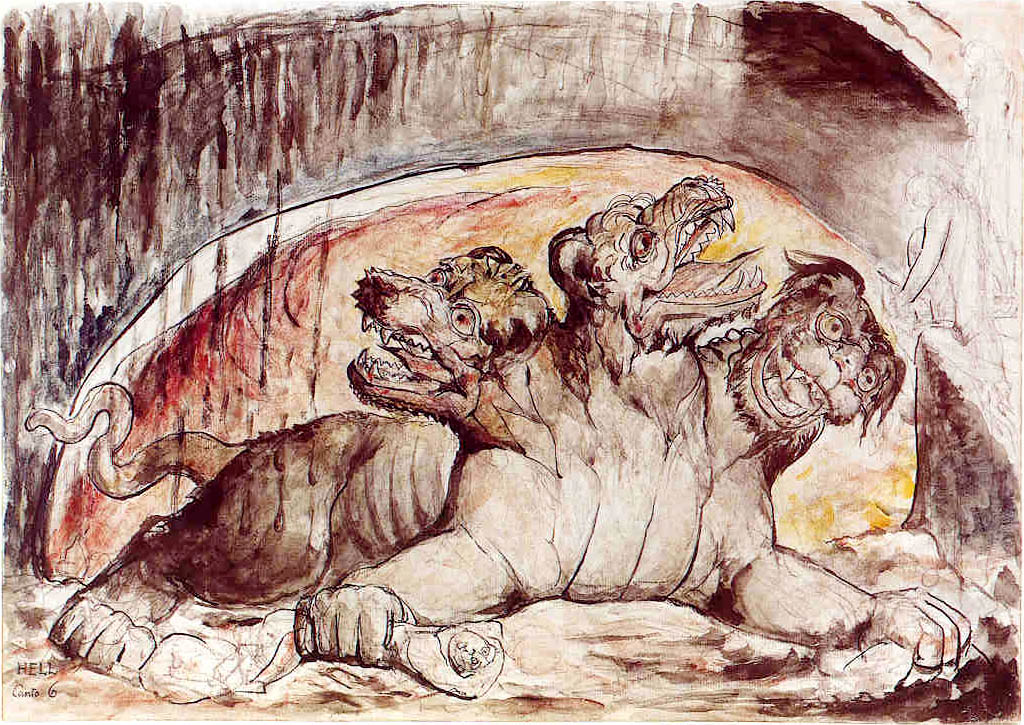


Appearance and attributes
Descriptions vary by source, but several features recur. Cerberus is typically depicted as a large canine with:
- Two or three heads (other traditions sometimes give him more),
- A serpent or many serpents entwined about him and forming his tail,
- A body sometimes shown with a mane of snakes or other monstrous traits.
He is called the "hound of Hades" in many accounts and serves primarily as guardian of the realm of the dead.
Origins and classical sources
Mythographers identify Cerberus as one of the offspring of the monstrous pair Typhon and Echidna. References to the creature appear across a range of ancient literature and art. Poets and epic writers of antiquity—both Greek and Roman—describe his role at the boundaries of the underworld, and later mythographers and vase painters elaborate his appearance and behavior.
Major myths and episodes
Cerberus appears in several well‑known narratives. Most famously, the capture of Cerberus was the final task of the hero Heracles (Herakles), who brought the beast to the surface briefly as one of his Twelve Labours. Other stories involve heroes and figures who pass him by: Orpheus charms him with music when rescuing Eurydice, and in Roman epic the living hero Aeneas encounters the guardians and rites of the underworld during his descent.
Symbolism and cultural impact
Cerberus embodies the boundary between life and death and the order that keeps the dead confined. In later art, literature, and heraldry his image is used to suggest guardianship, the monstrous, or the terrifying unknown. Cerberus has persisted in modern culture through adaptations in literature, visual art, and popular media.
Notes and further reading
For general background see ancient and modern discussions of Greek myth. Related names and figures include the Greek and Latin forms of the name (Κέρβερος, Cerberus), the Underworld and Hades (ancient sources), and Cerberus' epithet, the "hound of Hades". His parentage links him to other chthonic monsters (Typhon and Echidna), whose offspring populate many Greek tales.
Related articles
Author
AlegsaOnline.com Cerberus: The Multi‑Headed Hound of the Greek Underworld Leandro Alegsa
URL: https://en.alegsaonline.com/art/18161