
Tungsten (W) — Properties, Uses, and History
Tungsten (also wolfram) is a dense transition metal known for its very high melting point, hard alloys, and wide uses from lighting and electronics to heavy-duty industrial and military applications.
Overview
Tungsten, often called wolfram in many languages, is a chemical element identified by the symbol W. It occupies a place on the periodic table and is assigned the atomic number 74. Visually it ranges from steel-gray to silvery white in appearance and is usually described as a very hard, dense metal with a metallic luster. Chemically, tungsten is classified among the transition metals, a group of elements noted for variable oxidation states and metallic bonding.
Image gallery
10 Images






Physical and chemical characteristics
Tungsten is notable for exceptional physical properties. It has the highest melting point of all the common metals, a trait that underpins many of its technical uses related to high-temperature service. As a pure element it retains structural stability at temperatures that would melt most other metals; this contrasts with many engineered alloys and compounds. Tungsten’s electron shells are commonly given as 2,8,18,32,12,2, reflecting its electron configuration and the presence of electrons in the 5d and 6s subshells. Its density is very high — in practical terms it is close to that of gold, which has led to some notable comparisons and occasional frauds.
Occurrence and extraction
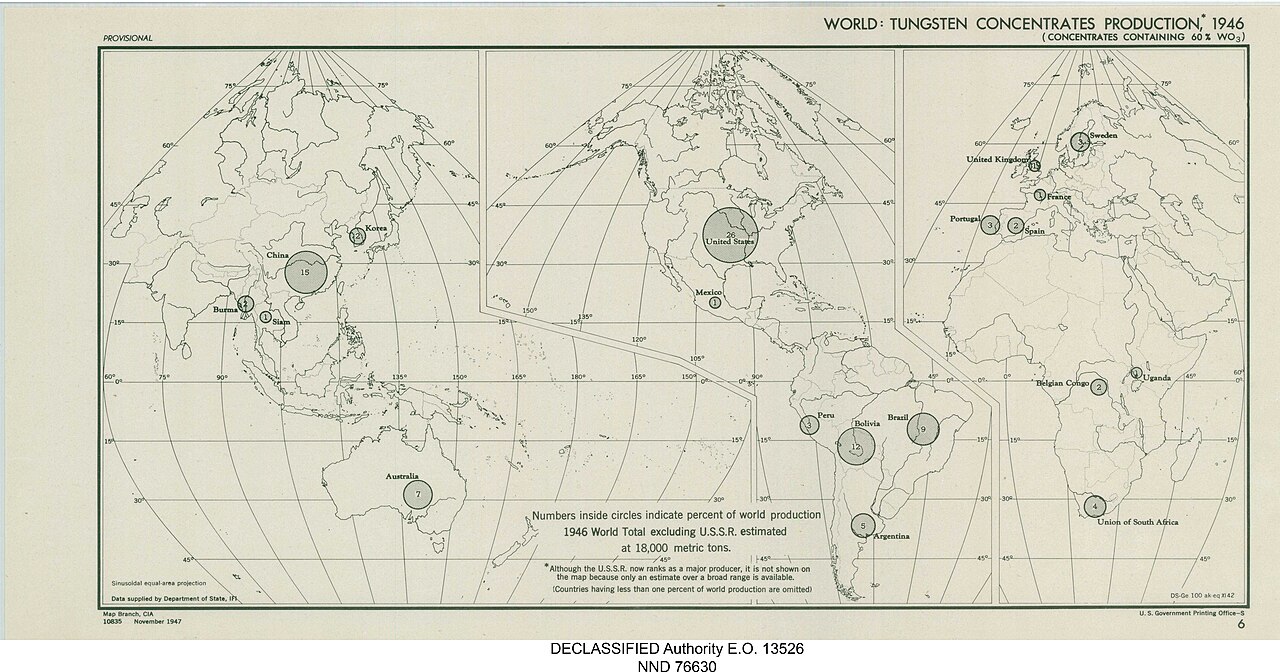
In nature tungsten is not found free but occurs in several minerals. The principal ores are wolframite and scheelite; these are processed by crushing, concentration, and chemical treatment to produce tungsten concentrates and then metal or compounds. The metal is typically recovered from oxides via reduction processes and often refined into powders that are consolidated for industrial use.
Common applications
Tungsten and its compounds serve diverse roles across industry and research. The element itself and its alloys are used in high-temperature and high-strength contexts, while chemical forms are useful where hardness, wear resistance, or specific electrical behavior is required. Examples include:
- Electrical and electronic components, where pure tungsten is used in specialized electrical equipment.
- Lighting and radiography: tungsten filaments remain famous for incandescent lamps and continue to be used in targets and filaments for filament-based systems and X-ray tubes.
- Hard materials: tungsten carbide and other alloys provide cutting, drilling, and wear-resistant properties in industrial tooling.
- Military applications: dense tungsten alloys have been deployed in armor-piercing munitions where high density and hardness are required.
- Chemical uses: salts and oxides of tungsten are used in catalysts, pigments, and chemical synthesis in compound form.
- Everyday and specialty glass-to-metal seals and high-temperature furnace parts, leveraging tungsten’s stability.
History, naming, and notable facts
The common English name "tungsten" comes from Swedish words meaning "heavy stone," reflecting the weight of its ores. The alternate name "wolfram" is still used in many languages and appears in the element’s symbol W. Historically, ores such as wolframite were recognized for their heavy, refractory nature and later isolated into the metal used today. Tungsten’s physical resemblance in density to precious metals has led to misuse: there are recorded instances of gold-plated tungsten ingots being passed off fraudulently as solid gold.
Distinctions, safety and handling
While bulk tungsten is relatively inert and not highly toxic, some tungsten compounds and fine dust can be hazardous and require proper industrial hygiene and environmental controls. Distinctive practical properties — extreme melting point, high density, and hardness — differentiate tungsten from most other metals and make it indispensable in a range of heavy-duty, high-temperature and precision applications. For more technical references on the element, see a general overview of lighting technology and resources on transition metals and high-temperature materials.
For industry-specific data and standards, consult materials on ore processing and alloy design, or dedicated technical literature on tungsten metallurgy and applications periodic table, elemental data, and practical guides to handling tungsten-containing materials.
Related articles
Author
AlegsaOnline.com Tungsten (W) — Properties, Uses, and History Leandro Alegsa
URL: https://en.alegsaonline.com/art/102020