
Ultramarine (deep blue pigment and colour)
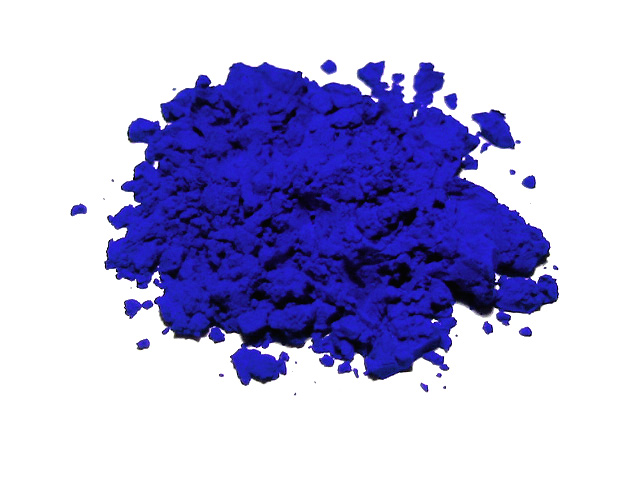
Ultramarine is a vivid blue pigment originally from lapis lazuli (lazurite). Its colour comes from sulfur anions; a cheaper synthetic form was developed in the 19th century and it is widely used in art and industry.
Ultramarine is a deep blue pigment and the name of the corresponding colour. The natural form is produced by grinding the mineral lazurite, the principal constituent of the semi-precious stone lapis lazuli. The striking blue hue arises from sulfur species within the mineral structure—principally the S3− (trisulfur) anion—rather than transition-metal ions that give many other blue pigments their colour.
Image gallery
10 Images




Composition and properties
Natural ultramarine is a complex sodium aluminosilicate that contains sulfur in reduced forms; this electronic structure absorbs yellow-red light and reflects deep blue. The pigment is chemically stable, lightfast, and non-reactive with many binding media, which made it valuable to painters who required a permanent blue that did not darken or fade readily.
History and origin
Historically, ultramarine was one of the most prized and expensive pigments. Lapis lazuli deposits in the mountains of what is now Afghanistan were a primary ancient source. Imported over long trade routes, ground lapis was reserved for important commissions and often used for the robes of religious figures in medieval and Renaissance paintings because of its cost and brilliance.
Natural vs synthetic
In the early 19th century chemists developed reliable methods to produce ultramarine synthetically, greatly reducing cost and increasing availability. Synthetic ultramarine has essentially the same visual characteristics as the natural pigment but is manufactured from common raw materials and is used widely today.
Uses and significance
- Art: washes, oil and tempera painting, and restoration work where a stable blue is needed.
- Industry: pigments for plastics, coatings, and printing where lightfastness is required.
- Conservation and cosmetics: chosen for safety and permanence compared with some copper-based blues.
Notable distinctions include the etymology—"ultramarine" means "beyond the sea"—and the difference between the original mineral source and the now-common synthetic product. Both forms remain valued for their particular shade, permanence, and historical resonance in art and material culture.
Questions and answers
Q: What is Ultramarine?
A: Ultramarine is a blue pigment and also the name of a blue colour.
Q: Where is Ultramarine pigment found naturally?
A: Ultramarine pigment is found naturally in a mineral called Lazurite, the main component of lapis lazuli.
Q: How is Ultramarine pigment made?
A: Ultramarine pigment is made by grinding down the mineral Lazurite.
Q: What is the main component of lapis lazuli?
A: The main component of lapis lazuli is Lazurite.
Q: What gives Ultramarine its blue color?
A: Ultramarine gets its blue color due to the presence of S−3 anions (trisulfur).
Q: Can Ultramarine be found in other colors than blue?
A: No, Ultramarine pigment is only found in blue.
Q: What is the chemical name for the S−3 anions present in Ultramarine pigment?
A: The chemical name for the S−3 anions present in Ultramarine pigment is trisulfur.
Related articles
Author
AlegsaOnline.com Ultramarine (deep blue pigment and colour) Leandro Alegsa
URL: https://en.alegsaonline.com/art/102698
Sources
- dx.doi.org : 10.1002/14356007.n20_n02