
Light bulb: design, history, types, and uses
Overview of the light bulb — how it works, main types (incandescent, fluorescent, LED, gas-discharge), historical development, common uses and environmental considerations.
The light bulb is a device that converts electrical energy into visible light. Modern bulbs use differing physical principles — heated filaments, gas discharge, or semiconductor electroluminescence — to produce illumination. Beyond general lighting, bulbs serve as visual indicators on electronic devices, in traffic signals and signage, for photographic or stage illumination, and even as localized sources of heat in specialised applications. Supplies of electricity distributed from central power stations enabled widespread adoption of powered lighting in the 20th century.
Image gallery
10 Images
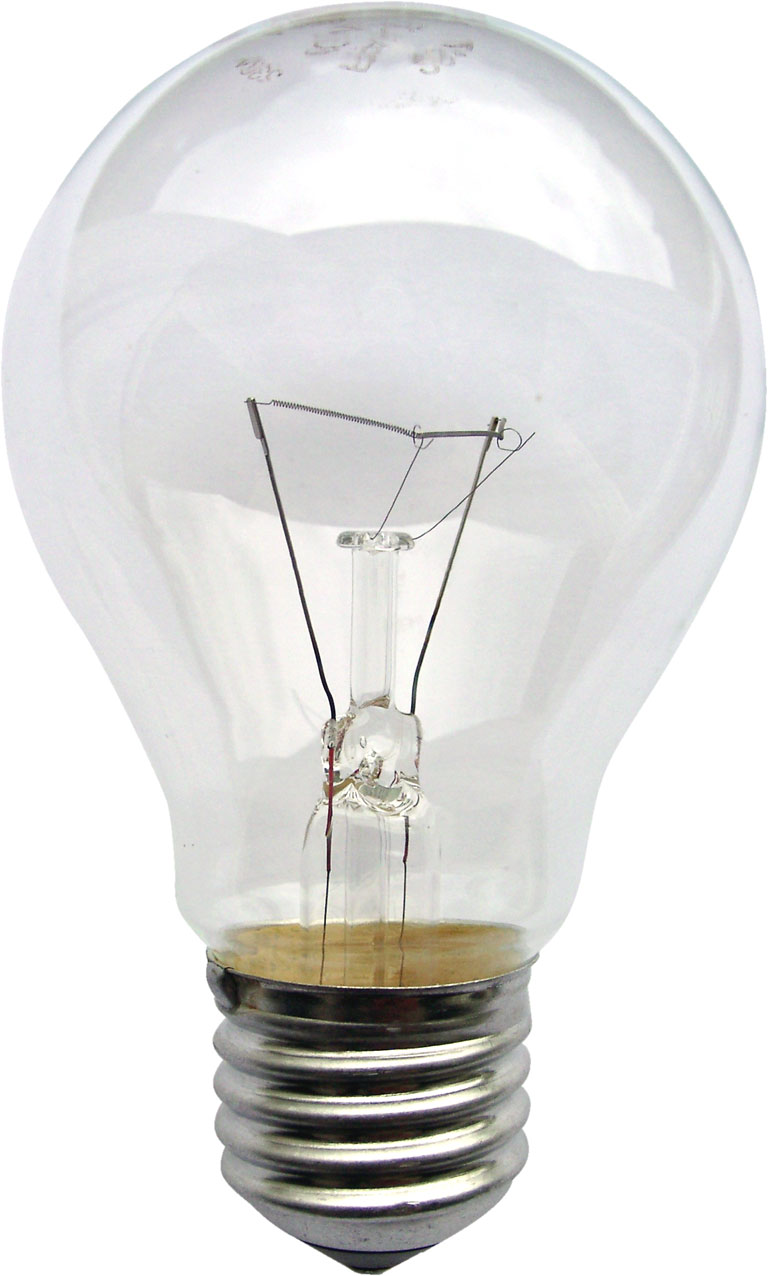


Basic components and how they work
Most traditional bulbs share a common set of parts: a light-generating element, a protective envelope, and a mechanical base or socket. Incandescent lamps use a thin filament (commonly tungsten) that glows when current flows; the filament is enclosed in a glass bulb that may be evacuated or filled with an inert gas. Fluorescent and other gas-discharge lamps make light by passing current through a gas or vapor that emits ultraviolet or visible radiation, which in turn excites a coating on the inner surface. Light-emitting diodes (LEDs) are solid-state devices that emit light when electrons recombine with holes in a semiconductor junction, offering high efficiency and long life.
Types and distinguishing characteristics
- Incandescent: simple, warm-toned light, low initial cost, high heat loss and comparatively short lifespan.
- Halogen: a refinement of incandescent using halogen gas to extend filament life and efficiency modestly.
- Fluorescent: gas-discharge tubes or compact variants, higher luminous efficacy than incandescent, some contain mercury and require careful disposal.
- High-intensity discharge (HID): used for street and industrial lighting; includes sodium and metal-halide lamps.
- LED: rapidly became the dominant technology for many applications due to superior energy efficiency, long life, and compact form factors.
Historical development
Humanity’s need for controlled light preceded electricity: people used candles and oil lamps for millennia. In the early 19th century experiments with electric arcs showed that electricity could produce intense light; notable early work is associated with Humphry Davy and others. By the late 19th century several inventors — most famously Thomas Edison and Joseph Swan among others — developed practical incandescent lamps, aided by improvements in filament materials and glass-blowing and by improved vacuum pumps. Widespread electrification and the growth of distribution networks made electric lighting common in urban and later rural settings.
Uses, importance, and modern trends
Light bulbs enable activities after dark, extend productive hours, improve safety, and contribute to cultural and commercial life. They are central to architecture, transportation, entertainment, and scientific instruments. In recent decades policy and market forces have shifted installations away from inefficient incandescent lamps toward fluorescent and especially LED solutions, reducing energy consumption and maintenance costs. Specialized lamps remain important where color rendering, dimming behavior, or extreme intensity are required.
Environmental and practical considerations
Energy efficiency, lifetime, color quality, and disposal impact bulb choice. Some discharge lamps contain small amounts of mercury and are subject to recycling regulations; LEDs reduce energy use but raise concerns about electronic waste and the need for compatible fixtures or drivers. Lighting design also increasingly considers human factors — circadian effects, glare control, and spectral composition — in addition to raw lumen output.
Throughout their evolution the basic goal of light bulbs has remained constant: to provide controlled, convenient illumination. Ongoing advances in materials science and electronics continue to expand the capabilities, efficiency, and form factors of lighting products used in homes, industry, transportation, and space — including fixtures built for use in outer space missions and satellites.
Questions and answers
Q: What is a light bulb?
A: A light bulb is an electronic device that produces light from electricity.
Q: What are some uses of a light bulb?
A: A light bulb can be used to light a dark space, show an electronic device is on, direct traffic, provide heat, and for many other purposes.
Q: How many light bulbs are in use?
A: Billions of light bulbs are in use, some even in outer space.
Q: What did early people use for light before the invention of the light bulb?
A: Early people used candles and oil lamps for light.
Q: Who invented the electric arclight?
A: Humphry Davy invented the electric arclight in the early 1800s.
Q: Who invented the more efficient incandescent lightbulb?
A: Thomas Alva Edison, Joseph Swann, and several others in the 1880s invented the more efficient incandescent lightbulb.
Q: What kind of light bulb became the main kind for the 20th century?
A: The incandescent light bulb became the main kind for the 20th century, thanks to improved vacuum pumps and better materials made them shine longer and brighter late in the century.
Related articles
Author
AlegsaOnline.com Light bulb: design, history, types, and uses Leandro Alegsa
URL: https://en.alegsaonline.com/art/57929
Sources
- pa.msu.edu : "How Does a Lightbulb Work?"
- inventors.about.com : "Edison's Inventions"
- berkeley.academia.edu : "Promises and Limitations of Light Emitting Diodes"