
Tuareg people: Saharan Berber pastoralists, language, and culture
The Tuareg are a Berber-speaking, historically nomadic people of the central and western Sahara. This article summarizes their language, social organization, history, cultural traits, and contemporary situation.
Overview
The Tuareg are a Berber people traditionally associated with trans-Saharan life. Often described as an ethnic group of the central and western Sahara, they live today primarily across several states of West Africa and the southern Sahara. Their identity combines language, customary law, material culture and migratory patterns that developed around desert pastoralism and caravan trade.
Image gallery
10 Images






Language and writing
Tuareg speak several closely related varieties of the Tamasheq (Tamajaq/Tamacheq) cluster, which belong to the larger Berber linguistic family. They have historically used the Tifinagh script (also encountered in older sources as tifinaɤ) for inscriptions and symbolic writing. The script experienced a modern revival in cultural and educational contexts.
Society and culture
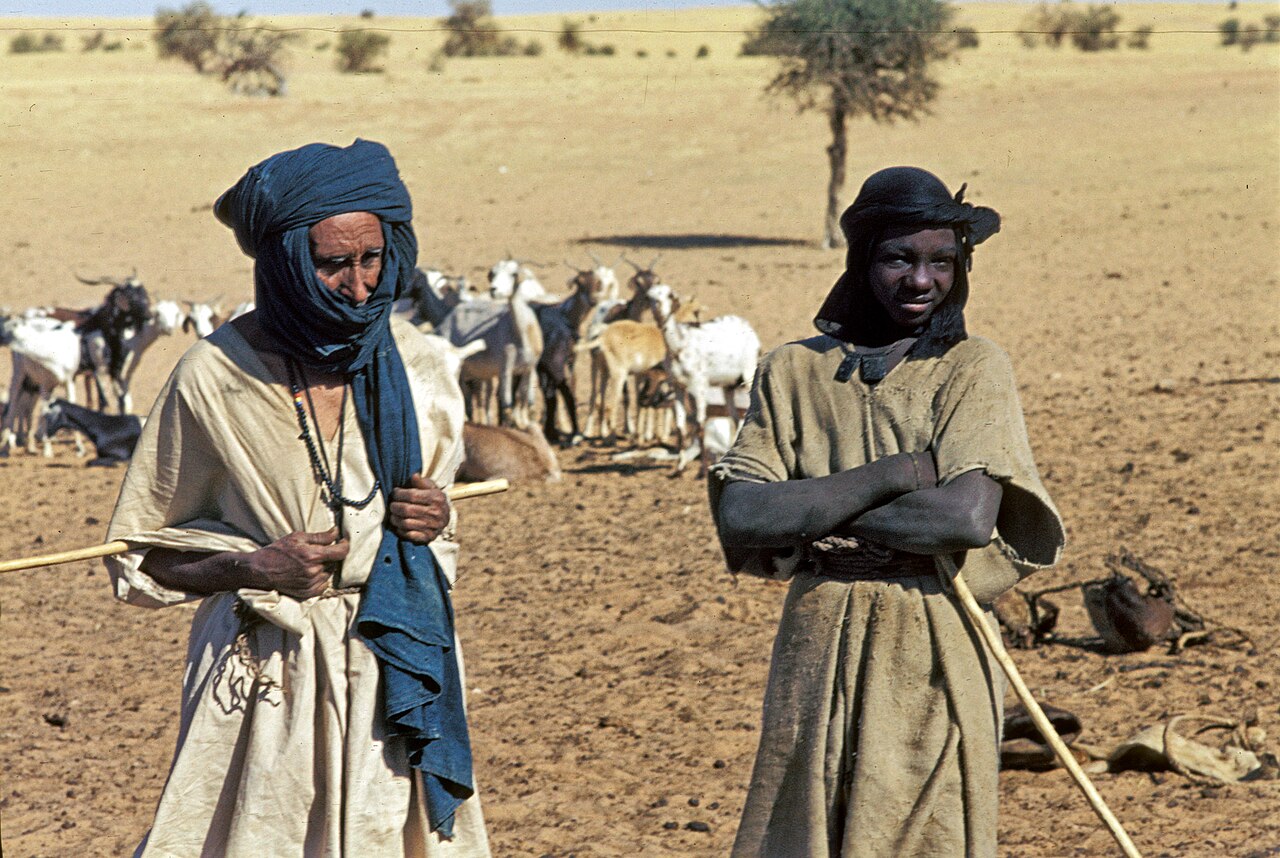
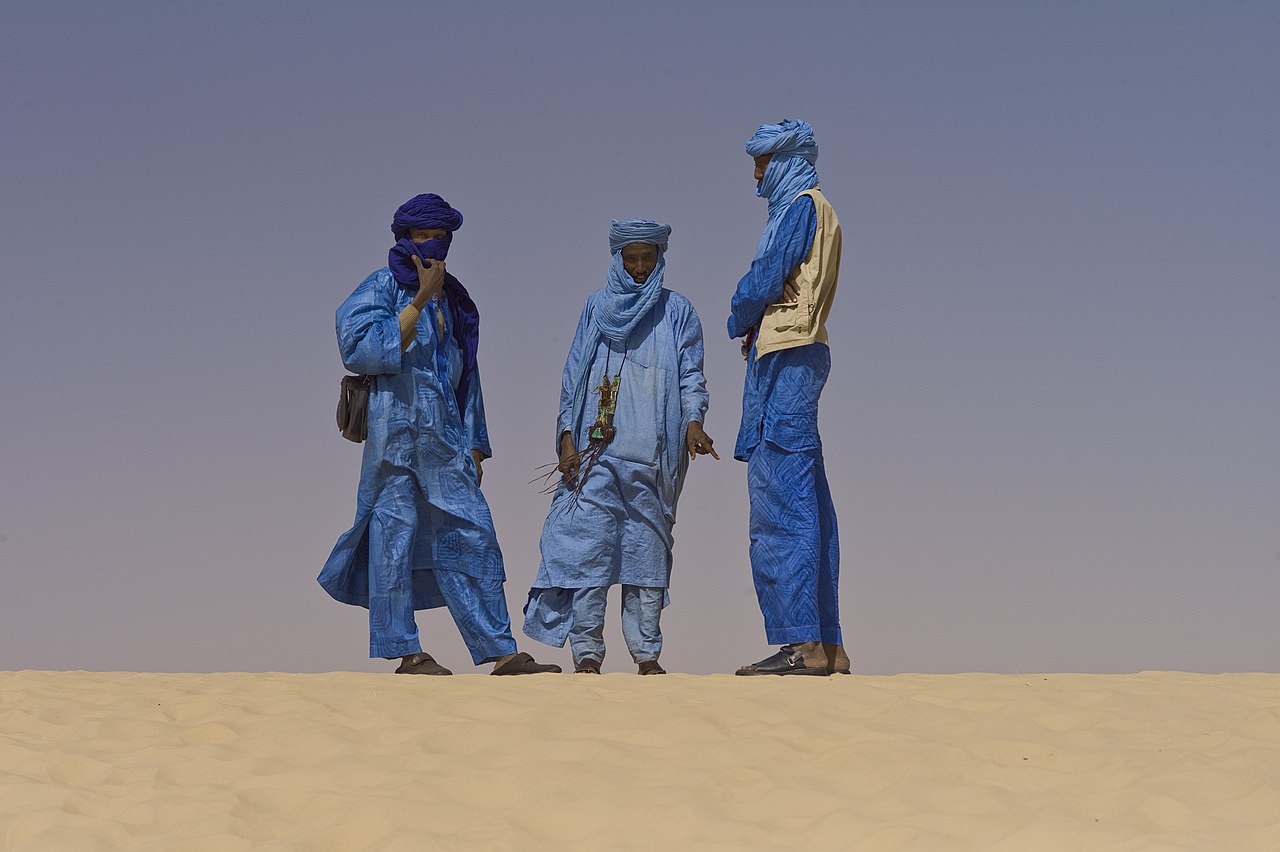
Tuareg social organization features distinct kinship patterns and customary ranks. Lineage and inheritance are often described as matrilineal, with descent traced through women and important property rights centered on female lines. Men characteristically wear the indigo-dyed veil known as a tagelmust or cheche, which has cultural and practical functions; women do not customarily veil in the same way. Islam is the predominant religion among Tuareg communities, usually blended with long-standing local customs (Muslims).
History and mobility
Historically, many Tuareg groups practiced nomadic and semi-nomadic pastoralism, moving herds of camels, goats and sheep and participating in caravan commerce; traditional accounts and archaeology place their ancestors in the Saharan and Sahelian belts for many centuries. Sedentarization, colonial frontiers and modern nation-states have changed mobility patterns, but elements of pastoral and trade culture remain. Some historical narratives emphasize a legendary matriarch, Tin Hinan, as a cultural ancestor for certain Tuareg confederations.
Distribution, economy and modern issues
- Geographic presence: Tuareg communities are found across Mali, Niger, Algeria, Libya, Burkina Faso and Mauritania and in urban diasporas.
- Economy: traditional livelihoods include pastoralism, seasonal trade and artisanal crafts; some groups have shifted to agriculture, wage labor or urban occupations.
- Contemporary challenges: many Tuareg face pressures from environmental change, border controls, and political marginalization; there have been periods of rebellion and negotiation with national governments as groups seek greater autonomy or development.
Distinctive features and cultural expressions
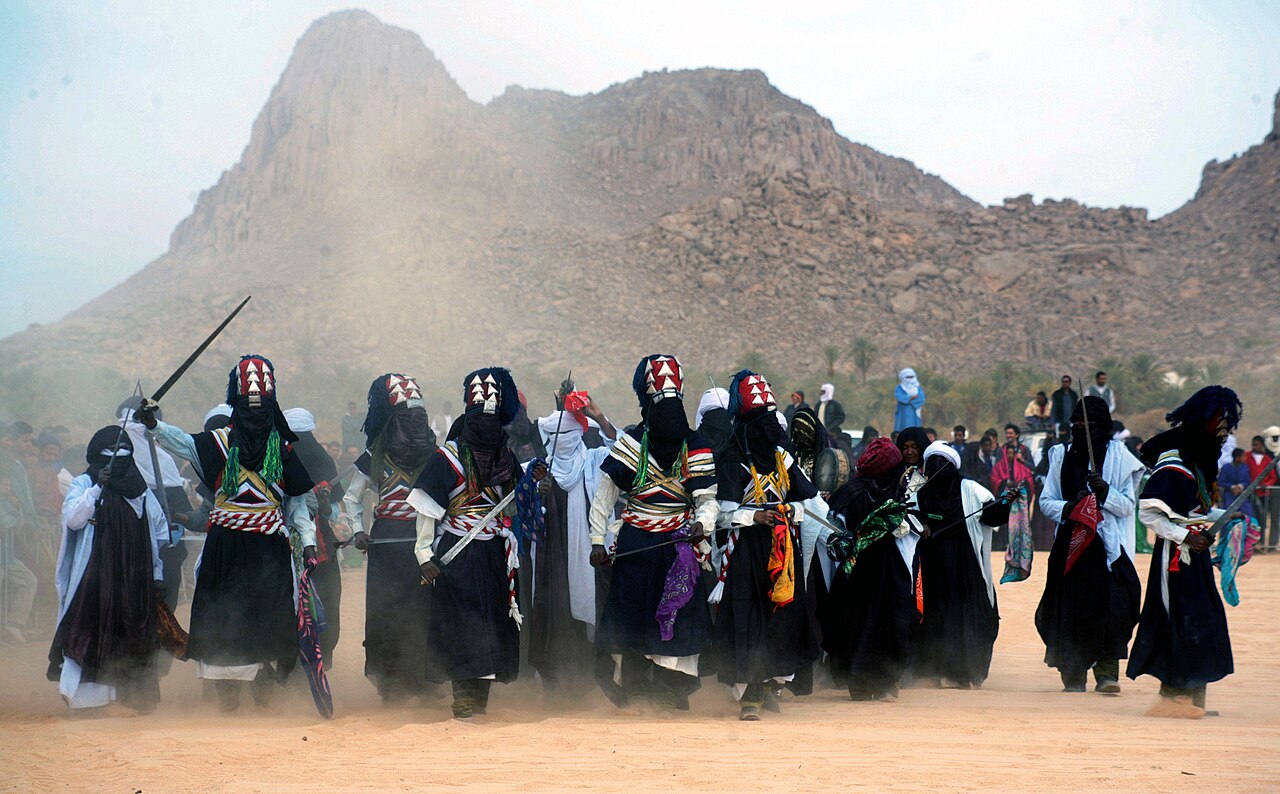
Notable Tuareg cultural elements include musical traditions (string and bowed instruments), distinctive jewelry and clothing, and a strong oral literature. The balance of matrilineal social structures with male ritual roles and the widely recognized practice of male veiling make Tuareg society distinctive among Saharan peoples. Although much has changed in recent decades, Tuareg identity remains centered on language, kinship and a shared desert heritage.
For further reading and resources, consult ethnographic and linguistic studies and cultural heritage projects that document Tuareg language, arts, and social history.
Arabic spelling and references, nomads and mobility, and regional studies can provide additional context.
See also regional summaries at Sahara studies and comparative West Africa research portals for broader background.
Related articles
Author
AlegsaOnline.com Tuareg people: Saharan Berber pastoralists, language, and culture Leandro Alegsa
URL: https://en.alegsaonline.com/art/101916