
Trout: biology, varieties, habitat, and human importance
Trout are salmonid fishes found mainly in cool freshwater habitats across the Northern Hemisphere; this article covers their taxonomy, appearance, life cycle, uses, and conservation issues.
Trout are a group of bony fishes commonly placed in the salmonid subfamily Salmoninae. They are teleosts by broad classification and belong to the family Salmonidae, which also includes salmon and chars. The name "trout" covers a range of species and forms rather than a single scientific taxon; several genera and local names are used for fish commonly called trout worldwide. Many trout species occur naturally in the temperate waters of North America, Europe, and Asia.
Image gallery
10 Images



Taxonomy and common groups
Different species called trout appear in several genera. Well known examples include brown trout (often placed in Salmo), rainbow trout and cutthroat trout (in Oncorhynchus), and some fishes called "trout" that are close to or confused with chars. Because common names vary by region, scientific names are used to clarify relationships. Trout are members of the broader group of teleost fish within the Salmonidae family, which links them closely to salmon.
Physical characteristics
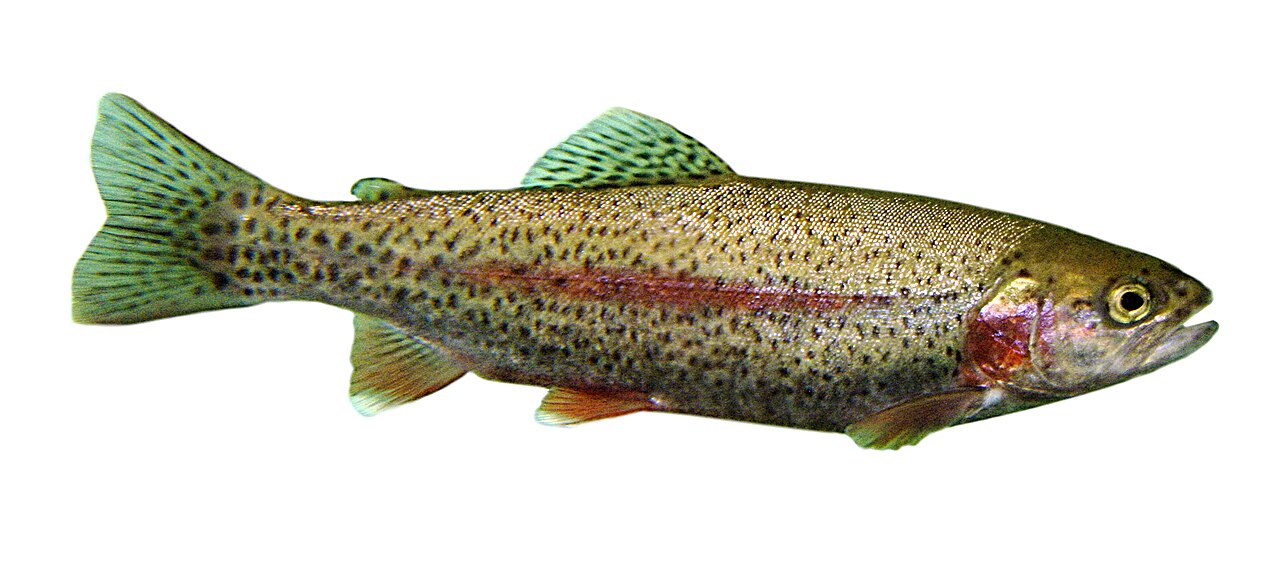
Trout typically have a streamlined body with an adipose fin behind the dorsal fin, a lateral line, and distinguishing colour patterns such as spots or parr marks on juveniles. They range in size and coloration according to species, life stage, and habitat. Most are adapted to cold, well-oxygenated water and show counter-shaded colouration: darker above and lighter below.
Habitat and life cycle
Although many trout are primarily freshwater fishes, some populations migrate between fresh and salt water. Trout occupy clear streams, upland rivers, and deep or cold lakes. Spawning usually occurs in gravel beds where eggs are deposited, and young fish pass through recognizable juvenile stages before reaching maturity. Some forms are resident in streams year-round, while others undertake longer migrations.
Uses and conservation
Trout are important for subsistence and commercial aquaculture, and they are a major focus of recreational angling owing to their fighting behaviour and appeal as food fish. Stocking programs and hatcheries have spread trout beyond their native ranges, which has benefits and risks: introduced trout can support fisheries but also threaten native species through competition, predation, and hybridization. Habitat degradation, water warming, pollution, and overfishing are common conservation concerns for many trout populations.
Notable distinctions and facts
- Identification: the small adipose fin and body markings help distinguish trout from non-salmonids.
- Life histories vary: some are anadromous (migrating to sea) while others remain strictly freshwater.
- Human management: conservation often balances angling interests with ecosystem protection.
For further reading on related topics, see entries on Salmonidae, salmon, and regional aquatic habitats linked here: streams, rivers, and lakes.
Related articles
Author
AlegsaOnline.com Trout: biology, varieties, habitat, and human importance Leandro Alegsa
URL: https://en.alegsaonline.com/art/101755