
Trumpet manucode (Manucodia keraudrenii)
A medium-sized bird of paradise from New Guinea and northeast Australia, notable for glossy black plumage, horn-like head tufts, a coiled trachea, and resonant trumpet-like calls.
The trumpet manucode (Manucodia keraudrenii) is a medium-sized member of the bird-of-paradise family (Paradisaeidae). Measuring roughly 31 cm in length, it is named for the low, resonant quality of its vocalizations and for the distinctive shape of its head and throat plumage. Unlike some other birds of paradise, the sexes of the trumpet manucode are similar in appearance rather than highly dimorphic.
Image gallery
10 Images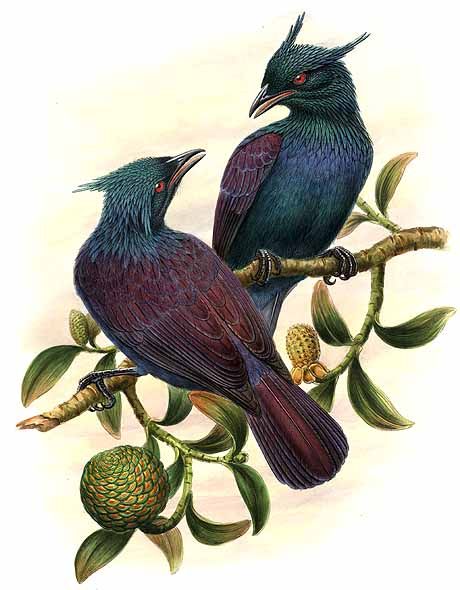






Appearance and anatomy
Adults have a generally dark, blackish plumage that shows iridescent blue, green and purple sheens in good light. Key identifying features include long, horn-like tufts or elongated feathers on the head, loose or ruffled feathers around the neck, a red iris, and dark bill, mouth and legs. Internally, the species has a notably long, coiled trachea that amplifies and deepens its calls, a trait seen in several other birds-of-paradise and in some related passerines.
Distribution and habitat
Trumpet manucodes are inhabitants of lowland rainforest and adjacent forest edges. Their range includes parts of northeastern Australia (northeast Australia), the island of New Guinea (New Guinea) and nearby smaller islands. They are typically associated with primary and well-developed secondary forest where fruiting trees are available.
Diet and ecological role
Their diet consists mainly of fruit, supplemented by arthropods and other small animal prey. As regular consumers of fleshy fruits, trumpet manucodes act as seed dispersers for many tropical plant species. They forage in the canopy and subcanopy, and occasional sallies for insects are part of their feeding repertoire. Observers may notice them moving deliberately through fruiting trees rather than performing the extravagant display flights seen in some other paradisaeids.
Behavior and vocalizations
The species produces low, trumpet-like calls that carry through the forest; the coiled trachea contributes to the depth and resonance of these sounds. Vocalizations play a role in territorial signaling and in maintaining contact between individuals. Compared with the highly showy courtship displays of some relatives, trumpet manucodes are comparatively subdued in visual display, relying more on vocal and perch-based behaviors.
Taxonomy, identification tips and notable facts
Belonging to the genus Manucodia, the trumpet manucode is one of several species of manucodes that share a relatively plain, glossy appearance and reduced sexual dimorphism. Field identification emphasizes size, the distinctive head tufts and neck feathers, the red eye, and the quality of the call. For further natural history notes and photographic guides, consult regional field resources and species accounts that illustrate the bill and head features in detail, such as the reference entry for the bill and head structure.
- Scientific name: Manucodia keraudrenii
- Family: Paradisaeidae
- Habitat: lowland rainforest and forest edge
- Diet: fruits and arthropods; important seed disperser
The trumpet manucode provides an example of how different members of the birds-of-paradise family have evolved diverse strategies—some favoring spectacular visual displays, others relying on acoustics and subtle morphological specializations—to occupy forested ecosystems in Australasia.
Related articles
Author
AlegsaOnline.com Trumpet manucode (Manucodia keraudrenii) Leandro Alegsa
URL: https://en.alegsaonline.com/art/101811
Sources
- iucnredlist.org : Manucodia keraudrenii