
True owls (Strigidae): overview, characteristics, distribution and ecology
True owls (family Strigidae) are the larger of two owl families. This article explains their features, behavior, distribution, taxonomy, and differences from barn owls.
Overview
True owls, belonging to the family Strigidae, comprise the majority of living owl species. They represent one of the two principal modern owl lineages and include a wide range of sizes and ecological roles. Modern counts commonly list roughly 180–200 species arranged in several dozen genera, although exact numbers vary as taxonomic research continues.
Image gallery
9 Images


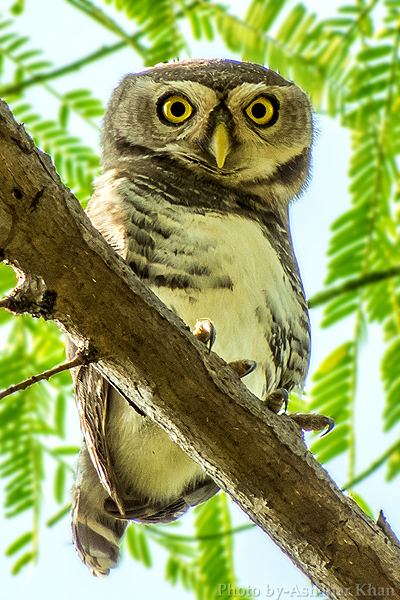

Key characteristics and adaptations
Members of the Strigidae share a collection of traits that suit a predominantly predatory, often nocturnal lifestyle. Prominent adaptations include forward-facing eyes and strong binocular vision, a facial disk that helps collect and direct sound, asymmetrical ear openings in many species for precise localization of prey, soft fringed wing feathers for near-silent flight, and powerful talons for seizing animals. Plumage varies widely from cryptic browns and greys to more contrasting patterns; many species have ear tufts while others do not.
Behavior, diet and reproduction
True owls are mostly carnivorous and opportunistic hunters. Their diet commonly consists of small mammals (rodents, rabbits), birds, reptiles, amphibians, and large insects, depending on size and habitat. Activity patterns range from strictly nocturnal to crepuscular or even partly diurnal in some species. Nesting habits are diverse: many use natural cavities, tree hollows, rock crevices or abandoned nests of other birds; a few nest on the ground. Vocalizations (hoots, screeches, whistles) play important roles in territory defense and mate attraction.
Taxonomy, history and relationships
The split between true owls and the other main owl family, the barn owls (Tytonidae), is considered an ancient divergence within Strigiformes. Molecular and morphological studies have improved understanding of these relationships, but details of deeper branching and fossil ancestry remain areas of active research. The grouping of species into genera such as Bubo, Strix, Otus and Athene reflects both shared features and continuing taxonomic refinement.
Distribution and conservation
True owls occupy a global range and are found across most habitats and continents, with the notable exception of Antarctica. They inhabit forests, grasslands, deserts, mountains and urban areas. Conservation status varies: while some species are widespread and adaptable, others face threats from habitat loss, rodenticide poisoning, collisions, and human disturbance. Local and international measures aim to protect vulnerable populations and their habitats.
Distinctions and notable facts
- True owls are more taxonomically and ecologically diverse than barn owls, displaying a wider range of sizes and hunting strategies.
- Many well-known species belong to Strigidae, including the Great Horned Owl and the Eurasian Eagle-Owl, which illustrate the family's size extremes and predatory power.
- Scientific study of Strigidae continues to revise species limits and evolutionary relationships as new genetic and ecological data emerge—see further resources for updates: additional information.
Overall, true owls are a successful and varied group whose adaptations make them important predators in many ecosystems and subjects of ongoing scientific interest.
Questions and answers
Q: What are true owls?
A: True owls (or typical owls) are owls belonging to the family Strigidae, one of the two families of owls, with 189 living species in 25 genera.
Q: How many living species of true owls are there?
A: There are 189 living species of true owls.
Q: Is the family Strigidae the only family of owls?
A: No, there is another family of owls called the barn owls.
Q: Where are true owls found?
A: True owls are found on every continent except Antarctica.
Q: How old is the division of owls into true owls and barn owls?
A: The division of owls into true owls and barn owls is quite ancient.
Q: Have the relationships of owls in general been resolved?
A: No, the relationships of owls in general are still unresolved.
Q: How many genera do true owls belong to?
A: True owls belong to 25 genera.
Related articles
Author
AlegsaOnline.com True owls (Strigidae): overview, characteristics, distribution and ecology Leandro Alegsa
URL: https://en.alegsaonline.com/art/101789
Sources
- elibrary.unm.edu : PDF fulltext
- ardeola.org : PDF fulltext