
Trans-Neptunian object
A trans-Neptunian object is a minor planet that orbits beyond Neptune. The group includes Kuiper belt objects, scattered-disc bodies, and dwarf planets such as Pluto.
Trans-Neptunian objects (TNOs) are minor planets that orbit the Sun at distances beyond Neptune. The term covers a broad family of icy bodies in the outer Solar System, from small fragments to large worlds such as Pluto and Eris. Astronomers have identified many more than a thousand, and the population is still being studied.
TNOs matter because they preserve evidence from the Solar System's early history. In the cold outer regions, some objects have changed less than bodies closer to the Sun, so their surfaces and compositions can offer clues about how planets formed, migrated, and interacted with one another over time.
Image gallery
9 Images
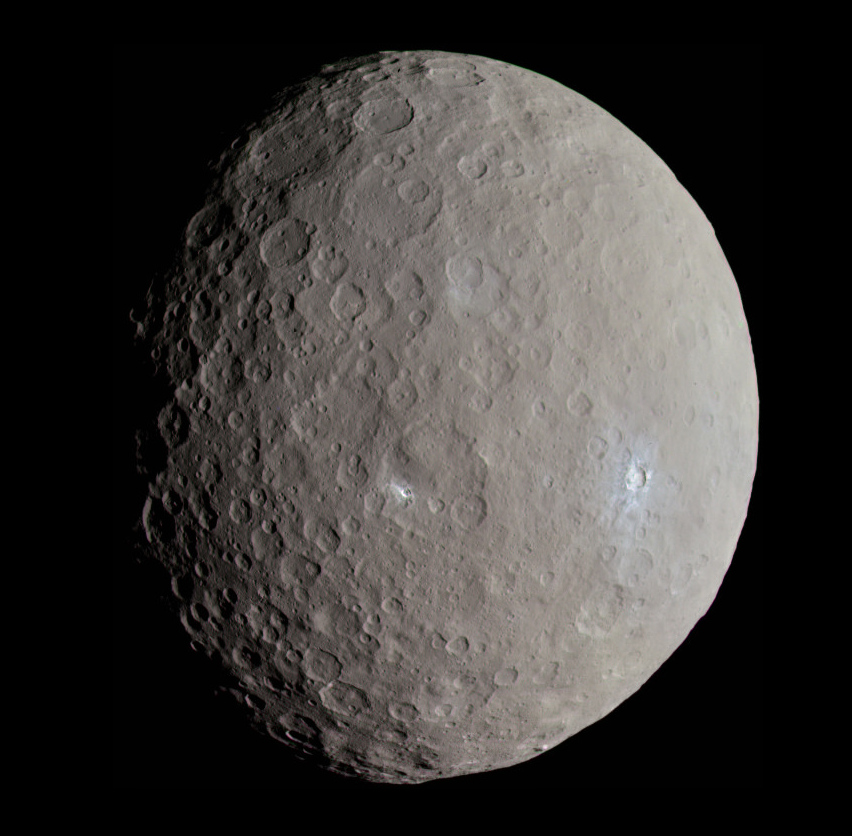





Main groups
Researchers usually describe TNOs by their orbits rather than by one single appearance or size.
- Kuiper belt objects are found in a broad region beyond Neptune and include many bodies on relatively stable paths.
- Resonant objects share an orbital ratio with Neptune; Pluto is the best-known example.
- Scattered-disc objects follow more elongated and inclined orbits that were likely altered by Neptune's gravity.
- Detached objects move far from Neptune's direct influence and can occupy very distant paths.
Physical features and examples
Most TNOs are thought to be mixtures of rock and frozen volatiles such as water ice, methane, and nitrogen ice. Many have dark or reddish surfaces that have been altered by long exposure to radiation. Some have moons, and a few are large enough to be classified as dwarf planets. Well-known examples include Pluto, Haumea, Makemake, and Eris.
Discovery and scientific importance
The first TNOs recognized after Pluto were found in the late 20th century, when improved detectors and survey telescopes made very faint distant objects easier to spot. Since then, discoveries have shown that the region beyond Neptune is not empty but rich and dynamically diverse. This has changed ideas about the outer Solar System and helped refine the distinctions between planets, dwarf planets, and smaller minor planets.
The term is often linked to the Kuiper belt, the best-known reservoir of many TNOs, but it also includes bodies from the more extended scattered disc and related distant populations. In astronomy, TNOs are therefore a key part of the modern picture of the Solar System's edge.
Related articles
Author
AlegsaOnline.com Trans-Neptunian object Leandro Alegsa
URL: https://en.alegsaonline.com/art/101107
Sources
- minorplanetcenter.org : minorplanetcenter.org/iau/lists/TNOs.html