
Triangulum Galaxy (M33)
Triangulum (M33) is a nearby spiral galaxy about 3 million light‑years away in the constellation Triangulum; a Local Group member used to study star formation and galaxy structure.
Overview
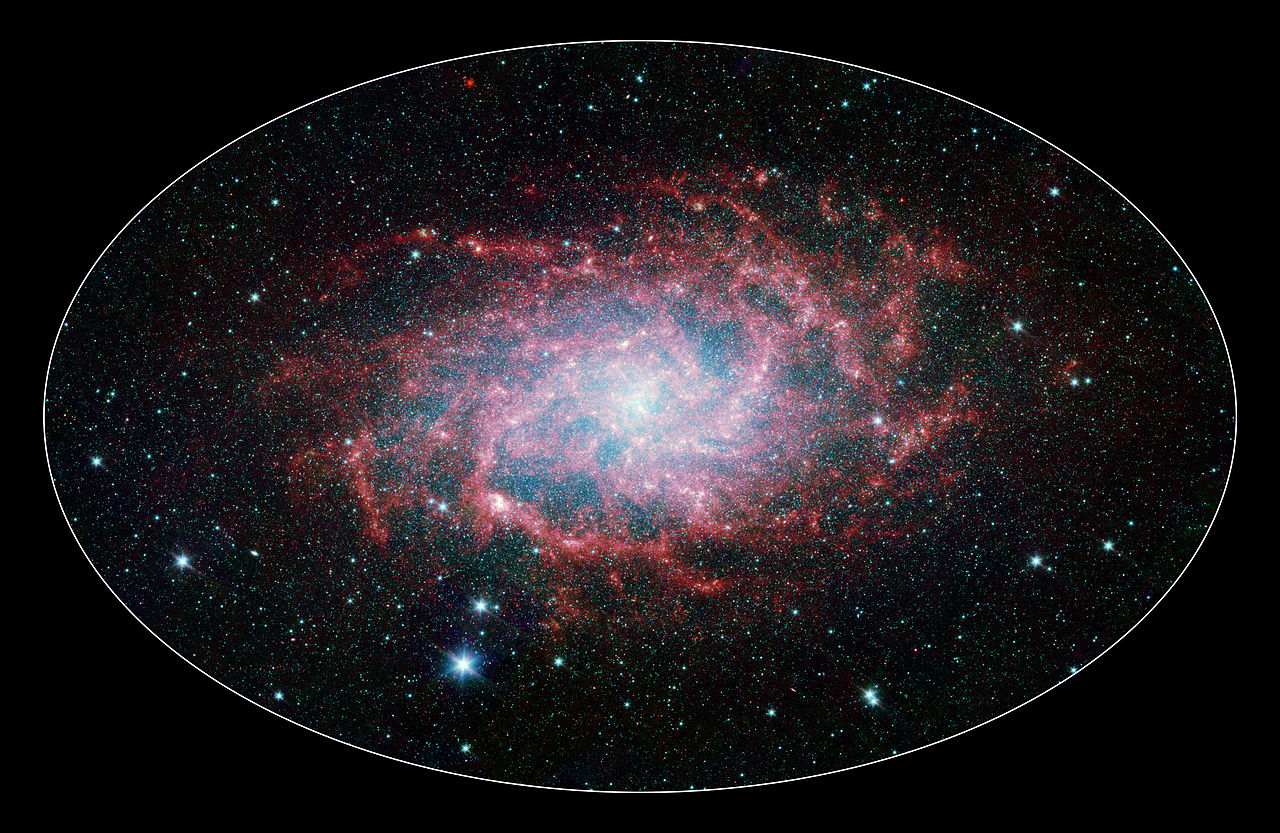
The Triangulum Galaxy is a nearby spiral galaxy located roughly three million light‑years from Earth, in the northern sky's constellation Triangulum. It is catalogued as Messier 33 and NGC 598. M33 is the third‑largest confirmed member of the Local Group, which also contains the Milky Way and the Andromeda Galaxy, together with many smaller dwarf galaxies.
Image gallery
10 Images





Structure and characteristics
M33 is a late‑type spiral with loosely wound arms and extensive regions of ongoing star formation. It is less massive than the Milky Way and Andromeda but hosts large H II complexes, the brightest being NGC 604, and numerous young star clusters. Its disk appears relatively transparent, allowing detailed studies of individual stars, nebulae and the interstellar medium in a nearby spiral environment.
History and discovery
The galaxy has been known to observers for centuries and entered modern catalogs in the 18th and 19th centuries; it was added to Charles Messier's list as M33 and later recorded in the New General Catalogue as NGC 598. Through telescopes it revealed its spiral structure and star‑forming regions, making it an early target for photographic and spectroscopic surveys of nearby galaxies.
Visibility and scientific importance
Under very dark skies the Triangulum Galaxy can be seen with the naked eye as a faint, diffuse patch visible to the unaided eye, but it is best observed with binoculars or a small telescope. Because of its proximity and low inclination, M33 serves as an important laboratory for studying stellar populations, the lifecycle of gas and dust, and the processes that govern star formation in spiral arms.
Notable facts and distinctions
- Common names and designations: Messier 33, NGC 598, often called the Triangulum Galaxy.
- Local Group context: the third‑largest member after Andromeda and the Milky Way (Local Group).
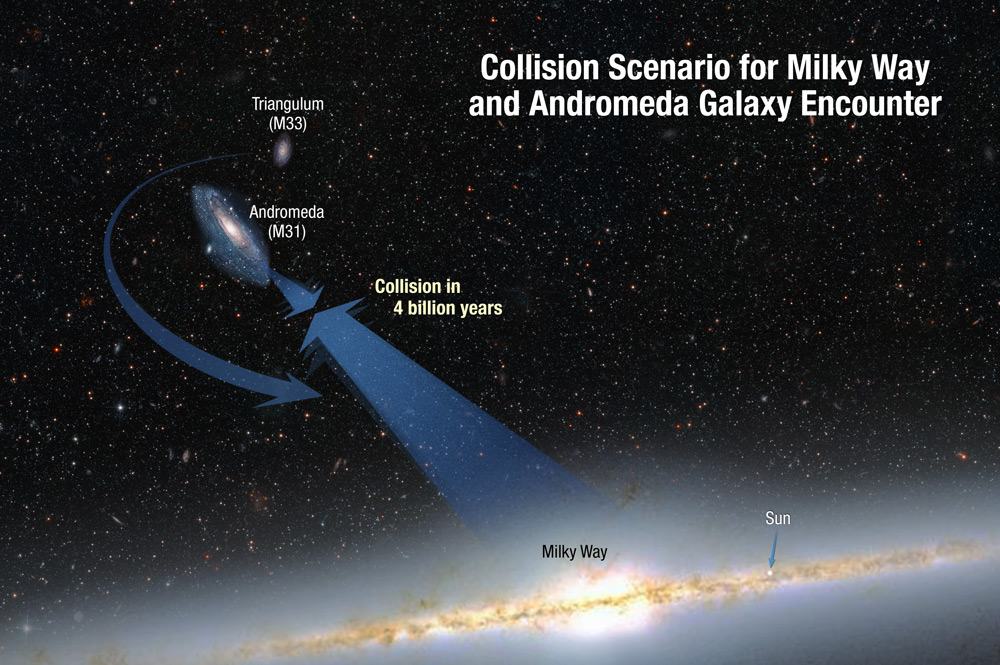
- Relation to nearby giants: M33 may be gravitationally influenced by Andromeda and is an important neighbour to the Milky Way for comparative studies.
For observational details, finder charts and deep images consult major catalogs and observing guides via authoritative resources (see background links and survey collections). Additional technical data and images are available in astronomical databases and publications referenced by professional observatories and sky atlases on spiral galaxy studies.
Questions and answers
Q: Where is the Triangulum Galaxy located?
A: The Triangulum Galaxy is located approximately 3 million light-years away from Earth in the constellation of Triangulum.
Q: How many galaxies are in the Local Group, which includes the Milky Way galaxy and Andromeda galaxy?
A: The Local Group of galaxies, which includes the Milky Way galaxy and Andromeda galaxy, consists of around 50 other smaller galaxies.
Q: What nicknames does Messier 33 share with another Messier object?
A: Messier 33 (also known as NGC 598) shares a nickname with Messier 101 - 'the Pinwheel Galaxy'.
Related articles
Author
AlegsaOnline.com Triangulum Galaxy (M33) Leandro Alegsa
URL: https://en.alegsaonline.com/art/101446
Sources
- arxiv.org : astro-ph/0503058
- ui.adsabs.harvard.edu : 2005Sci...307.1440B
- doi.org : 10.1126/science.1108342
- pubmed.ncbi.nlm.nih.gov : 15746420
- ui.adsabs.harvard.edu : 2004AJ....127.2031K
- doi.org : 10.1086/382905
- wikidata.org : wikidata.org/wiki/Q13724
- d-nb.info : 4241985-2
- id.loc.gov : sh2001005850
- viaf.org : 243527874
- worldcat.org : 243527874