
Titanium alloy: properties, uses and manufacturing
Alloys of titanium with added elements that combine high strength, low density and corrosion resistance; widely used in aerospace, medical implants and specialty engineering despite high cost.
Overview
Titanium alloys are engineered metals formed by combining elemental titanium with other chemical elements. The resulting materials are prized for a combination of high strength and relatively low density, yielding excellent strength-to-weight ratios. They are a distinct family of materials used where lighter weight, corrosion resistance and performance at elevated temperatures are important.
Image gallery
10 Images






Key characteristics
Common attributes include strong mechanical properties such as high tensile strength, good fracture toughness and useful behavior at high temperatures. Titanium alloys are notably lightweight compared with many steels and show excellent corrosion resistance in many environments. Different alloy compositions and heat treatments produce a range of microstructures and properties suited to particular tasks.
Types and production
Alloys are commonly classified by phase content (for example, alpha, beta and alpha‑beta types) and processed by melting, forging, rolling and specialized heat treatments. Manufacturing requires careful control because titanium reacts readily with oxygen and other gases at high temperature, and machining or welding can be more challenging than for more conventional metals. These processing demands contribute to higher production costs.
Applications and examples
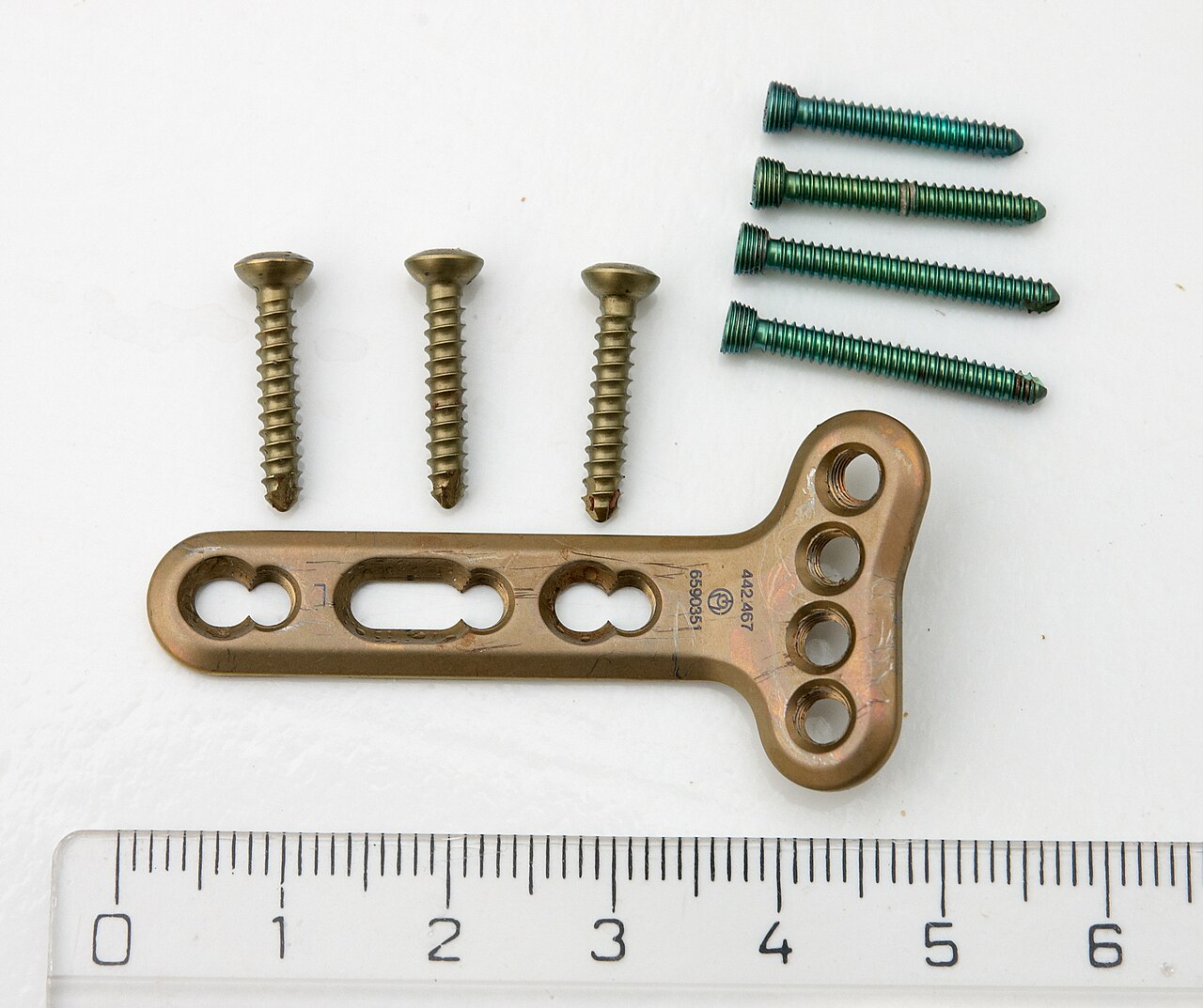
Because of their performance, titanium alloys appear in demanding fields such as aircraft and spacecraft structures, where every unit of mass saved improves efficiency. They are used in military systems, medical implants and surgical instruments, and in motorsport parts like connecting rods on sports cars. Smaller-volume uses include high-end sporting goods and some consumer electronics components.
Advantages, limitations and notable facts
Titanium alloys offer long service life in corrosive environments and good biocompatibility for implants. Limitations are primarily economic: raw material and processing costs are higher than for steels or aluminum, which restricts their use to applications where performance justifies expense. Recycling is feasible and practiced in many supply chains to reduce cost and environmental impact.
Further reading and resources
- Alloy composition and metallurgical basics
- Mechanical testing and properties overview
- High-temperature behavior and applications
- Common alloying elements and their roles
- Comparisons with other lightweight metals
For practitioners and designers, selecting an appropriate titanium alloy involves balancing strength, ductility, corrosion requirements and cost. When weight savings, durability and performance at temperature are essential, titanium alloys are often the leading choice.
Related articles
Author
AlegsaOnline.com Titanium alloy: properties, uses and manufacturing Leandro Alegsa
URL: https://en.alegsaonline.com/art/100120