
Mixture (chemistry)
A mixture is a physical combination of two or more substances (elements or compounds) that retain their individual properties and can usually be separated by physical methods.
Overview
In chemistry, a mixture is a material system made from two or more distinct substances physically combined but not chemically bonded. The components may be elements or compounds, and they do not necessarily occur in fixed proportions. Mixtures occur in everyday life, industrial processes, and natural environments.
Image gallery
5 Images



Characteristics
A mixture differs from a pure substance because each component keeps its own chemical identity and properties. Physical methods—such as stirring, heating, filtration, or evaporation—can often separate the parts. Concentrations are used to describe relative amounts; common measures include mass percent or volume fraction.
Types and examples
- Homogeneous mixtures (solutions): composition is uniform throughout, e.g., salt dissolved in water or alloys of metals.
- Heterogeneous mixtures: distinct regions or phases are visible, e.g., sand in water, salad dressings, or soil.
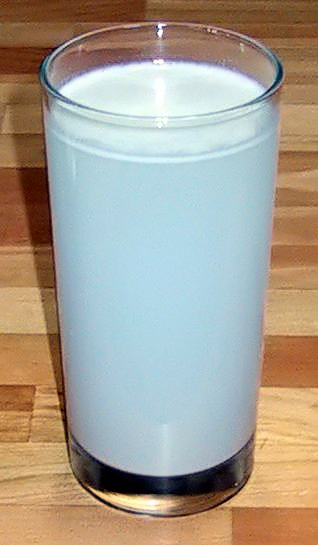
- Special classes: colloids (milk), suspensions (muddy water), and emulsions (oil in water).
- Mixtures can be of liquids, solids, or gases; air is a common gaseous mixture.
Separation methods
- Filtration and decanting for solids from liquids.
- Distillation for components with different boiling points.
- Chromatography and centrifugation for fine separations.
Understanding mixtures is fundamental in both basic science and technology—from designing pharmaceutical formulations to treating water and developing alloys. For further reading, see introductory texts in components and mixtures and resources on chemical principles.
Notable distinctions include the difference between mixtures and chemical compounds: mixtures require physical separation while compounds require chemical reactions to break bonds. Historical practices such as metallurgy and brewing were early applied uses of mixture manipulation, long before modern analytical methods refined how we characterize and control them.
Questions and answers
Q: What is a mixture in chemistry?
A: In chemistry, a mixture is a substance that is made up of two or more simpler substances.
Q: What are the simpler substances that make up a mixture?
A: The simpler substances that make up a mixture can be chemical elements or compounds.
Q: What forms can a mixture be in?
A: A mixture can be made of liquids, solids, or gases.
Q: Can a mixture be made up of only one substance?
A: No, a mixture is made up of two or more simpler substances.
Q: Are all mixtures homogeneous?
A: No, not all mixtures are homogeneous. Some mixtures are heterogeneous.
Q: Can a mixture be separated into its individual components?
A: Yes, a mixture can be separated into its individual components using various physical and chemical methods.
Q: How are mixtures different from pure substances?
A: Mixtures are different from pure substances because pure substances are made up of only one type of atom or molecule, whereas mixtures are made up of two or more different types of atoms or molecules.
Related articles
Author
AlegsaOnline.com Mixture (chemistry) Leandro Alegsa
URL: https://en.alegsaonline.com/art/65614