
Timer (timekeeping device)
A timer is a device that measures, counts down, or signals periods of time. Types include mechanical, electronic, and software timers used for cooking, industry, research, and everyday automation.
A timer is a device designed to measure or indicate the passage of a specific interval of time. Closely related to a clock, a timer focuses on intervals rather than continuous timekeeping. Some timers are built to count elapsed time, while others are set to run until a chosen end point and then signal that the interval has finished. The basic purpose is measurement and notification, whether by sound, light, movement, or an electrical action.
Image gallery
2 Images
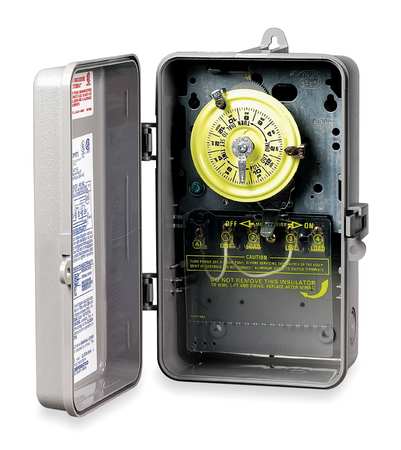
Types and characteristics
Timers vary by mechanism and function. Common categories include:
- Stopwatches — instruments that count upwards from zero to record elapsed time; often called a stopwatch.
- Countdown timers — devices set to a predetermined interval that decrease until zero and then trigger an alert.
- Mechanical timers — spring-driven or sand-based instruments such as an hourglass that require no electricity.
- Electronic timers — use quartz oscillators, microcontrollers, or software to maintain accurate intervals and complex scheduling.
- Time switches — timing mechanisms that activate a switch to control circuits, lighting, or appliances, sometimes called time switches.
History and development
Simple interval devices predate mechanical clocks: the hourglass and clepsydra (water clock) were early ways to segment time. With mechanical clockwork, compact timers became possible for cooking, navigation, and industry. The 20th century saw electronic and digital timers emerge, improving precision and programmability. Contemporary systems may integrate timers in software, embedded controllers, or networked building management.
Uses and examples
Timers are ubiquitous in daily life and specialized fields. In kitchens they warn when food is done; in sports they measure performance; in laboratories they control experiment durations. Industrial timers manage manufacturing sequences and safety interlocks. Many alarms and notifications rely on a timer that provides an audible or visual signal when time is up, or a linked device like an alarm is triggered.
Notable distinctions and practical considerations
Important distinctions include counting up versus counting down, manual versus automatic reset, and analog versus digital displays. Some timers are simple and single-purpose, while others offer programmable cycles, multiple channels, and networked control. In electrical applications, a timer that activates a switch must meet safety and reliability standards. For more on measurement and timing technology, see resources about measuring time.
Overall, timers serve as fundamental tools for organizing activities, ensuring safety, and coordinating processes wherever precise or repeatable intervals are required.
Related articles
Author
AlegsaOnline.com Timer (timekeeping device) Leandro Alegsa
URL: https://en.alegsaonline.com/art/99963