
Toner (printer and photocopier)
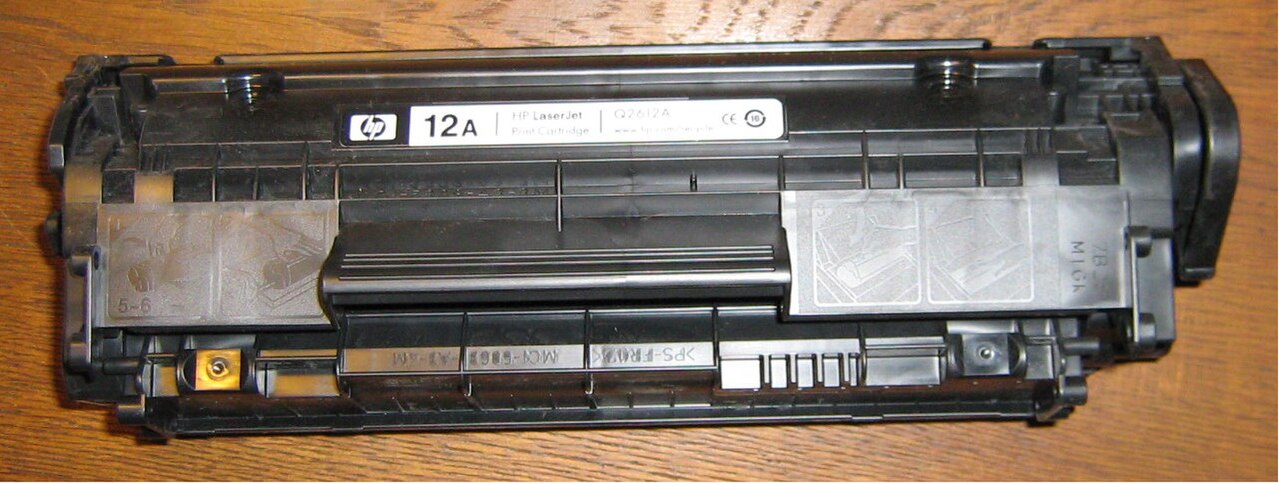
Toner is a powdered imaging material used in photocopiers and laser printers. Modern toners combine pigment with polymer and additives, are supplied in sealed cartridges, and are fixed to paper by heat and pressure.
Toner is a fine powdered material used to form text and images in electrostatic printing devices such as photocopiers and laser printers. The powder is transferred to a sheet of paper and is then fused by heat and pressure so the image is durable and resistant to smudging. Early toners were simple carbon powders but contemporary formulations are engineered blends designed for reliable charging, transfer and fusing.
Image gallery
3 Images

Composition and types
Most modern toners consist of a pigment or carbon base combined with a polymer binder and various additives. Typical components include:
- Pigments or carbon for color and opacity.
- Polymer or thermoplastic binders that melt in the fuser to adhere toner to the sheet.
- Charge control agents, flow aids and sometimes magnetic materials for developer systems.
There are distinctions such as pulverized toners (traditional ground particles), polymerized toners made by chemical processes for narrower size distribution, and liquid toners used in some types of electrophotographic presses. Each type affects print resolution, color uniformity and toner consumption.
How toner works in a printer
Electrostatic printing uses a photoconductor (drum or belt) that is uniformly charged. Exposure to light selectively discharges areas corresponding to the image, creating a latent electrostatic image. Toner particles are attracted to charged regions, transferred to paper and then permanently fixed when the paper passes through a heated fuser. Early devices required users to pour toner into an internal reservoir, but modern machines typically use sealed cartridges containing toner and sometimes the developer unit, making handling cleaner and simpler.
Cartridges, refilling and recycling
Sealed cartridges are usually proprietary to a manufacturer and may combine toner, a photoconductive drum and other components. Empty cartridges are commonly collected for recycling or remanufacture; some third-party vendors also refill them. Consumers are advised to follow manufacturer guidance or certified recycling programs because improper refilling can cause print defects and may void warranties. Recycling programs aim to reduce waste from used cartridges and recover plastics and metals.
Safety, handling and environmental considerations
Toner is composed of very small particles; accidental spills should be cleaned with a damp cloth or a vacuumspecified for fine powders to avoid inhalation and airborne dust. Manufacturers provide safety data sheets describing composition and safe handling. Environmental concerns include resource use and waste from cartridges; many suppliers offer take-back and recycling services. Choosing remanufactured cartridges from reputable providers can reduce environmental impact, but quality and compatibility vary.
Print quality and troubleshooting
Toner particle size and shape affect sharpness, color consistency and gloss. Polymerized toners tend to produce smoother solids and better control of dot gain for high-quality printing. Common user issues include streaks, faded areas, or excess toner in the waste collection box; these often relate to worn cartridges, clogged transfer paths or fuser problems and are typically addressed by replacing the cartridge or servicing the device.
Distinction from inkjet ink
Toner is a dry, powdery medium fixed by heat and pressure, whereas inkjet systems use liquid inks that are deposited wet and then dried. This fundamental difference affects media compatibility, drying time, resistance to water and typical application areas: toner-based printing is common for fast, durable office output and high-volume monochrome and color work.
Questions and answers
Q: What is toner?
A: Toner is a powder used in photocopiers and laser printers to draw images and text onto paper.
Q: What were the early forms of toner made of?
A: The early forms of toner were just carbon powder.
Q: What do modern toners mix carbon with?
A: Modern toners mix carbon with a thermoplastic and other materials.
Q: How did users in early machines use toner?
A: In early machines, the user had to pour the toner into a reservoir on the machine itself.
Q: How do current machines feed toner?
A: Current machines feed from a sealed cartridge which is normally a proprietary design.
Q: Are empty cartridges ever refilled by third-party vendors?
A: Yes, although manufacturers try to make the process complicated, empty cartridges are sometimes refilled by third-party vendors.
Q: How are toner particles bound to paper?
A: Toner particles are melted by the heat of the fuser, and bind to the paper.
Related articles
Author
AlegsaOnline.com Toner (printer and photocopier) Leandro Alegsa
URL: https://en.alegsaonline.com/art/100517