
Mechanism: devices, systems and explanatory processes
Concise reference on mechanisms: physical devices, assemblies and conceptual explanations. Covers definition, components, historical development, practical examples, scientific uses and key distinctions.
A mechanism is any arrangement of parts or processes that produces a predictable effect or performs a task. In everyday use the term covers physical devices such as tools and machines, assemblies of moving components, and also abstract explanations that describe how a phenomenon arises. Because the word spans hardware and ideas, it is applied to simple implements, engineered systems and theoretical accounts in science and social inquiry.
Image gallery
4 Images
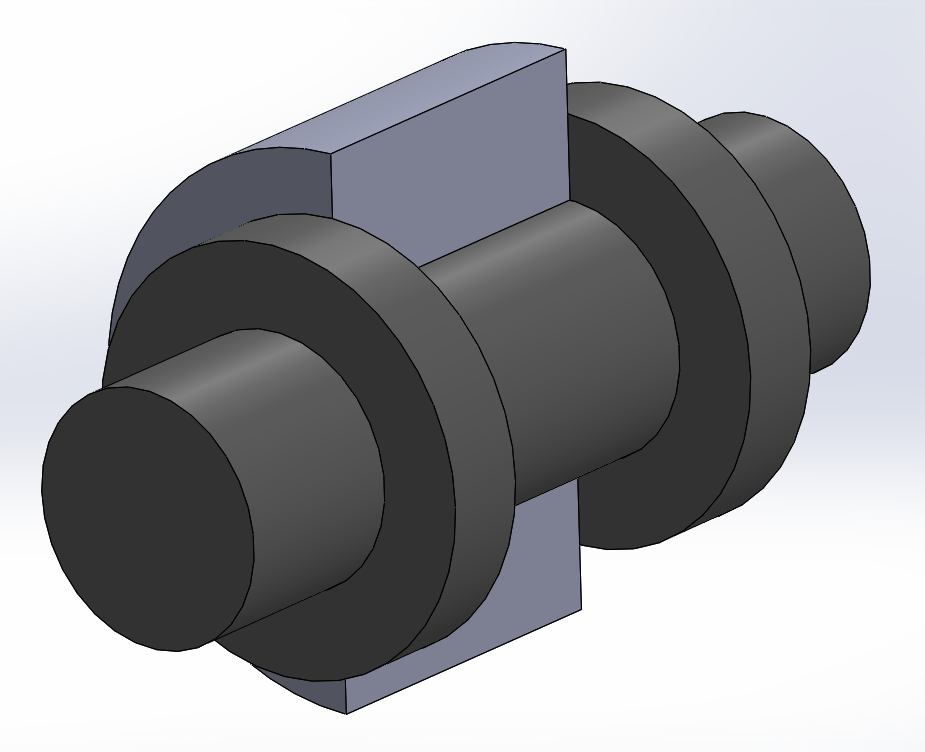


Characteristics and common types
Mechanisms can be characterized by their function (what they do), their structure (how parts interact) and the energy or information that drives them. Familiar categories include simple machines (lever, pulley, wheel and axle), coupled linkages (gear trains and cams), fluid- and thermodynamic mechanisms (pumps and heat engines), and information-processing mechanisms (algorithms and control systems). Mechanisms may be static and structural, dynamic and kinetic, or algorithmic and procedural.
Historical development and examples
Human use of mechanisms stretches back to prehistoric times: early stone tools and shaped implements allowed people to apply force more efficiently. Over millennia artisans and engineers developed basic mechanical principles — levers, inclined planes, wheels — that underlie many devices. The industrial era introduced complex machines such as steam and internal combustion engines that convert chemical or thermal energy into motion. In the late 20th and 21st centuries, mechanisms also include electronic and computational systems such as microprocessors and global networks that coordinate vast flows of information.
Mechanism as explanation
Beyond physical artifacts, scientists and scholars use “mechanism” to mean a process or set of interactions that explains how an outcome occurs. For example, Newtonian gravitation and Keplerian laws form a mechanism for predicting planetary motion; in biology, natural selection is presented as a mechanism for evolutionary change. Treating mechanisms as explanatory models emphasizes causal components and the interactions that link causes to effects.
Uses, importance and methods
Identifying mechanisms is central to engineering design, troubleshooting and scientific explanation. Engineers design and assemble mechanisms to transform inputs into desired outputs. Researchers seek to uncover mechanisms to test hypotheses, build predictive models, or intervene in systems. Methods include decomposition of systems into parts, controlled experiments, modeling and simulation, and comparative analysis across cases.
Distinctions and notable points
It helps to distinguish a mechanism from a mere description or a black-box function: a mechanism explains internal operation rather than only mapping inputs to outputs. Mechanisms can be deterministic or probabilistic, simple or emergent when many interacting parts produce unexpected behavior. Understanding limitations — scale dependence, context sensitivity and assumptions in models — is important when transferring a mechanism from one domain to another.
Further links and related topics
- Tools and hand implements — overview
- Machines and machine design
- Examples of mechanical objects
- Processes and workflows
- Concepts and theoretical frameworks
- Palaeolithic technology and early tools
- Hand axes and archaeological examples
- Pulleys and simple lifting mechanisms
- Levers and mechanical advantage
- Internal combustion and power generation
- Fuels and energy sources
- Computers as information-processing mechanisms
- The web and distributed systems
- Metaphors and linguistic uses of 'mechanism'
- Celestial mechanics and classical physics
- Planetary motion and orbital dynamics
- Solar System models
- Darwin and historical scientific theories
- Natural selection as a causal account
- Evolutionary theory and mechanisms
- Mechanisms in scientific practice
- Technological applications and engineering
- Explanations, models and causal inference
Questions and answers
Q: What is a mechanism?
A: A mechanism is a mechanical device for doing something.
Q: What does the term 'mechanism' include?
A: The term 'mechanism' includes the idea of tools and machines, but is used for a wider range of objects, processes and ideas.
Q: What were one of the first tools used by humans?
A: Palaeolithic hand axes were one of the first tools used by humans.
Q: What are some examples of simple modern mechanisms?
A: Some examples of simple modern mechanisms are rope pulleys or levers.
Q: What is the internal combustion engine?
A: The internal combustion engine is a mechanism for turning oil into motion.
Q: What is a complicated example of a mechanism?
A: A complicated example of a mechanism would be computers and the web.
Q: What does the term 'mechanism' also refer to?
A: The term 'mechanism' also refers to a metaphor for an explanation of how something works or might work in science or technology, such as the celestial mechanics of Kepler and Newton or Darwin's natural selection as his proposed mechanism for how evolution took place.
Related articles
Author
AlegsaOnline.com Mechanism: devices, systems and explanatory processes Leandro Alegsa
URL: https://en.alegsaonline.com/art/63357