
Stopwatch — handheld device for measuring elapsed time
A stopwatch records elapsed time for short intervals. Articles cover types, operation, history, common uses (sports, labs, industry), and differences between mechanical and digital models.
Overview
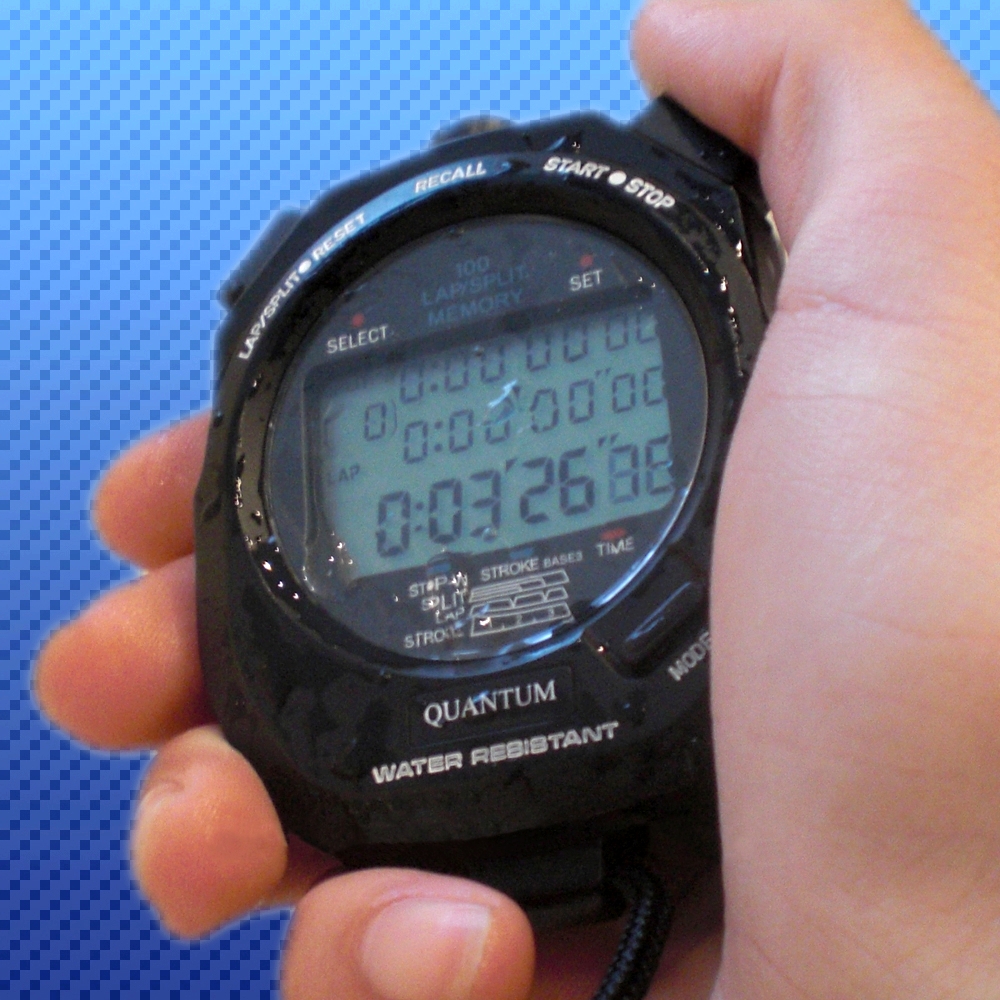
A stopwatch is a handheld or built-in timing instrument used to measure the length of an event. It reports elapsed time with resolution ranging from whole seconds down to hundredths or thousandths of a second. Modern implementations appear as standalone devices, dedicated chronographs, functions in digital watches, or apps on smartphones.
Image gallery
10 Images




Design and operation
Basic operation is simple: a user presses a button to start timing and presses it again to stop. Most stopwatches add a reset control and a lap or split feature that lets users record intermediate times without stopping the overall measurement. Typical readouts display hours, minutes, seconds, and fractional seconds; some instruments also show date, countdowns, or stored memory.
Types and characteristics
- Mechanical stopwatches: spring-driven with analog dials and a mechanical escapement; they are prized for tactile feedback and classic design.
- Digital stopwatches: quartz-based electronics provide higher precision, easier readouts, and additional functions such as data logging and multiple splits.
- Integrated timers: many sports timing systems, fitness trackers and phones include stopwatch functions for convenience and connectivity.
History and development
Devices for timing short intervals evolved from early mechanical chronographs and precision clocks. In the 19th and 20th centuries, specialized timing instruments became common for scientific experiments and competitive sports. Advances in quartz electronics and microprocessors in the late 20th century transformed accuracy, miniaturization, and features, moving many users from mechanical pocket stopwatches to multifunction digital units.
Uses and examples
Stopwatches are used wherever precise interval timing is needed: athletic performance (for example timing a sprinter or measuring a car's 0–60 mph acceleration), laboratory experiments, industrial process timing, and everyday tasks like cooking. Coaches and officials rely on split/lap functions to compare segments, while engineers use high-resolution models to benchmark components.
Notable distinctions and practical considerations
Accuracy depends on design and human factors: mechanical models are susceptible to wear and operator reaction time, while digital quartz instruments reduce mechanical error but can still be limited by sampling rates. When very high precision is required, specialized timing systems synchronized to reference clocks or photofinish equipment are used rather than a handheld unit. For more about practical selection and calibration, see other resources linked here: vehicle testing, athletic timing, and general timing methods controls.
Further reading and tools include manufacturer guides and timing standards; for quick reference on definitions and common features consult a general timing overview tool summary or a digital-device comparison feature list.
Related articles
Author
AlegsaOnline.com Stopwatch — handheld device for measuring elapsed time Leandro Alegsa
URL: https://en.alegsaonline.com/art/94085