
Beauty: concepts, theories, perception, and cultural meaning
Overview of beauty as a perceptual and evaluative concept: philosophical theories, psychological and biological basis, cultural variation, domains (art, nature, writing, music) and practical distinctions.
Overview
Beauty is a term used to describe qualities that produce pleasure, admiration or deep interest when perceived. It applies across sensory modalities — sight, sound, touch, taste and smell — and extends to ideas and experiences. As an evaluative concept, beauty mixes immediate sensation with memory, expectation and learned associations. Different traditions treat beauty as an objective property, an emotional response, or a social construct.
Image gallery
9 Images


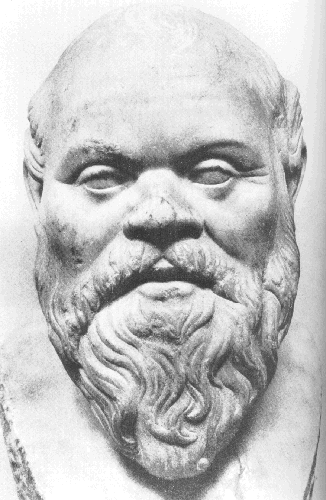
Theories and commonly cited criteria
Scholars and everyday observers propose several overlapping ways to think about what makes something beautiful. These include:
- Resemblance or realism: objects that faithfully represent a subject can be judged beautiful, for example a realistic picture admired for its likeness to the original.
- Ideal form and expectation: beauty may be measured against a mental standard or prototype, such as a broadly pleasing tree shape like a classic tree with a straight trunk and abundant leaves.
- Emotional effect: an object’s power to move us — making us happy, melancholic or awed — is often central; consider a piece labelled as emotionally striking.
- Formal qualities and craftsmanship: balance, proportion, harmony, contrast and technical skill matter in art, design and literature; a finely told tale may be called a beautiful story.
Biological and psychological perspectives
Experimental psychology and evolutionary biology seek proximate and ultimate explanations. Proximately, sensory systems favour certain patterns: symmetry, contrast and smooth gradients are easier to process and often judged pleasing. Ultimately, some propose that these preferences signalled health, fertility or reliability in ancestral environments, though the degree to which evolution fixes aesthetic taste is debated. Cognitive factors — attention, familiarity, and cultural learning — also shape responses; the same melody can be moving in one culture and neutral in another, while a piece of music may be experienced as beautiful because of structure and timing.
Cultural variation and historical development
Concepts of beauty shift across time and place. Standards that are dominant in one era or culture can be rejected in another. Art movements, religious values and social norms influence which traits are desirable. Historical styles illustrate changing ideals: classical balance and symmetry, the expressive distortions of some modern art, or culturally specific ornamentation. What a community labels beautiful often supports identity, ritual or moral frameworks rather than a single universal formula.
Domains and examples
Beauty is discussed across multiple domains, each with distinct criteria:
- Visual arts and design: composition, color, proportion and technique.
- Nature: patterns, seasonal changes, and landscapes; clouds may be admired for softness and shape, sometimes likened to wool.
- Music and sound: melody, harmony and expressive timing can produce profound emotional responses (music).
- Literature and speech: vivid imagery, rhythm and insight create aesthetic pleasure (stories and poetry).
- Everyday objects: functional items gain beauty through simplicity, durability and considerate detail.
Notable distinctions and concluding remarks
It is crucial to separate beauty as an observed property from beauty as a feeling. The same object can be described as beautiful in formal terms while failing to evoke emotion in some observers. Philosophers distinguish aesthetic judgement from moral or practical judgement, though the categories sometimes overlap. Finally, debates continue about whether non‑human animals experience beauty or whether beauty is uniquely human; the answer depends on how broadly one defines aesthetic experience. For practical purposes, appreciating beauty involves perception, context and meanings created by individuals and communities.
For further reading on related examples and case studies see links to illustrative material: realistic art, trees, trunks, soft textures, emotional aesthetics, music and narrative craft.
Questions and answers
Q: What is beauty?
A: Beauty is a subjective concept. It is a feeling that can vary from person to person and culture to culture, and it is not known if only humans can feel it.
Q: Are there any ideas about what beauty is?
A: Yes, there are many ideas about what beauty is. Some people say that beauty can be the similarity between a real object and an object of art, the similarity between any object and what you think it 'should' look like, or the way an object makes us feel (happy, sad, angry). Additionally, some people believe that beauty can be found in the quality of an object such as writing which may be beautiful through use of intricacies and depth which gives the reader a mental image or certain feelings or emotions.
Q: Is there anything else that people consider to be beautiful?
A: Yes, there are other things that people consider to be beautiful which cannot necessarily be explained by any of these ideas.
Related articles
Author
AlegsaOnline.com Beauty: concepts, theories, perception, and cultural meaning Leandro Alegsa
URL: https://en.alegsaonline.com/art/9949