
Picture (image): definition, types, history and uses
An overview of pictures (images): what they are, how they are made, key types and characteristics, a brief history from early art to digital imaging, and common uses and distinctions.
Overview
A picture, often called an image, is a visual representation that stands for a person, object, scene or idea. It is made up of elements such as color, tone and shape across a surface so that it appears to resemble something else. Pictures can be created by hand or by optical and electronic devices; they may be realistic or abstract and are used to communicate, record, decorate or persuade.
Image gallery
6 Images
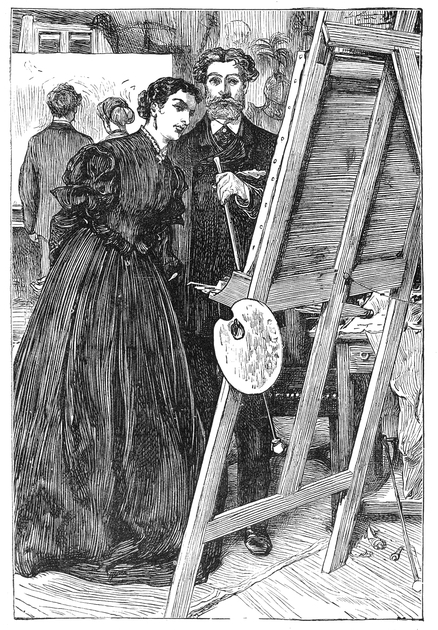


Common characteristics and how pictures are made
Pictures differ by medium, scale and method of reproduction. Traditional media include drawings and paintings, while modern methods include chemical and digital photography. Practitioners range from artists who compose images by hand to photographers and digital creators who capture or render images with devices and software.
Optical systems such as the lens can form an image of an object at a different location; cameras and other recording devices use that principle to produce photographs. Electronic displays such as television and computer screens present images as patterns of light. In digital contexts an image may be stored as pixels (raster) or constructed from mathematical shapes (vector).
History and development
The act of making images is ancient; early humans produced paintings and engravings to record scenes and beliefs. Over centuries, techniques evolved through advances in pigments, optics and mechanical reproduction. The development of practical photographic processes in the 19th century enabled direct chemical capture of light, and the late 20th century brought digital imaging, which transformed creation, editing and distribution.
Uses and examples
Pictures serve many practical and cultural roles. They can illustrate instructions, explain complex systems and record events. As the proverb says, a picture is worth a thousand words, because images often convey information more quickly than text. Typical uses include:
- Communication and journalism — photographs and illustrations that document people and events.
- Education and explanation — diagrams, charts and annotated images that teach how things work.
- Art and expression — paintings, prints and digital art that explore form and meaning.
- Science and engineering — images used for measurement, microscopy and remote sensing.
- Everyday tools — icons, maps and photos used in user interfaces and commerce, where images act as a tool for navigation and decision making.
Distinctions and notable facts
In casual use "picture" and "image" are interchangeable, but technical contexts may distinguish them: an "image" can be any visual data file or optical reproduction, while a "picture" often implies an intended representation. Pictures can be representational (showing an identifiable subject) or non-representational (abstract). They can be produced, copied and modified in many ways: painted by hand, captured by cameras, scanned, rendered digitally or projected by devices such as the camera obscura. Whether a painting in a gallery or a photo on a screen, the basic purpose is the same: to make visible what might otherwise be unseen.
For further reading on specific techniques and historical periods, see resources on color and perception, picture-making tools and the technologies behind photographic capture and digital display: color, surface, composition, representation, drawing, painting, artists, photographers, proverbs, diagrams, tools, television, computer, lens, object and cameras.
Questions and answers
Q: What is a picture?
A: A picture is a group of coloured points on a flat surface that resembles something else.
Q: What are some examples of pictures?
A: Drawings, paintings, and photographs are examples of pictures.
Q: What do we call people who make pictures?
A: People who make pictures are called artists, photographers, or painters.
Q: Why are pictures helpful?
A: Pictures are helpful because they can be used to explain things, sometimes better than words.
Q: What is the phrase "a picture is worth a thousand words" mean?
A: This phrase means that a picture can convey a lot of information or emotion without needing many words.
Q: What is an image?
A: An image is something that can be seen, but it is not physically there.
Q: How do cameras create images?
A: Cameras create images by using a lens to make the image of an object appear somewhere else, which becomes a photograph.
Related articles
Author
AlegsaOnline.com Picture (image): definition, types, history and uses Leandro Alegsa
URL: https://en.alegsaonline.com/art/76753