
Bhangra: energetic folk dance of Punjab and its modern global forms
Bhangra is a high-energy Punjabi folk dance rooted in harvest celebrations. Known for dhol-led rhythms, athletic steps and colourful costume, it survives as traditional village styles and modern global fusions.
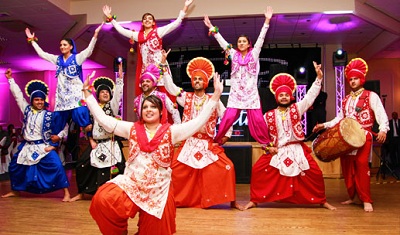
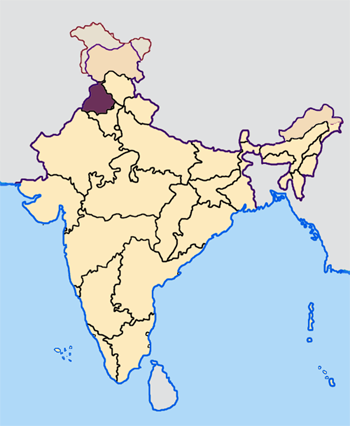
Bhangra is a dynamic folk dance that developed in the agricultural region of Punjab. It arose as a celebratory music-and-dance form associated with harvests and seasonal festivals such as Vaisakhi, and is recognised for vigorous jumps, shoulder and arm movements, strong footwork and an infectious rhythmic drive. Performances combine group formations, sung refrains and instrumental beats to create a lively social spectacle.
Image gallery
7 Images



Origins and regional traditions
Local variants of bhangra emerged across villages and districts of the Punjab. The rural tradition associated with the Sialkot area is often cited as a model of the village style and is regarded as a standard reference for older forms (Sialkot district). In parts of Indian Punjab, community forms have been preserved in places such as Gurdaspur and Hoshiarpur, where performances may be arranged in circles, lines or linked formations. Historically bhangra was performed by farming communities, with male dancers wearing colourful kurtas and turbans and performing energetic, acrobatic steps.
Music and instruments
Music is central to bhangra. The dhol — a large double-headed drum — provides the dominant tempo and punch that characterises the genre. Other traditional instruments commonly used include the single-stringed tumbi, the chimta (a metal percussion implement with jingles), and wind instruments such as the algoza. Vocals often appear as call-and-response lines or short sung couplets that accompany the dance.
Costume, steps and performance
Traditional costume varies by locality but typically features bright colours and practical garments suited to lively movement. Common elements include turbans (pagri), long kurtas and sashes; in contemporary performances costumes may be adapted for stage aesthetics. The movement vocabulary emphasises buoyant, athletic gestures—leaps, kicks, strong arm patterns and coordinated group choreography—that express communal joy and the optimism associated with a successful harvest.
Modern evolution and global spread
During the 20th and 21st centuries bhangra spread with Punjabi diasporas to the United Kingdom, Canada and other countries. In diaspora communities bhangra evolved into theatrical stage forms, competitive team routines and popular-music fusions that mix Punjabi rhythms with electronic, hip-hop and pop elements. The term "bhangra" is therefore used both for village-origin styles and for a wide range of modern hybrid practices.
Functions, competitions and preservation
Today bhangra remains a living cultural practice: it marks rites of passage and community festivals, appears in concerts and stage shows, and features in university and cultural-competition circuits. Ensembles and cultural organisations teach traditional sequences alongside contemporary choreographies, and scholars, musicians and community groups work to document regional styles and maintain links between rural heritage and modern expression.
Whether presented as a traditional village performance, a competitive team routine or a fusion stage show, bhangra continues to be one of the most recognisable and energetic expressions of Punjabi cultural life, adapting while retaining core musical and movement elements.
Questions and answers
Q: What is Bhangra?
A: Bhangra is an Indian dance from the Punjab.
Q: Where is Bhangra most famous?
A: Bhangra is most famous in the Punjab.
Q: Where has Bhangra spread to?
A: Bhangra has spread to other parts of the subcontinent, and to other countries such as the U.K.
Q: What is the music like in Bhangra?
A: The music in Bhangra is a specific kind of upbeat song.
Q: What is the traditional form of Bhangra and where is it performed?
A: The traditional form of Bhangra danced in the villages of Sialkot district is regarded as the standard. The community form of traditional Bhangra has been kept in the Gurdaspur district, India, and in Hoshiarpur, Punjab, India.
Q: How is traditional Bhangra performed?
A: Traditional Bhangra is performed in a circle.
Q: Is Bhangra only performed in India?
A: No, Bhangra has spread to other countries such as the U.K.
Related articles
Author
AlegsaOnline.com Bhangra: energetic folk dance of Punjab and its modern global forms Leandro Alegsa
URL: https://en.alegsaonline.com/art/11172
Sources
- books.google.com : books.google.com/books?id=1WsMAQAAMAAJ&q=sialkot+bhangra+pure+form&dq=sialkot+bhangra+pur…
- books.google.com : Teens in Pakistan