
Torridonian: Proterozoic red sandstones of northwest Scotland
Torridonian refers to thick Proterozoic red sandstones and related sediments in NW Scotland that overlie ancient Lewisian gneiss and form the Torridon Hills and parts of Skye.
Overview
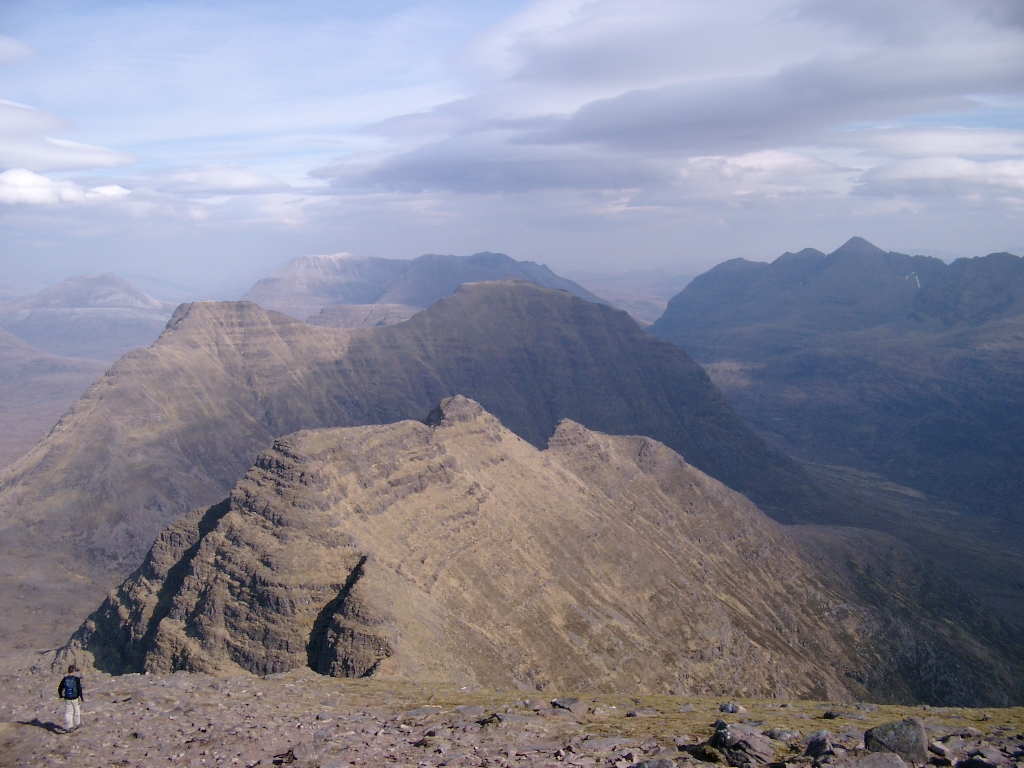
The Torridonian denotes a suite of ancient sedimentary rocks—chiefly coarse red sandstones—that occupy parts of the northwestern Scottish mainland and some islands. These rocks form the visually striking Torridon Hills in the district of Wester Ross and outcrops on portions of Skye. In map depictions the Torridonian is often shown as a distinctive unit; it rests unconformably atop much older basement rocks and preserves a record of surface conditions more than half a billion years ago.
Image gallery
6 Images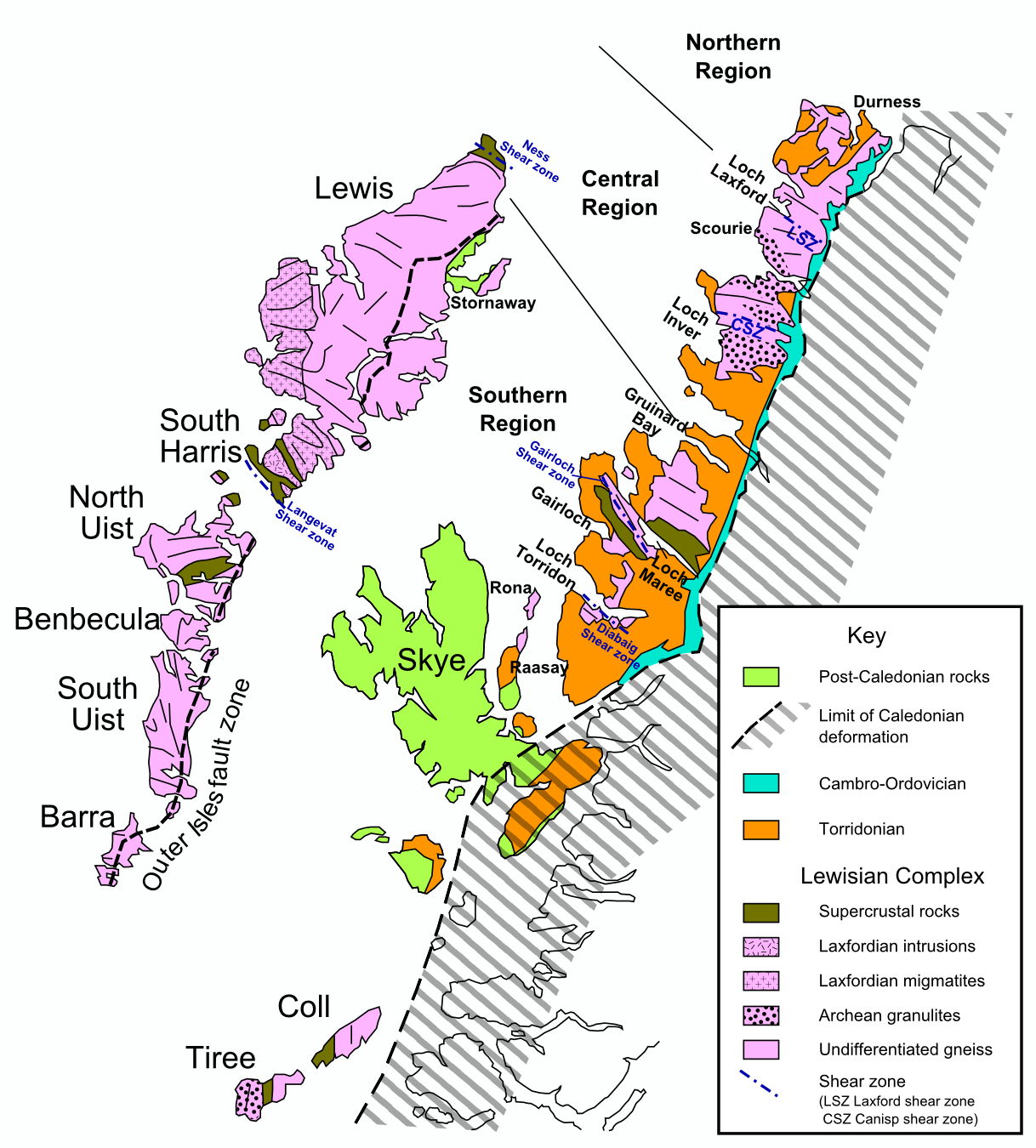


Composition and visible features
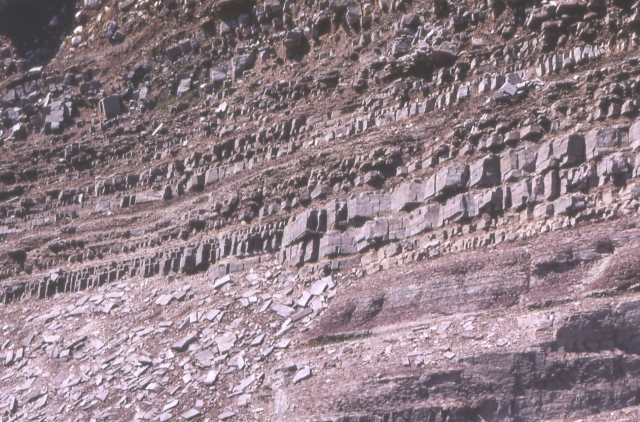
The dominant lithology is coarse sandstone, often red to reddish-brown in colour because of iron oxidation. The sequence also includes conglomerates and a basal breccia made of angular fragments derived from the underlying bedrock. Field exposures commonly show strong bedding, large-scale cross-stratification, ripple marks and desiccation cracks, indicating deposition by rivers and ephemeral lakes rather than deep marine conditions. These beds are typically termed red beds because of their colour and continental origin.
Geological setting and age
The Torridonian sits on top of the ancient Lewisian basement, a complex of highly metamorphosed and metamorphosed igneous rocks that record much older Earth history. Sedimentation of the Torridonian took place during the Proterozoic, a broad interval of geological time before the Cambrian. The deposits record long-lived river systems and sediment accumulation in a landscape of low, rocky highlands and intermontane basins—described here generally as a dry or seasonally wet landscape where coarse detritus could be shed into adjacent basins.
Tectonic history and later modification
After deposition the Torridonian sequence experienced burial, deformation and later uplift related to successive phases of rifting and mountain-building. These tectonic events controlled whether parts of the sequence were submerged beneath the sea or were raised into mountain ranges. Much of the present-day relief owes as much to relatively recent glacial sculpting as to the original rock strengths: glaciation accentuated peaks and valleys and exposed clean faces of Torridonian strata that are now familiar features of the mountains and glens.
Importance and study
The Torridonian is important for several reasons. It provides a window into continental environments on the Precambrian Earth, records provenance and erosion of ancient basement rocks, and preserves sedimentary structures that inform palaeoenvironmental reconstructions. The dramatic scenery formed by these rocks also makes them accessible natural laboratories for teaching and research, and they attract walkers and geotourists who can view large-scale bedding and coarse clastic textures in situ.
Key distinctions and notable facts
- The Torridonian is younger than the Lewisian basement but far older than typical fossil-bearing Phanerozoic rocks.
- Its basal breccia records intense erosion of the underlying Lewisian complex before renewed sedimentation.
- Biological fossils are scarce; most preserved evidence is physical (e.g., cross-bedding, mudcracks) rather than abundant body fossils.
- Later rifting and mountain-building episodes determined the present distribution: some deposits were buried beneath seas, others uplifted into the distinctive mountains.
- The Torridonian landscape remains a classic study area for understanding continental sedimentation during the Proterozoic.
For further reading on rock types, localities and geological context, consult regional guides and geological maps that discuss the Torridonian in relation to modern Scotland and specific field sites on Skye and in Wester Ross. General introductions to red-bed sedimentology and Precambrian geology provide useful background when approaching these ancient strata (sandstone, metamorphosed igneous rock descriptions and depositional models).
Questions and answers
Q: What is the Torridonian?
A: The Torridonian is a sedimentary sandstone which sits on top of the earliest rocks in Scotland.
Q: What colour is the Torridonian sandstone on the map?
A: The Torridonian sandstone is shown as orange on the map.
Q: Where is the Torridonian located?
A: The Torridonian is on the western edge of the mainland of Scotland and on part of Skye. Geographically, this is part of the district of Wester Ross.
Q: What kind of rock is under the Torridonian sandstone?
A: All the rock under the Torridonian sandstone is igneous and metamorphosed igneous rock.
Q: How did the Torridonian sandstone form?
A: The Torridonian sandstones were red beds laid down by rivers and lakes in a landscape of low rocky hills. A great thickness of red sandstone, brought in by rivers, buried the old hills. This took place in the Proterozoic, 1,200 to 544 million years ago (mya).
Q: Are there different groups of sandstone within the Torridonian?
A: Yes, there are older and younger sandstone groups within the Torridonian, with a long period between them.
Q: Where can some parts of the Torridonian sandstone be found due to tectonic movement?
A: As a result of later periods of rifting and mountain-building, some of the Torridian sandstone lies under the sea, and some of it is uplifted into mountains.
Related articles
Author
AlegsaOnline.com Torridonian: Proterozoic red sandstones of northwest Scotland Leandro Alegsa
URL: https://en.alegsaonline.com/art/100752
Sources
- books.google.com : The Geology of Scotland
- books.google.com : The later Proterozoic Torridonian rocks of Scotland: their sedimentology, geochemistry and origin