
Mesosphere: Earth's middle atmospheric layer
The mesosphere is the atmospheric layer between roughly 50 and 90 km altitude. It is cold, thin, hosts meteors and noctilucent clouds, and is difficult to study because it lies above aircraft and below typical satellite orbits.
Overview
The mesosphere is the layer of Earth's atmosphere that lies above the stratosphere and below the thermosphere. It begins at approximately 50 kilometers (about 30 miles) above the surface and extends upward to roughly 80–90 kilometers. Temperatures in the mesosphere fall with height, making it the coldest region of the atmosphere. Because of its altitude, the mesosphere is inaccessible to conventional aircraft and is below the altitudes where most satellites orbit, which has historically made it one of the least well-explored atmospheric layers.
Image gallery
9 Images




Characteristics and phenomena
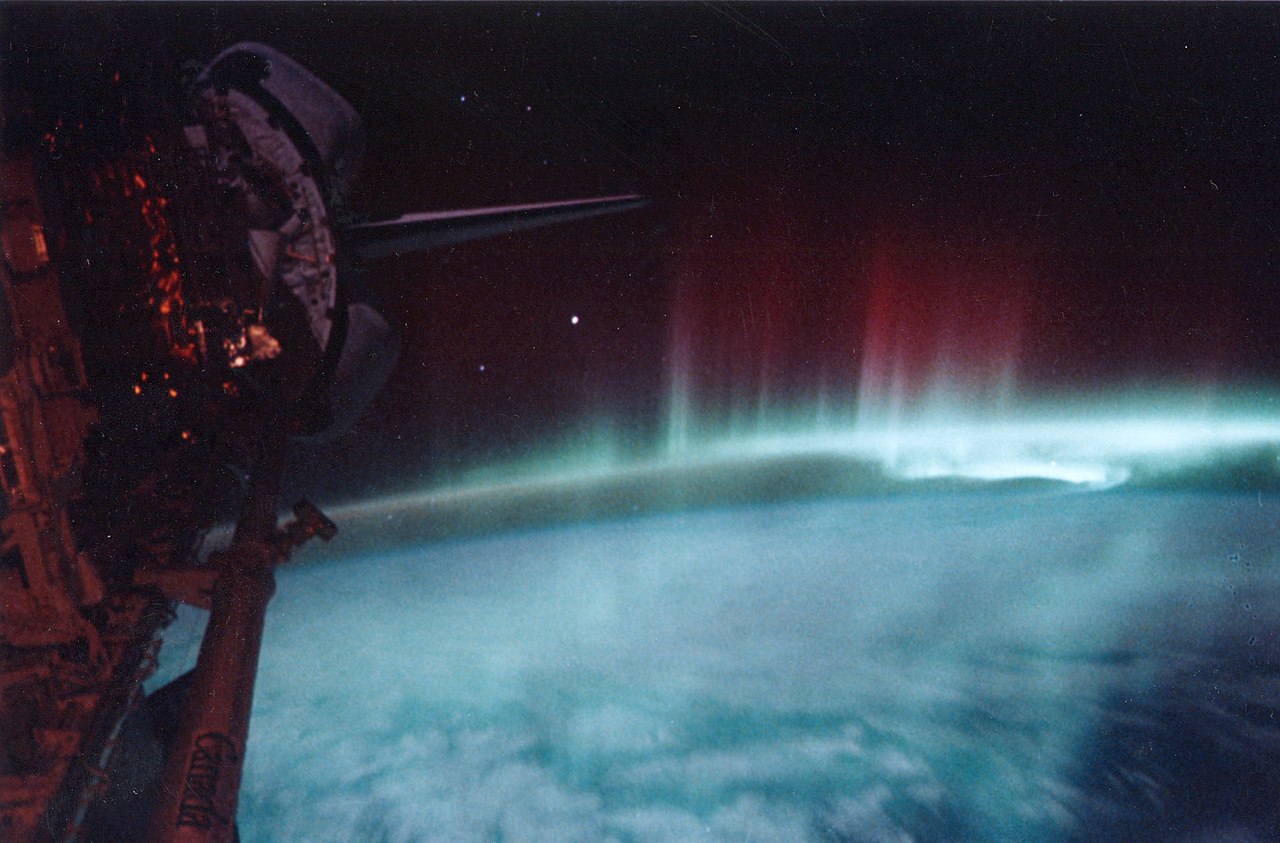
The mesosphere is characterized by low pressure and low density, with molecular nitrogen and oxygen remaining the dominant gases. Notable phenomena associated with this layer include:
- Meteor ablation: most meteors burn up in the mesosphere, producing visible streaks of light (shooting stars).
- Noctilucent clouds: rare, high-altitude clouds that form near the upper mesosphere under very cold, often polar-summer conditions.
- Strong temperature gradients: the mesosphere hosts the coldest average temperatures in Earth’s atmosphere, often below −80 °C.
- Gravity and tidal waves: atmospheric waves generated lower in the atmosphere propagate and break in the mesosphere, driving winds and mixing.
Relation to the ionosphere and upper layers
Parts of the lower ionosphere overlap the top of the mesosphere. The ionized D-region, produced by solar ultraviolet and energetic particle radiation, can extend into mesosphere altitudes and affects long-range radio wave absorption, especially at low frequencies. Higher ionospheric layers are primarily located in the thermosphere above the mesosphere.
History of study and methods
Because balloons stop well below it and satellites typically orbit above it, researchers have used specialized tools to investigate the mesosphere. Common methods include sounding rockets that briefly pass through and sample the layer, ground-based lidars and radars that profile winds and temperatures, and specialized satellite instruments that infer properties from above. These approaches have progressively improved understanding but many processes remain active research topics.
Importance and notable facts
The mesosphere plays a key role in coupling lower atmospheric weather with space environment processes. Its interaction with gravity waves regulates momentum transfer between layers, while meteoric input supplies metal atoms that influence chemistry. Although it has no direct practical uses for humans, phenomena in the mesosphere affect radio communications, spacecraft re-entry heating, and the appearance of noctilucent clouds that are sensitive indicators of changes in the upper atmosphere.
Summary
In summary, the mesosphere is the middle, cold, and thin layer of Earth's atmosphere where meteors disintegrate, noctilucent clouds form near its top, and complex dynamical processes occur. It remains an active field of study because it occupies a challenging altitude range that bridges atmospheric weather and space environment science.
Related articles
Author
AlegsaOnline.com Mesosphere: Earth's middle atmospheric layer Leandro Alegsa
URL: https://en.alegsaonline.com/art/64095