
Bear dog (Amphicyonidae)
Amphicyonidae, commonly called bear dogs, were an extinct family of caniform carnivores that lived from the Eocene to the Pleistocene across Eurasia, Africa and North America.
Overview: The group commonly known as bear dogs is represented by the family Amphicyonidae, an extinct family of primarily large terrestrial mammals with strong carnivorous adaptations. They are members of the dog-like suborder Caniformia and show a mix of features that recall both modern bears and dogs, which is the origin of their popular name, "bear dogs."
Image gallery
6 Images
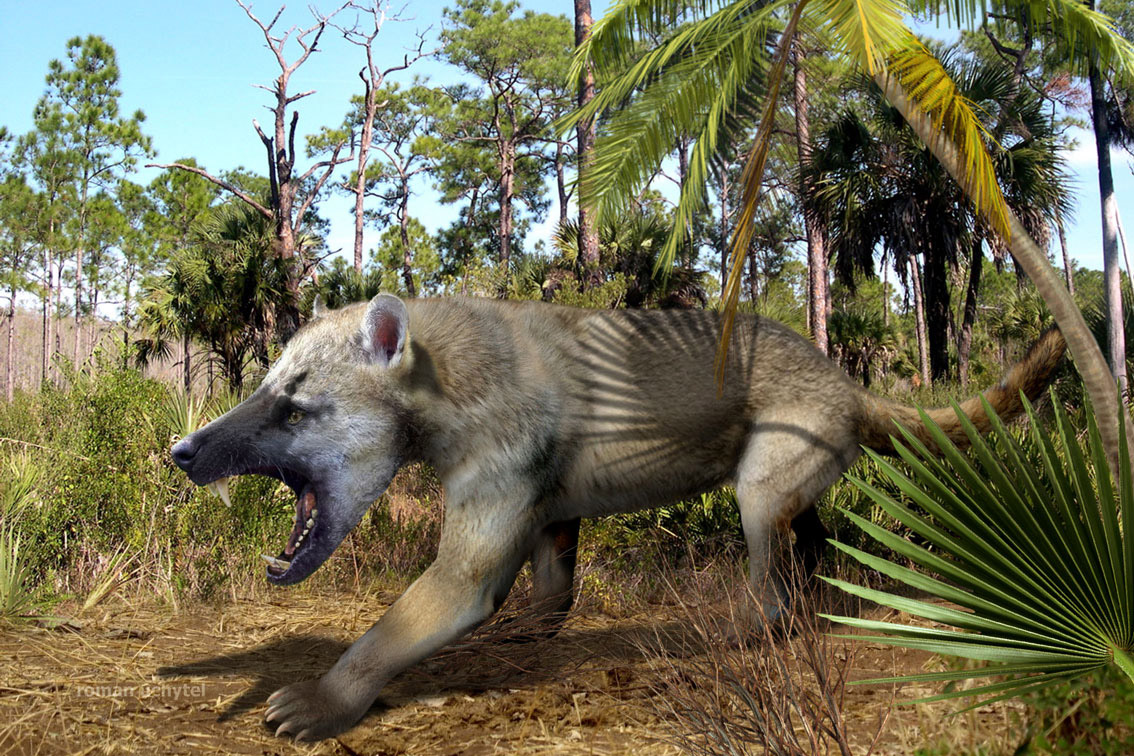


Physical characteristics
Amphicyonids varied widely in size and build. Some species were about the size of a modern fox, while others grew to dimensions comparable to or exceeding modern bears. Their skulls and teeth typically combine the slicing carnassials of predators with robust jaws and blunt molars suited to crushing, indicating dietary flexibility. Limb proportions ranged from cursorial (adapted for running) to robust and plantigrade (feet flat on the ground), reflecting different hunting and foraging strategies across genera.
Taxonomy and notable genera
Fossils attributed to this family include several well-known genera such as Amphicyon, Daphoenus, and others that illustrate the group's diversity. The fossil record shows distinctive dental and cranial characters used to identify amphicyonids and distinguish them from true canids and ursids.
Geographic range and temporal span
Bear dogs had a wide distribution, with remains found in North America, Europe, Asia and Africa. They appeared in the fossil record in the Eocene and persisted through the Neogene into the Pleistocene, roughly from about 46 to 2 million years ago. The group is believed to have originated in the Old World and later spread into the Americas, likely via northern land connections during the Miocene.
Ecology and extinction
Bear dogs occupied a range of ecological roles as active predators and opportunistic scavengers. Their varied dentition suggests many species were generalists, able to process both meat and tougher plant material. The decline and eventual extinction of amphicyonids appear linked to climatic change and increasing competition from emerging true dogs (canids), bears (ursids) and felids, together with habitat shifts that favored newer carnivore lineages.
Significance and study
- Amphicyonids are important for understanding carnivore evolution and ecological dynamics in Cenozoic ecosystems.
- Well-preserved fossils help reconstruct locomotion, diet and behavior in extinct predators.
- Comparative anatomy of amphicyonids clarifies relationships among caniform families and the adaptive paths that led to modern bears and dogs.
Note: The common name "bear dog" reflects morphological resemblance rather than a direct ancestral link to modern bears or dogs. For further information consult specialist paleontology resources and museum collections; many online and print references use the family name Amphicyonidae as a starting point.
Questions and answers
Q: What are the Amphicyonidae?
A: The Amphicyonidae are an extinct family of large terrestrial carnivores that belonged to the dog-like suborder Caniformia.
Q: In what areas did the Amphicyonidae have a wide distribution?
A: The Amphicyonidae had a wide distribution in North America, Europe, Asia, and Africa.
Q: During which epochs did the Amphicyonidae live?
A: The Amphicyonidae lived from the Eocene epoch to the Pleistocene epoch, which spanned from 46.2 to 1.8 million years ago.
Q: For how many years did the Amphicyonidae exist?
A: The Amphicyonidae existed for a total of about 44.4 million years or from the Paleocene to the Quaternary period.
Q: Where did the Amphicyonidae originally evolve?
A: The Amphicyonidae originally evolved in the Old World.
Q: When did the Amphicyonidae cross over to the Americas?
A: The Amphicyonidae crossed over to the Americas during the Miocene epoch.
Q: How did the Amphicyonidae cross over to the Americas?
A: The Amphicyonidae crossed over to the Americas at a time when crossing was possible via the Bering Strait.
Related articles
Author
AlegsaOnline.com Bear dog (Amphicyonidae) Leandro Alegsa
URL: https://en.alegsaonline.com/art/9818
Sources
- paleodb.org : Paleobiology Database: Amphicyonidae, age range and collections
- digitallibrary.amnh.org : Intercontinental migration of large mammalian carnivores: earliest occurrence of the Old World beardog Amphicyon (Carnivora, Amphicyonidae) in North America