
Beaver: the semi‑aquatic rodent and ecosystem engineer
Overview of beavers: biology, behavior, habitat, history of decline and return, dam-building impacts, ecological importance, and human management and interactions.
Overview
The beaver is a large, primarily herbivorous rodent known for its strong association with freshwater habitats and its capacity to alter landscapes. As a semi-aquatic mammal, it divides time between water and land and constructs two distinctive structures: dams to impound water and lodges or burrows for shelter. See a general definition of beaver as a large rodent at large rodent and its semi-aquatic habit at semi-aquatic.
Image gallery
10 Images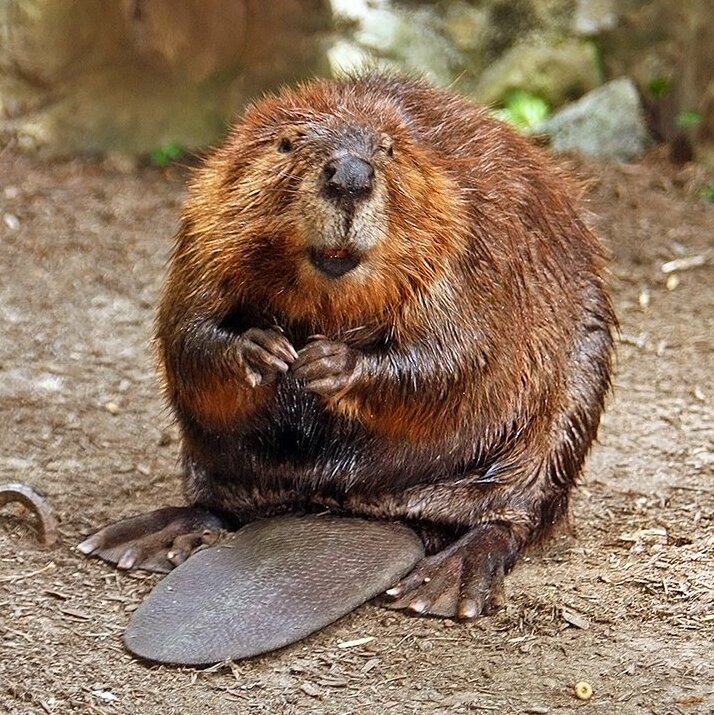


Physical characteristics and behavior
Beavers have stout bodies, dense brown fur, webbed hind feet, and a broad, flat tail used for communication, balance and fat storage. A pair of continuously growing incisors allow them to fell trees and process woody food. They are mostly nocturnal and social animals, living in family groups. Typical behaviors include gnawing, tree-felling, dam construction and maintenance, and the building of lodges or bank burrows for raising young and avoiding predators.
Range, species and history
Two closely related species occur in the wild: the North American beaver and the Eurasian (or European) beaver. Populations historically ranged across much of North America and large parts of Europe and Asia. In both continents beavers were heavily trapped for fur and castoreum, leading to severe declines. Today they persist in North America and re-established or recovering populations occur across Europe. Reintroduction efforts have returned beavers to locations such as Great Britain, rivers like the Elbe and the Rhone, and regions including Bavaria, Poland and parts of Scandinavia.
Engineering and ecological role
Beavers are famous for building dams and lodges. Dams slow flowing water and create wetlands that raise water tables and expand standing-water habitats. These changes reduce bank erosion, retain sediment, store water during dry periods and create habitat for amphibians, waterfowl, plants and invertebrates. However, dams can obstruct the movement of migratory fish; specialized measures are often required so that species such as salmon can pass and spawn. Wetland creation by beavers is increasingly recognized as a nature-based solution for biodiversity and some forms of flood management. Information about beaver dam building is summarized at dam building, and the wetland benefits are described at wetlands.
Human interactions and management
Beavers coexist with humans in rural and suburban landscapes. Conflicts arise where dams flood roads, crops or timber, or where chewing damages valued trees. Management options include exclusion fencing, relocation where legal and practicable, installing flow devices to control water levels without removing dams, selective tree protection and community engagement. Legal protection, reintroduction programs and habitat restoration are part of many conservation strategies. For background on where beavers live and management context see North America and Europe.
Notable distinctions and facts
- There are two main beaver species commonly recognized; populations differ in morphology and genetics.
- Beaver activity creates habitat mosaics that increase local biodiversity and resilience to drought.
- Human reintroductions and natural recolonization have led to visible recoveries in places such as Great Britain, Bavaria and Poland.
- Management often balances ecological benefits against infrastructure and fish passage concerns; engineering and legal tools are used to accommodate both, including fish-friendly solutions on rivers like the Rhone and Elbe.
Beavers remain an important example of an animal that shapes ecosystems through behavior. Their return to former ranges has highlighted both the ecological value of keystone species and the need for practical measures that let people and wildlife share modified landscapes. Further reading and resources can be found via introductory links on natural history and conservation approaches at rodent reference, species range summaries at North America and Europe, and regional case studies at Scandinavia and dam research.
Questions and answers
Q: What is a beaver?
A: A beaver is a large rodent that is semi-aquatic.
Q: Where are beavers found?
A: Beavers are found in North America and Europe.
Q: Have beavers been reintroduced to Great Britain?
A: Yes, beavers have been deliberately reintroduced to Great Britain.
Q: Have beavers almost died off in Europe?
A: Yes, beavers almost died off in Europe, but they are returning.
Q: What are beavers known for?
A: Beavers are known for building and keeping dams in rivers.
Q: How do beavers' dams benefit other species?
A: The wetlands created by beavers' dams benefit many other species.
Q: What special arrangements are needed for migratory fish when beavers build dams?
A: Special arrangements are needed to let salmon and other migratory fish pass the dams to spawn.
Related articles
Author
AlegsaOnline.com Beaver: the semi‑aquatic rodent and ecosystem engineer Leandro Alegsa
URL: https://en.alegsaonline.com/art/9972
Sources
- iucnredlist.org : Castor fiber
- wwf.at : "Europäischer Biber"
- iucnredlist.org : Castor canadensis
- itis.gov : "Castor canadensis"