
Bearded dragon (Pogona): overview, behavior, care, and species distinctions
Bearded dragons (genus Pogona) are medium-sized, diurnal lizards from arid Australia. This article summarizes their appearance, behavior, habitat, captive care, reproduction, species differences and basic welfare considerations.
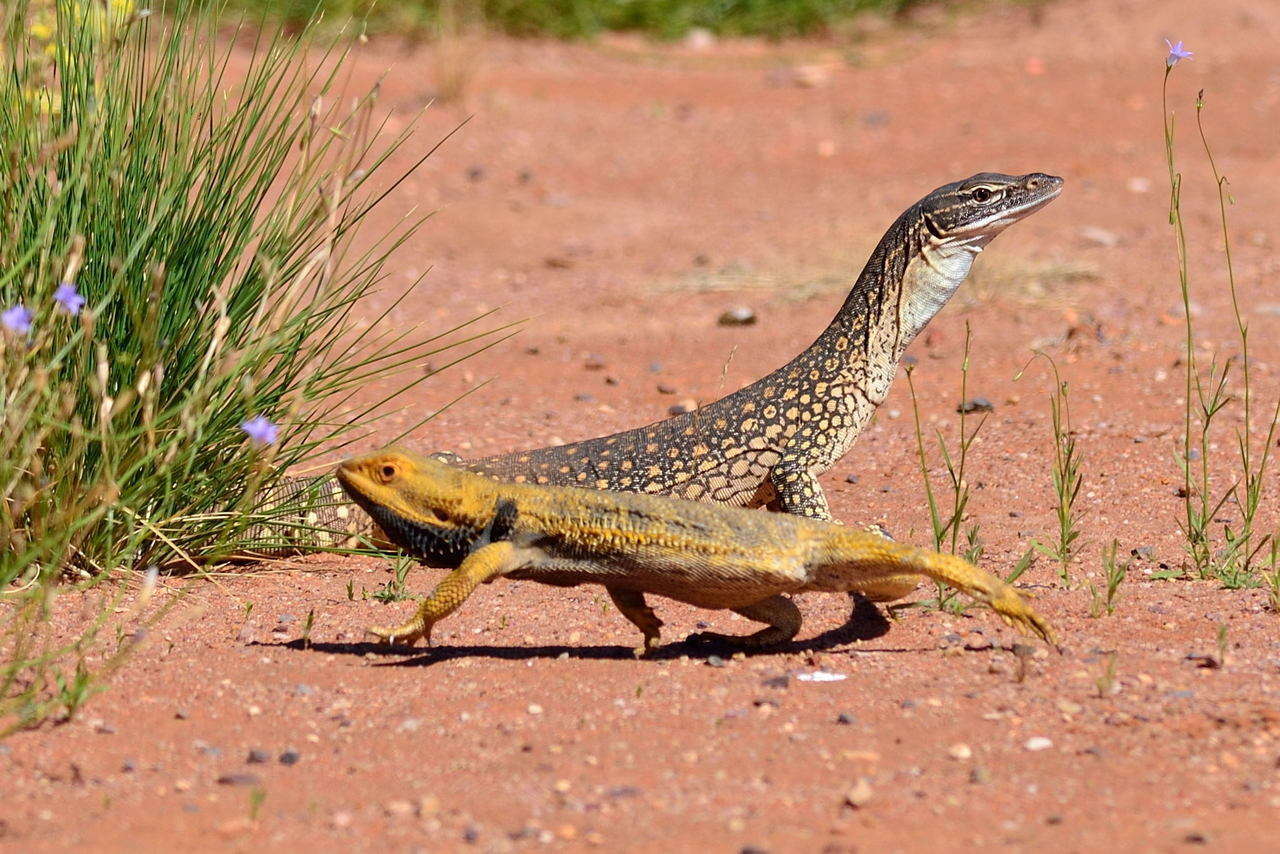
Bearded dragons are a group of egg-laying lizards in the genus Pogona, native to arid and semi-arid regions of Australia. The best known species is the central bearded dragon, Pogona vitticeps, which is widespread and commonly kept as a pet. The common name comes from the loose throat skin or "beard," which can be expanded and darkened in displays. These reptiles are largely diurnal and are valued for their manageable size, tolerance of handling, and conspicuous visual behaviour.
Image gallery
10 Images



Characteristics
- Body form: Robust, slightly flattened body with rows of spiny scales along the sides of the head and body; adults reach moderate total lengths with a long tapering tail.
- Beard and displays: The throat pouch is used in threat and social signalling; males commonly show larger, darker beards during displays.
- Senses and thermoregulation: Good vision; relying on basking to raise body temperature and on shaded retreats to cool down.
- Diet: Omnivorous—juveniles eat proportionally more insects to support growth, while adults eat a higher proportion of plant matter alongside animal prey.
Habitat and distribution
Bearded dragons inhabit a range of dry habitats including woodlands, scrublands and desert margins. They are often seen basking on rocks or branches to absorb heat and retreat to crevices or burrows to avoid predators and temperature extremes. For general context about their native continent see Australia.
Behaviour and life history
Communication is mainly visual: head-bobbing, arm-waving and beard darkening occur during courtship and dominance interactions. Most species are solitary outside the breeding season. Reproduction is by egg-laying; females dig nests and deposit clutches that incubate in warm substrate. Clutch sizes and incubation periods vary with species, female condition and environmental temperature.
Care in captivity
Bearded dragons are among the most commonly kept pet lizards. Proper husbandry includes a spacious enclosure with a thermal gradient (a warm basking area and cooler retreat), access to ultraviolet B (UVB) lighting to support calcium metabolism, and a varied diet of insects, leafy greens and vegetables. Typical basking temperatures are kept substantially warmer than the cool side; exact temperatures and equipment should follow current husbandry guidelines. Juveniles require more frequent feeding than adults. Gentle, regular handling tends to habituate many individuals, but handling should always support the body and be calm.
Health, conservation and legal notes
Poor husbandry can lead to common health problems such as metabolic bone disease, nutritional imbalances, parasites and impaction from inappropriate substrates. Signs of illness include prolonged lethargy, weight loss, abnormal skin or swollen joints. Lifespan varies by species and conditions; many captive bearded dragons live several years to over a decade when properly cared for. Wild populations face habitat pressures in parts of their range, and regulations on collection and trade vary by jurisdiction—prospective keepers should check local laws and conservation advice.
Species and human interactions
Taxonomically, Pogona contains several recognized species and regional forms, including the central bearded dragon (P. vitticeps), the eastern bearded dragon (P. barbata) and others that differ in size and distribution. In the pet trade, selective breeding has produced a variety of color morphs and patterns. Beyond their role as companion animals, bearded dragons are used in education and research to illustrate reptile behaviour, thermoregulation and basic physiology.
Related articles
Author
AlegsaOnline.com Bearded dragon (Pogona): overview, behavior, care, and species distinctions Leandro Alegsa
URL: https://en.alegsaonline.com/art/9829