
Bearded seal (Erignathus barbatus): Arctic pinniped overview
A concise encyclopedia article on the bearded seal, covering appearance, behavior, distribution, fossil record, ecology, and conservation in the Arctic.
Overview
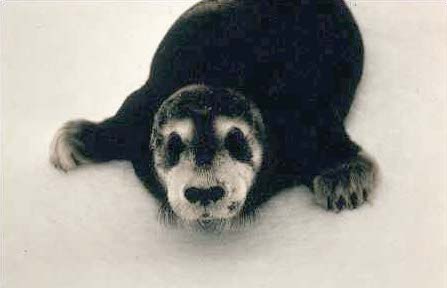
The bearded seal (Erignathus barbatus) is a medium-sized marine mammal of the pinniped group. It is notable for long, stiff whiskers and broad, square foreflippers that give rise to the older name "square flipper seal." Bearded seals are closely tied to sea ice and shallow Arctic waters where they feed, rest and reproduce. They are the only living species in the genus Erignathus.
Image gallery
10 Images



Appearance and adaptations
Adults have a robust body, a relatively large head and a short snout rimmed with prominent vibrissae (whiskers). These whiskers are highly sensitive and help detect prey on the seafloor. Typical adaptations include a thick layer of blubber for insulation and broad flippers that aid propulsion and maneuvering among ice floes. Distinguishing features include:
- Vibrissae: long, dense whiskers used for tactile sensing.
- Foreflippers: broad and squared, useful for swimming and hauling out on ice.
- Behavior: largely solitary or small groups, vocal and sometimes heard bellowing underwater.
Diet and behavior
Bearded seals are primarily benthic feeders, foraging along shallow continental shelves for clams, shrimp, crabs, worms and bottom-dwelling fish. They use their whiskers to find prey in murky or dark conditions. They spend a great deal of time under the ice and surface at holes or cracks in the pack ice. Males may advertise territories with low-frequency calls, especially during the breeding season.
Reproduction and life cycle
Pups are typically born on pack ice and are nursed for a period of weeks. Mothers invest heavily in milk to support rapid pup growth so the young can develop blubber and swimming skills quickly. Like many Arctic marine mammals, bearded seals time reproduction so pups emerge when conditions allow better survival prospects.
Distribution, fossil record and history
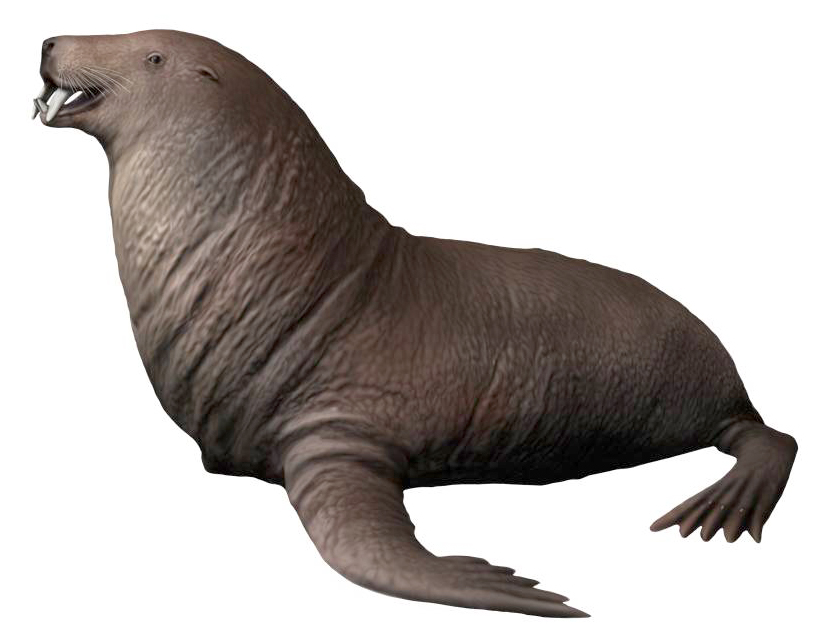
Bearded seals are a circumpolar species found throughout the Arctic Ocean and adjacent seas. Their fossil history shows wider past ranges; for example, Pleistocene deposits indicate they once occurred considerably farther south. Fossils attributed to this species have been reported from regions as distant as the eastern coast of what is now the United States, illustrating past changes in climate and sea-ice extent. For more on pinnipeds and marine mammals see pinniped overview, on the Arctic habitat see Arctic Ocean, on geologic epochs see Pleistocene, and on southern fossil localities see South Carolina records.
Human interactions and conservation
Indigenous Arctic peoples have long hunted bearded seals for meat, fat and pelts, and the species remains culturally and nutritionally important in many communities. While not historically a major target of commercial sealing, bearded seals face modern threats tied to climate change: loss and alteration of sea ice can disrupt breeding, resting sites and prey availability. Other pressures include industrial development, increased ship traffic and potential bycatch. Conservation efforts focus on monitoring populations, protecting ice habitats, and working with communities to manage sustainable uses.
Questions and answers
Q: What is a bearded seal?
A: A bearded seal is a medium-sized pinniped found in and near to the Arctic Ocean.
Q: What is the bearded seal also known as?
A: The bearded seal is also known as the square flipper seal.
Q: What is the historical range of bearded seals according to fossils?
A: Fossils indicate that bearded seals went as far south as South Carolina during the Pleistocene epoch.
Q: What type of environment is the bearded seal found in?
A: The bearded seal is found in and near to the Arctic Ocean.
Q: Is the bearded seal a small or large pinniped?
A: The bearded seal is a medium-sized pinniped.
Q: What is a pinniped?
A: A pinniped is a type of marine mammal that includes seals, sea lions, and walruses.
Q: Can bearded seals be found in environments other than the Arctic Ocean?
A: It is unlikely that bearded seals would be found outside of the Arctic Ocean and surrounding regions, as that is their primary habitat.
Tags
Related articles
Author
AlegsaOnline.com Bearded seal (Erignathus barbatus): Arctic pinniped overview Leandro Alegsa
URL: https://en.alegsaonline.com/art/9830
Sources
- bucknell.edu : "Order Carnivora"
- google.com : Mammal Species of the World
- worldcat.org : 62265494
- iucnredlist.org : "Erignathus barbatus"
- doi.org : 10.1111/j.1365-2907.2011.00193.x
- animaldiversity.ummz.umich.edu : Erignathus barbatus
- eoearth.org : Bearded seal