
Bee: biology, diversity, behavior, and human importance
Comprehensive overview of bees: biology, major groups, role as pollinators, relationship with humans (honey and beekeeping), and conservation issues.
Overview
Bees are a diverse group of flying insects within the order Hymenoptera, a lineage that also includes ants and wasps. They are best known for visiting flowers to gather nectar and pollen, resources that sustain individuals and enable pollination of many wild plants and crops. Worldwide there are about 20,000 species of bees, and they occur on every continent except Antarctica. Their forms and behaviors range from highly social colonies to solitary nesters.
Image gallery
10 Images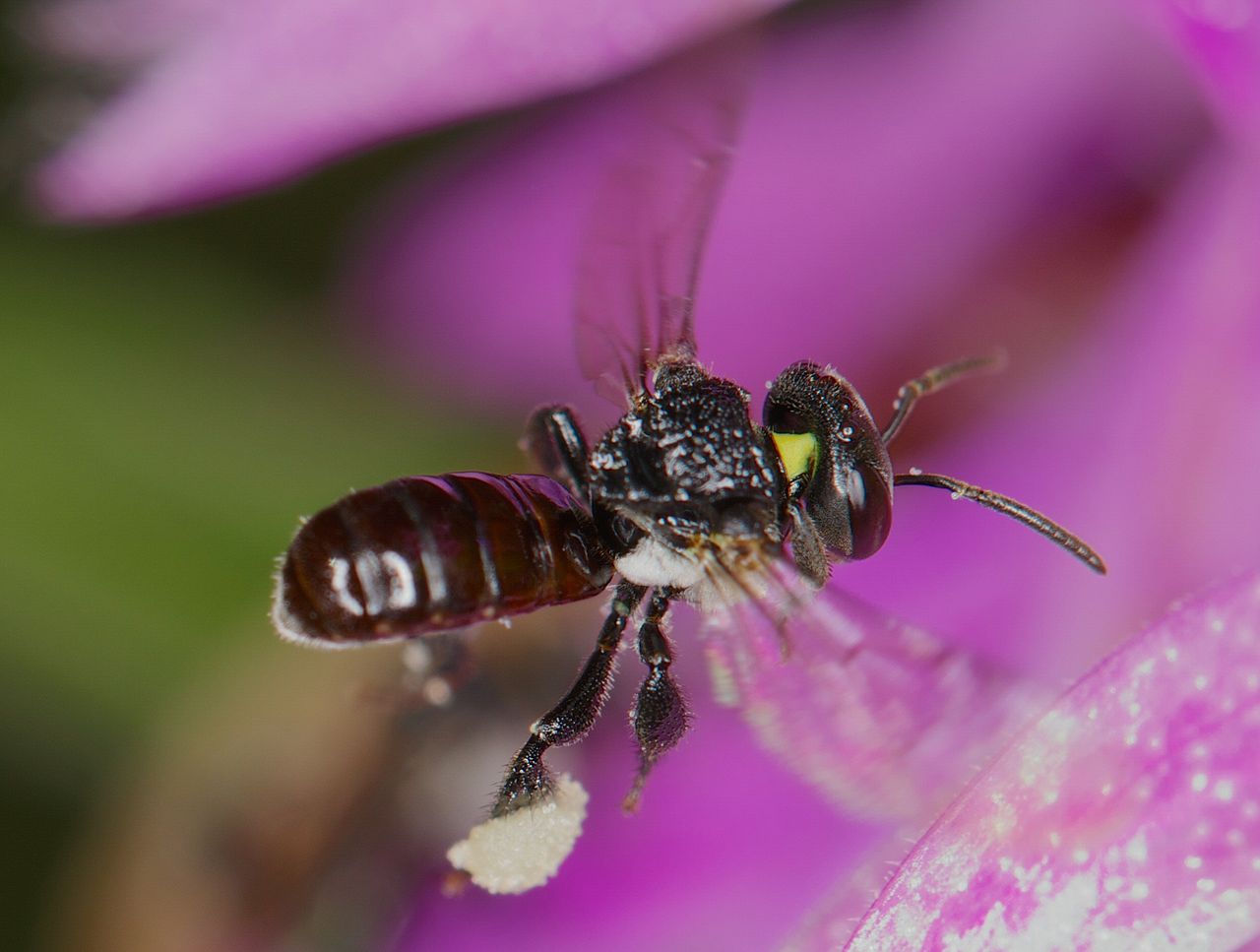


Characteristics and anatomy
Bees typically have a pair of wings, branched body hairs that trap pollen, and mouthparts adapted for sipping nectar. Many species possess pollen-collecting structures such as the corbicula (pollen basket) or scopa (dense hairs). The life cycle follows complete metamorphosis: egg, larva, pupa and adult. Social species display division of labor among queens, workers and drones, while solitary females perform all nesting and provisioning duties alone.
Major groups and behavior
Bee diversity is commonly grouped by social organization and taxonomy. Examples include:
- Honeybees: perennial social colonies with complex communication and brood care; the well-known European honey bee is often called Apis mellifera.
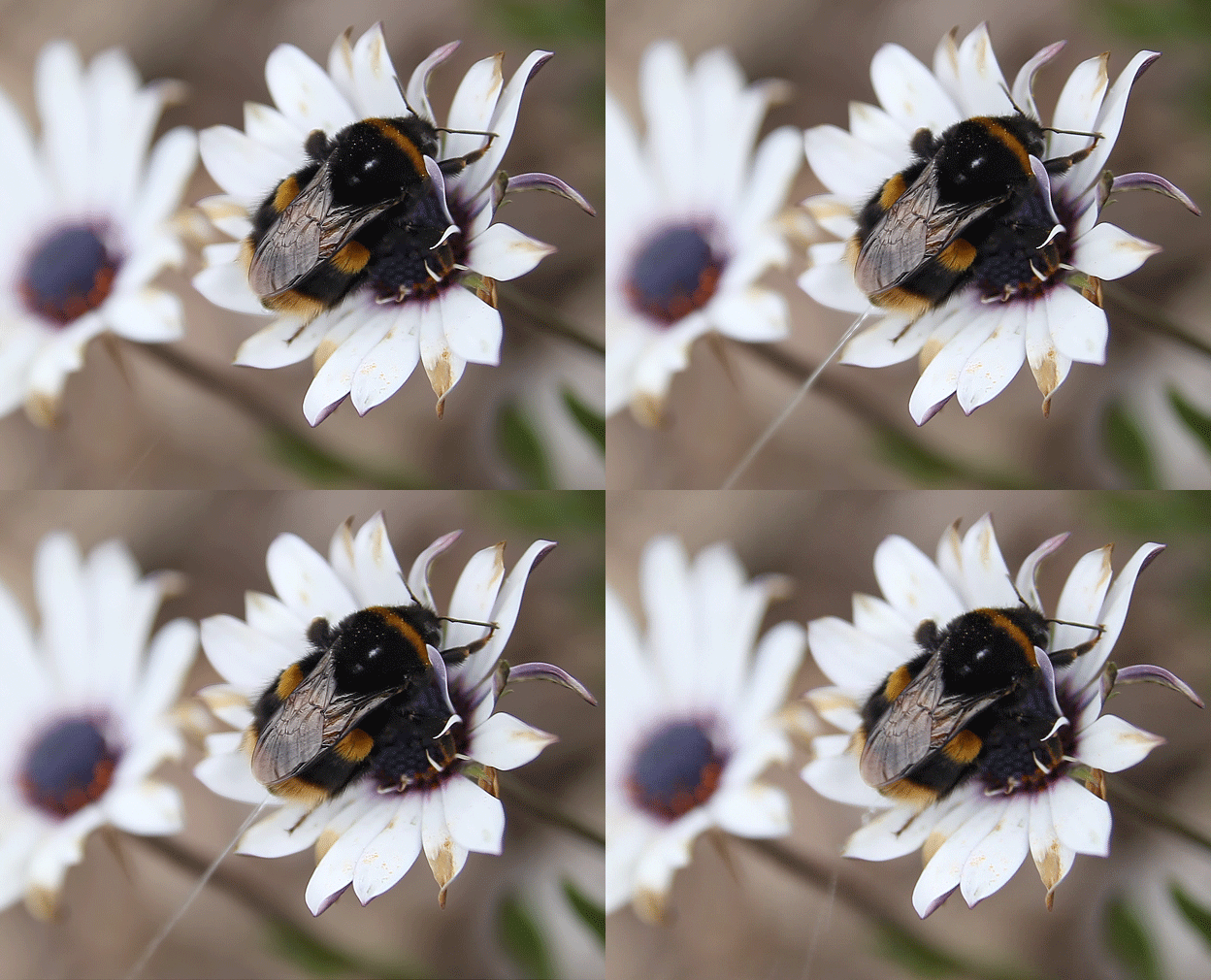
- Bumblebees: generally social or primitively social, robust-bodied pollinators important for many wildflowers and crops.
- Stingless bees: tropical social bees that produce and store honey in small amounts.
- Solitary bees: a broad category that includes carpenter, mason and leafcutter bees; each female constructs and provisions her own nest.
Ecological role and importance
Bees are among the most effective pollinators. By transferring pollen between flowers they enable sexual reproduction in many plants, supporting biodiversity and agricultural productivity. Pollination by bees contributes directly to the production of fruits, vegetables and seeds. Their activity influences ecosystem structure and yields important ecological services valued worldwide.
Human uses and beekeeping
People have managed colonies for millennia to harvest products and benefit from pollination services. Honey, beeswax and other hive products are familiar outputs; honey itself is a long-used food and preservative. The practice of keeping bees is known as beekeeping or apiculture, and it includes managing colonies for honey production and crop pollination. Beekeepers may manage European honey bees as well as other species depending on local needs.
Conservation and notable issues
Bee populations face multiple pressures including habitat loss, pesticide exposure, pathogens, invasive species and climate change. Conservation efforts range from creating flower-rich habitats to reducing harmful chemical use and supporting managed and wild populations. Because of their central role in ecosystems and agriculture, protecting bees is considered important for food security and biodiversity.
For further background and taxonomic details consult general references on Hymenoptera and surveys of global bee diversity; many accessible guides and scientific overviews describe regional species, natural history, and best practices for supporting bees in gardens and farmland. Additional resources on the subject are available from entomological handbooks and apiculture manuals.
Questions and answers
Q: What is the order of Insects that bees belong to?
A: Bees belong to the Hymenoptera order of Insects.
Q: How many species of bees are there?
A: There are approximately 20,000 species of bees.
Q: What do bees collect from flowers?
A: Bees collect pollen from flowers.
Q: On which continents can bees be found?
A: Bees can be found on all continents except Antarctica.
Q: What are the four groups into which bee species fall?
A: The four groups into which bee species fall are Honeybees, Bumblebees, Stingless bees and Solitary bees.
Q: How is keeping honeybee colonies referred to in terms of agriculture or apiculture?
A: Keeping honeybee colonies is referred to as beekeeping or apiculture in terms of agriculture or apiculture respectively
Related articles
Author
AlegsaOnline.com Bee: biology, diversity, behavior, and human importance Leandro Alegsa
URL: https://en.alegsaonline.com/art/10064
Sources
- species.wikimedia.org : Hymenoptera
- commons.wikimedia.org : Anthophila
- books.google.com : "Bee pollination in agriculture"
- doi.org : 10.1126/science.1134103
- pubmed.ncbi.nlm.nih.gov : 17068254
- ncbi.nlm.nih.gov : "The history of early bee diversification based on five genes plus morphology"
- doi.org : 10.1073/pnas.0604033103
- pubmed.ncbi.nlm.nih.gov : 17015826