
Templo Mayor — Great Temple of Tenochtitlan
The Templo Mayor was the principal temple complex of the Aztec capital Tenochtitlan. This article covers its design, religious role, destruction, and modern archaeology and museum.
The Templo Mayor, often called the Great Temple, was one of the principal temples of the Aztec civilization. It rose at the heart of Tenochtitlan, the island capital that later became Mexico City. Built in a stepped-pyramid form typical of central Mexico, the complex reflects a distinctive architectural style associated with the late Postclassic period of Mesoamerican history. Local people spoke Nahuatl, and the temple was commonly known by the indigenous name huei teocalli (great house of the gods).
Image gallery
10 Images

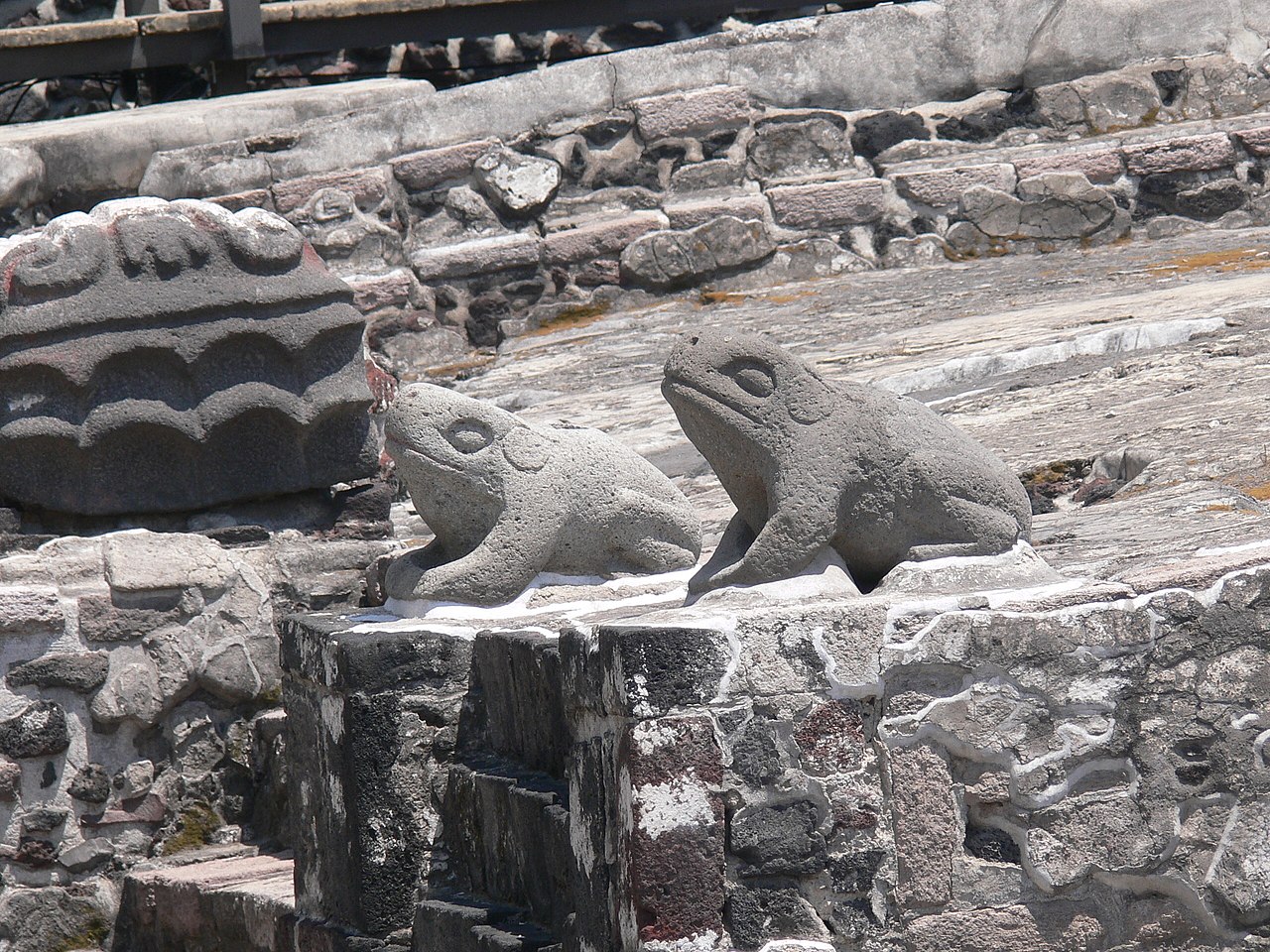

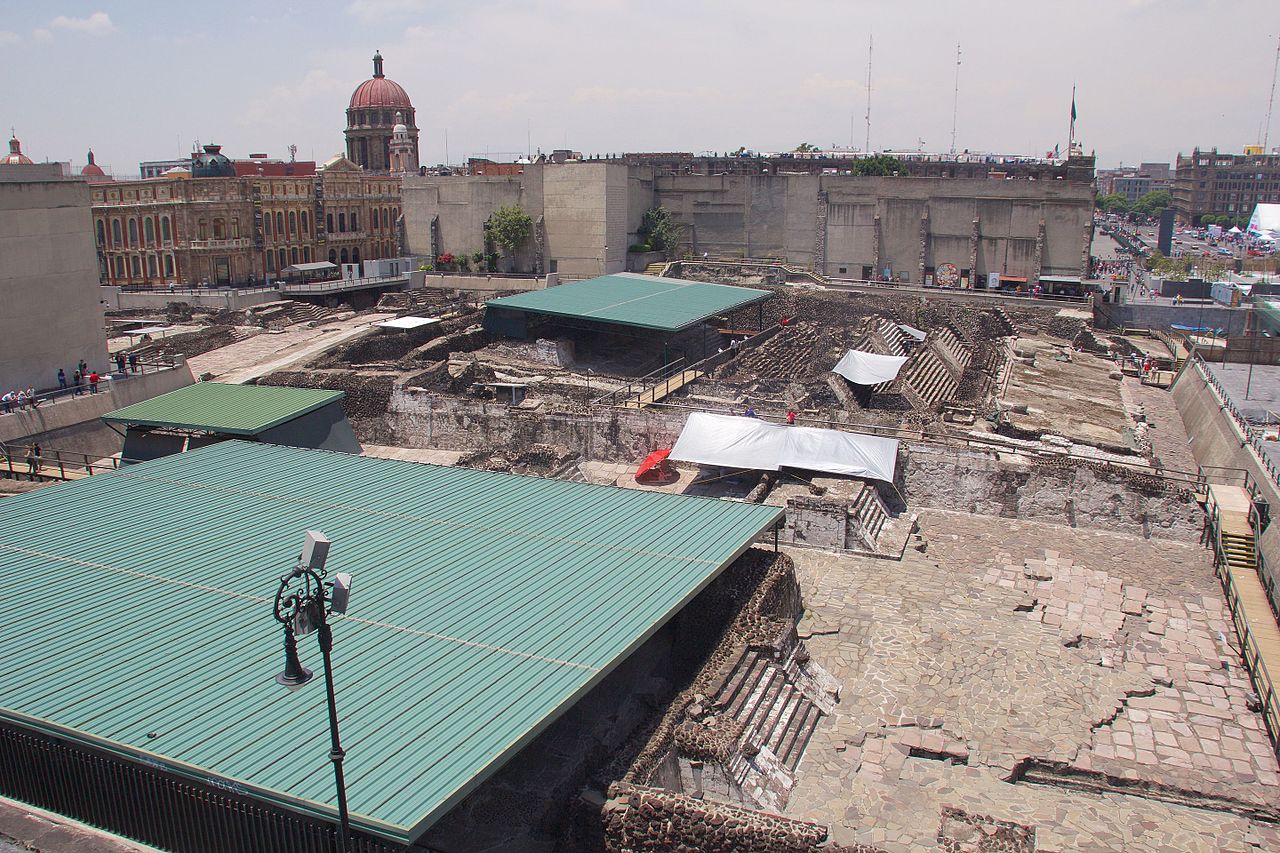


Design and principal features
The Templo Mayor was a multi-level pyramid topped by two shrines dedicated to different deities. One side honored Huitzilopochtli, the patron god associated with war and the sun; the other honored Tlaloc, the rain and fertility deity. The dual arrangement meant that separate shrines and stairways led to the summit of the central pyramid. Nearby vertical features like a distinctive spire represented other deities, such as Quetzalcoatl in his guise linked to wind and life.
History and development
Construction of the first masonry temple on the site began after the founding of Tenochtitlan in the early 14th century. Over the next two centuries the monument was enlarged and rebuilt in stages; archaeological and documentary evidence indicate several major rebuilding phases as rulers sought to mark political power and ritual change. The complex reached its largest form shortly before the arrival of Europeans. In 1521 the city fell to forces that included Spanish conquistadors and their indigenous allies, and the temple was dismantled during the colonial occupation, with building materials reused for new works and churches by the Spanish.
Ritual importance and public role
Templo Mayor functioned as the ceremonial center of the Aztec state: priests performed offerings, calendrical rites, and public ceremonies on its terraces and platforms. The dual shrines expressed complementary cosmic roles—war and rulership on one side, agricultural fertility and rainfall on the other—so the monument symbolized the Aztec worldview linking politics, religion, and environment. Surrounding precincts contained altars, courts, and storage spaces that supported large communal festivals.
Archaeology, museum, and modern setting
Excavation of the Templo Mayor began in earnest in the 20th century when construction work revealed major remains. The principal excavation area lies just to the northeast of the city's main plaza, the Zocalo. Archaeologists have uncovered stairways, offerings, carved stone monuments (including famous circular and sacrificial stones), and many small votive objects. Many finds are displayed in the Templo Mayor Museum, which interprets the site for visitors and scholars and situates the remains in a broader narrative of Mesoamerican art and ritual.
Notable facts and legacy
- The temple's twin-shrine layout exemplifies how Aztec architecture combined religious symbolism with urban prominence.
- Although the original superstructure was destroyed in the early colonial period, extensive archaeological recovery has clarified its phases and functions.
- The site is part of the historic core of modern Mexico City and contributes to the area's cultural heritage and tourism.
Today the Templo Mayor remains one of the most important archaeological and symbolic sites in Mexico, studied for what it reveals about Aztec religion, imperial power, and the transformation of the cityscape after contact. For further structural descriptions and cultural context see specialist works and museum resources linked from official pages and research centers.
More on Aztec temples • Tenochtitlan overview • Mexico City history • Mesoamerican architecture • Postclassic period • Nahuatl language • Huitzilopochtli • Tlaloc • Temple shrines • Pyramid typology • Ritual spires • Quetzalcoatl and Ehecatl • Conquest and colonialism • Site location • Zocalo and surrounding precinct
Related articles
Author
AlegsaOnline.com Templo Mayor — Great Temple of Tenochtitlan Leandro Alegsa
URL: https://en.alegsaonline.com/art/96931
Sources
- mexicodesconocido.com.mx : El Templo Mayor (Distrito Federal)
- mexicolore.co.uk : "Study the... WIND GOD"
- mexicomaxico.org : "EL RECINTO CEREMONIAL Y EL TEMPLO MAYOR Evolución de la Gran Tenochtitlan"
- ancient.eu : "Tenochtitlán"
- commons.wikimedia.org : Templo Mayor