
Monument to the Unknown Soldier, Baghdad
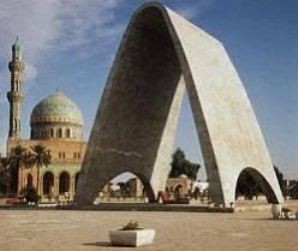
A modern commemorative monument in central Baghdad honouring unknown war dead; designed by Marcello D'Olivo from a concept by Khaled al‑Rahal and completed during 1979–1982 as part of a larger memorial ensemble.
Overview
The Monument to the Unknown Soldier (Arabic: نصب الجندي المجهول) stands in central Baghdad as a national memorial erected to honor soldiers who died without identification. Conceived in the late 1970s and finished in the early 1980s, the work combines modern architectural forms with symbolic references intended to represent sacrifice, anonymity and national mourning. It was built during a period of major public works and commemorative projects for the state.
Image gallery
3 Images
Design and components
The monument was constructed between 1979 and 1982. Its realized design was the work of the Italian architect Marcello D'Olivo, developed from an initial concept by the Iraqi sculptor Khaled al‑Rahal. The composition integrates architectural elements and sculptural surfaces to create a focal point in the urban landscape.
- Materials and form: The structure uses stark geometry and monumental scale to convey solemnity, with surfaces intended to catch light and shadow.
- Sculptural input: Al‑Rahal's influence is present in figurative motifs and symbolic detailing that link the piece to Iraqi artistic traditions.
- Setting: The monument occupies a prominent place in a larger ceremonial area, giving it visual and civic prominence.
History and context
The memorial was dedicated to those who fell during the Iran–Iraq War (Iran–Iraq War), a conflict that produced large numbers of casualties and missing personnel. It was one component of a sequence of state-funded monuments and urban projects built in the same era to commemorate wartime sacrifice and to provide sites for official remembrance. Construction and dedication occurred amid broader national programs to mark recent events in Iraq's modern history.
Related monuments and site ensemble
In the years following its completion, additional memorials and a national ceremonial space were added nearby. The Great Celebrations square was developed close to the monument in the mid-1980s, and complementary works such as the Al‑Shaheed Monument and the Victory Arch were unveiled around the same period, forming a coherent commemorative axis. Together these structures create a civic cluster intended for state ceremonies, public visitation and collective remembrance.
Museum, use and public significance
The monument complex includes an underground museum that houses exhibits relating to the conflict, the fallen and the process of national remembrance. The site functions both as a place of mourning and as a venue for official ceremonies on anniversaries and national holidays. As with other monuments to unknown soldiers around the world, it serves a symbolic role: representing all those who died without recognition and providing a concrete focus for private grief and public memory.
Notable facts and distinctions
- The project brought together an international architect and an Iraqi artist, reflecting a mix of external and local influences in late 20th‑century Iraqi public art.
- It is part of a broader memorial landscape in Baghdad that was developed across the 1980s to acknowledge wartime sacrifice and reinforce national narratives.
- The presence of an underground museum distinguishes it from many other tombs or cenotaphs by providing curated historical context in addition to commemorative space.
The Monument to the Unknown Soldier remains a visible element of Baghdad's urban fabric and continues to be referenced in discussions of memorial architecture, civic ritual and the ways nations commemorate collective loss.
Related articles
Author
AlegsaOnline.com Monument to the Unknown Soldier, Baghdad Leandro Alegsa
URL: https://en.alegsaonline.com/art/98483