
Temple of Hera at Olympia
Ancient Greek temple at Olympia dedicated to Hera, built c. 600 BC. One of the earliest Doric peripteral temples; site of cult statues, the Heraia women’s races, and the Altar of Hera where the modern Olympic flame is lit.
Overview
The Temple of Hera, often called the Heraion, is a monumental sanctuary building at the Panhellenic sanctuary of Olympia in Greece, dedicated to the goddess Hera, wife of Zeus. Constructed around 600 BCE, it ranks among the earliest large stone temples of the Greek mainland and played a continuous religious role throughout the classical and Hellenistic periods. The temple’s plan and surviving fragments illustrate an early form of the Doric order and the transition from wooden to stone construction that characterized Archaic Greek temple-building.
Image gallery
10 Images





Architecture and layout
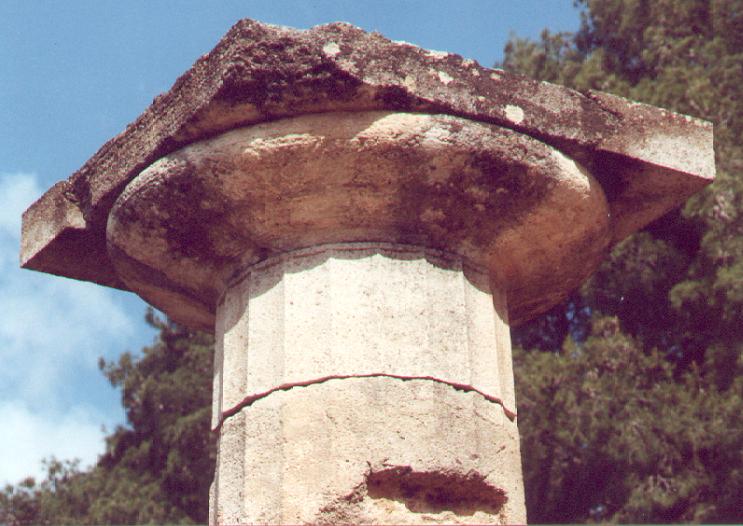
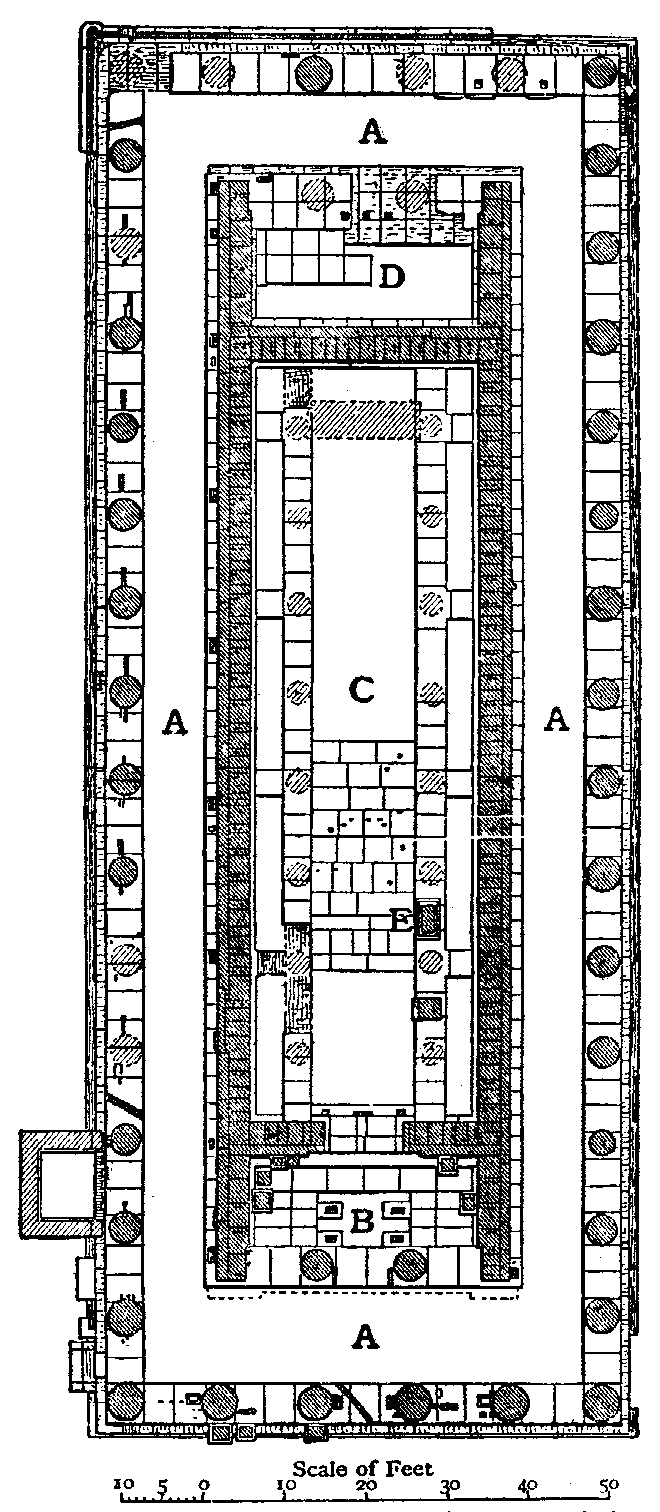
The temple was a peripteral Doric structure measuring roughly fifty meters in length and nearly nineteen meters across; its profile rose to an estimated height of about 7.8 meters. The colonnade had six columns at each short end and sixteen along each long side. Archaeological evidence indicates the earliest columns were wooden and were gradually replaced or rebuilt in limestone—an evolution common to Archaic temples. The building contained a single cella (inner chamber) with an eastern doorway, and typical ancillary spaces such as a pronaos and an opisthodomos. Decorative elements included an imposing akroterion, the large circular roof ornament now conserved and displayed in the local museum.
Sculptures, cult objects and treasures
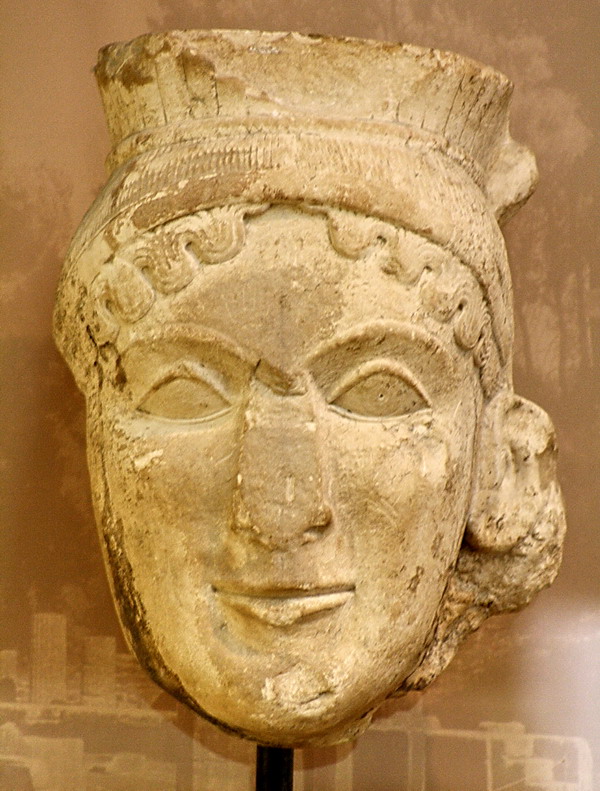
The eastern end of the cella housed a seated cult image of Hera on a throne; surviving sculpted fragments such as a stone head are sometimes attributed to that statue. Nearby stood a companion statue of Zeus in martial aspect and, in later antiquity, the celebrated statue of Hermes carrying the infant Dionysos, attributed to Praxiteles, was found in the temple ruins and is associated with the site’s storied collections. The western part of the temple contained chests and a table where winners’ wreaths from the Olympic Games were stored, together with various dedications and precious offerings accumulated over centuries.
Religious use, festivals and the Heraia
The Heraion was central to rituals honoring Hera and to local cult practice. Notably, the all-female footraces known as the Heraia were held in her honor; victors in those races earned the right to dedicate small statues at the temple. Every four years women of the region wove and presented a ceremonial robe (peplos) which was placed on the cult statue of Hera in a ritual dressing. Adjacent to the temple stands the Altar of Hera; in modern times that altar is used to kindle the Olympic flame before the Games.
Destruction, excavation and restoration
The temple survived into late antiquity but suffered major damage after seismic events in the early 4th century CE and subsequent neglect; it was not rebuilt as an active sanctuary under the Christianized Roman empire. Systematic excavations at Olympia in the 19th and 20th centuries exposed the foundations and sculptural remains. In the late 20th century archaeologists, including teams from the German Archaeological Institute, undertook careful consolidation and partial restoration of some columns and the prominent akroterion; many recovered artifacts are exhibited in the Archaeological Museum of Olympia.
Significance and notable facts
- The Heraion exemplifies an Archaic Doric peripteral temple and illustrates the switch from timber to stone construction in Greece.
- It connected religious ritual with the athletic life of Olympia—wreaths and dedications link the temple to the Olympic Games (Olympic Games).
- Fragments and statues discovered at the site, including finds associated with Hermes and the Infant Dionysos and attributions to Praxiteles, are important to the study of ancient Greek sculpture.
- Winners of the female Heraia races and the ritual robe for Hera demonstrate gendered civic cult practices (Heraia, peplos).
For further reading on the site, its architecture, and archaeological work consult specialist surveys of Olympia and temple typology; museum displays list excavation histories and conservation reports (early temples, Doric order). Photographs and catalogues of finds reference the temple plan and dimensions (columns, earthquake damage). Discussions of cult practice and the role of Hera in Greek religion appear in works on sanctuary rites and panhellenic festivals (Hera cult, throne imagery, victor wreaths, Olympic flame).
Related articles
Author
AlegsaOnline.com Temple of Hera at Olympia Leandro Alegsa
URL: https://en.alegsaonline.com/art/96917