
Praxiteles (4th-century BC Greek sculptor)
Praxiteles was a leading Greek sculptor of the Late Classical period, celebrated for introducing a life-size nude female statue and for a graceful, sensuous style known through later copies and ancient testimony.
Overview
Praxiteles is remembered as one of the most influential Greek sculptors of the 4th century BC. Ancient writers praise his manner and list several famous commissions. No original work can be attributed to him with absolute certainty today, yet his reputation endures through Roman and Hellenistic copies and through references in surviving literature and visual sources. For contemporary summaries of ancient commentary, see ancient sources.
Image gallery
8 Images



Style and characteristics
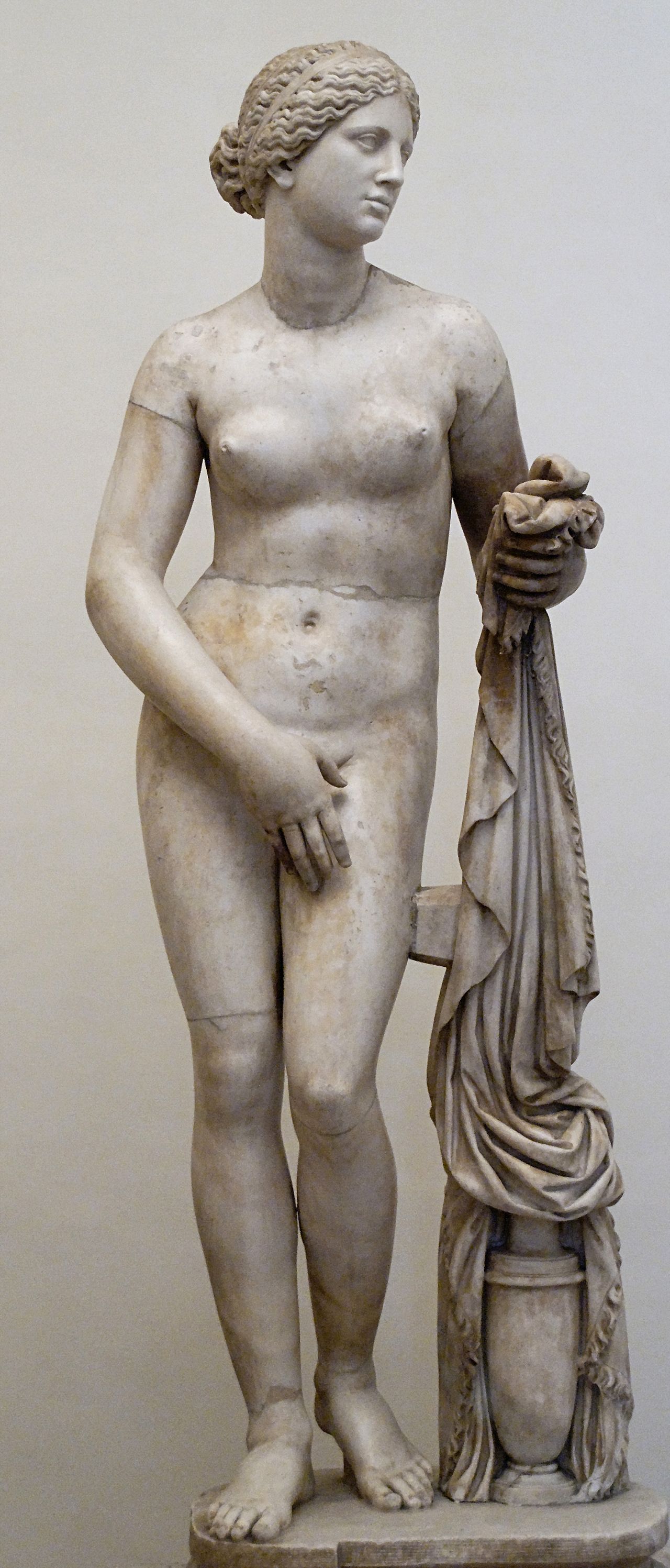
Praxiteles is associated with the Late Classical move toward softer modeling, relaxed poses, and a heightened interest in the human body as an object of beauty and emotion. Sculptures attributed to his type often show a subtle contrapposto and a tender, sensuous approach to the figure. His work is thought to have introduced a more intimate scale and a refined surface treatment that emphasized fleshiness and gentle transitions of form. For studies of the female nude in antiquity, consult introductions like specialist surveys.
Notable works and surviving evidence
- Aphrodite of Knidos — Traditionally credited as the first life‑size female nude in Greek sculpture and one of Praxiteles' best-known types. The original is lost, but numerous Roman copies and descriptions preserve its fame.
- Hermes and the Infant Dionysus — A marble group discovered at Olympia in the 19th century has often been linked to Praxiteles; its attribution remains debated among scholars.
- Other types and group compositions — Coins and engraved silhouettes from the period reproduce characteristic poses and offer additional corroboration of Praxitelean types.
Writings by later authors collect comments and lists of his works; for surviving literary testimony, see summaries and editions at literary collections and the passages preserved in Pliny the Elder, discussed in many modern treatments (Pliny references).
Origin, context and legacy
Active in the later 4th century BC, Praxiteles worked in the cultural milieu that followed the Classical age of Phidias. His emphasis on grace, an individualized emotional presence, and graceful nudity influenced generations of Hellenistic and Roman artists. Because original bronzes and marbles rarely survive intact, his impact is reconstructed from copies, ancient commentary, and the transmission of sculptural types across the Mediterranean. Evidence such as engraved coin silhouettes also attests to the popular recognition of his statuary forms (coin images).
Distinctive facts and scholarly caution
- Praxiteles is widely credited with producing the first canonical life‑size nude statue of a woman, a major turning point in Greek art.
- Attributions are often uncertain: many works are known only through Roman copies or literary description, so specific assignments to Praxiteles are debated.
- His reputed softness of modeling and sensual grace distinguish him from earlier, more monumental Classical sculptors.
Overall, Praxiteles stands as a key figure in the transition to the Late Classical aesthetic; his reputation rests on a combination of later copies, ancient testimony, and the lasting influence of sculptural types associated with his name.
Questions and answers
Q: Who was Praxiteles?
A: Praxiteles was the most famous sculptor of the 4th century BC.
Q: What was Praxiteles known for?
A: Praxiteles was known for being the first sculptor to create a life-size nude female form statue.
Q: Are any of Praxiteles' original sculptures still in existence?
A: No, none of Praxiteles' original sculptures are still in existence.
Q: How do we know about Praxiteles' works?
A: We know about Praxiteles' works through numerous copies and descriptions by authors like Pliny the Elder.
Q: What are some of Praxiteles' famous statuary types?
A: Some of Praxiteles' famous statuary types include Hermes and the Infant Dionysus.
Q: Are there any coins that feature Praxiteles' works?
A: Yes, there are coins engraved with silhouettes of Praxiteles' various famous statuary types.
Q: What distinguishes Praxiteles from other sculptors of his time?
A: Praxiteles distinguished himself by being the first to sculpt life-size nude female forms.
Related articles
Author
AlegsaOnline.com Praxiteles (4th-century BC Greek sculptor) Leandro Alegsa
URL: https://en.alegsaonline.com/art/78641