
Temple of Zeus at Olympia: architecture, art, history, and legacy
The 5th‑century BC Doric temple at Olympia housed Phidias' Statue of Zeus. This article explains its architecture, sculptural program, role in the Olympic festival, destruction, excavation and lasting cultural significance.
Overview
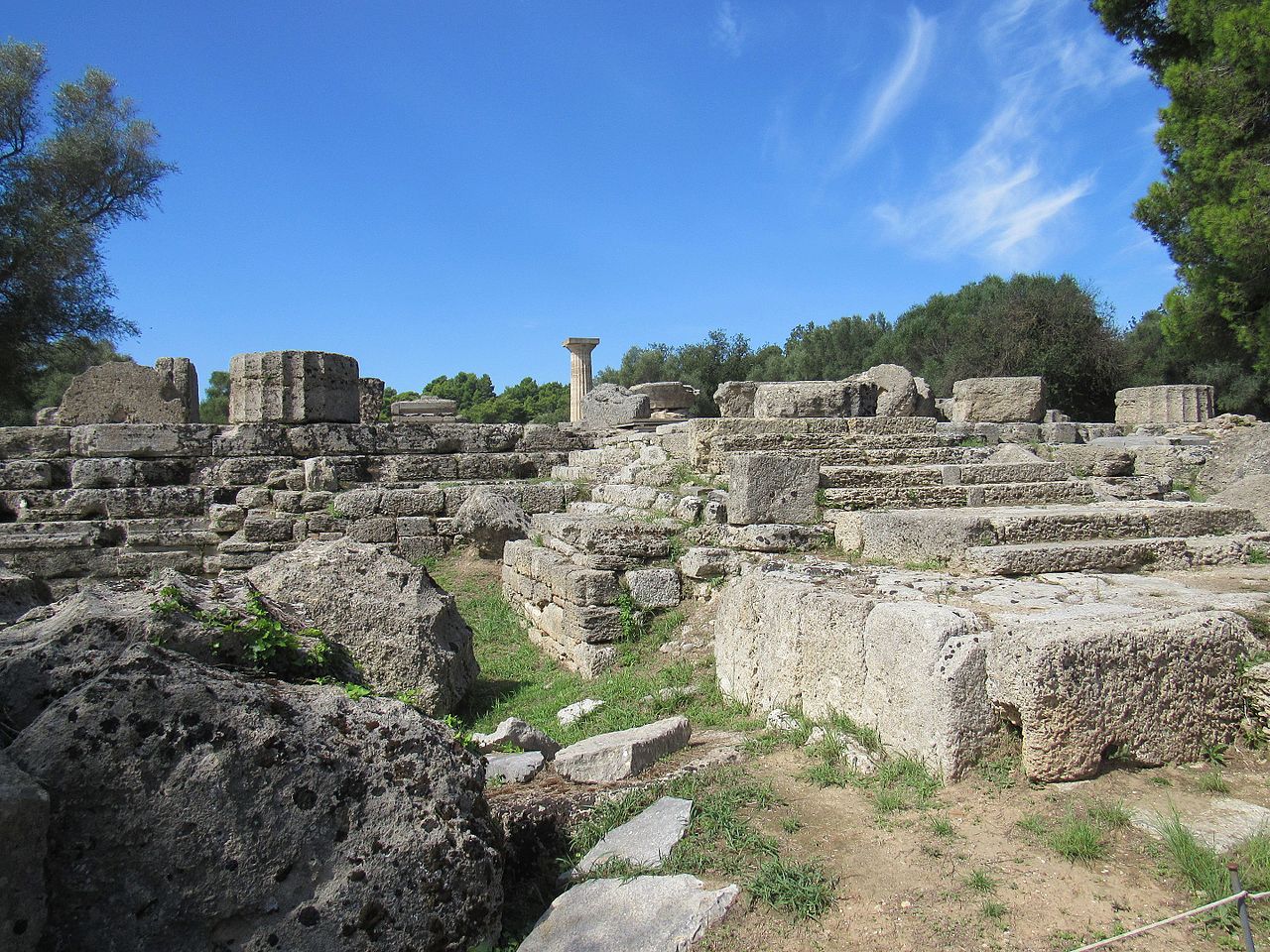
The Temple of Zeus at Olympia was the principal sanctuary building in the sacred Altis precinct and one of the great monuments of classical Greece. Erected in the 5th century BC, it functioned as the focal point for the cult of Zeus and provided a monumental backdrop for the Olympic Games. Although now a ruin, the temple was renowned in antiquity for its size, Doric proportions and the high-quality sculptural program that adorned its pediments, metopes and interior. Its presence reinforced the religious and civic character of Olympia and embodied local and pan‑Hellenic artistic ambitions.
Image gallery
6 Images



Construction and materials
Built between roughly 470 and 456 BC, the building followed the canonical Doric plan with a peripteral colonnade measuring approximately 64.12 by 27.66 metres and rising to about 20.25 metres at the cornice. The peristyle consisted of six columns at each end and thirteen along the sides, a 6 x 13 layout that was typical for a temple of this scale. The core masonry used locally quarried limestone, while finer architectural and decorative elements such as roof tiles and waterspouts — sometimes described as gargoyles in modern accounts — and most figural sculpture were executed in marble to provide a durable and impressive finish. Column heights of roughly 10.45 metres gave the building a powerful vertical presence in the sanctuary.
Architectural arrangement and interior
The temple’s orientation and approach were connected to processional and ritual activity within the Altis. A ramp at the eastern end led up to the pronaos and the temple platform. Inside the cella the monumental cult image dominated the space and the surrounding area served for offerings and dedications. Numerous statue bases once stood around the temple, holding dedications by cities and individuals that transformed the precinct into an open gallery of honor and memory. These bases are an important corpus for epigraphists and art historians studying the politics of commemoration.
Sculptural program and iconography
Sculpture was essential to the temple’s visual message. The east pediment presented the myth of Pelops and Hippodameia, a foundation myth linked to chariot racing and thus to the athletic ethos of Olympia; the west pediment showed the struggle of the Centaurs and Lapiths, a traditional theme symbolizing the conflict between order and unruly force. The twelve metopes — six on the pronaos and six on the opisthodomos — depicted episodes from the labors of Heracles, a hero closely associated with Zeus. These sculpted narratives connected local myth and pan‑Hellenic heroic themes in ways intended to instruct and awe viewers.
Phidias, the cult statue and artistic technique
The temple once housed the monumental chryselephantine cult image by the sculptor Phidias, the famed Statue of Zeus that ancient writers ranked among the Seven Wonders. Made with ivory and gold mounted on a wooden framework, the statue combined technical virtuosity with an imposing scale that drew travelers and pilgrims. The exact appearance of the work is known only from ancient descriptions and later artistic copies, but the statue’s fame influenced both contemporary visitors and generations of artists.
Ritual role in the Olympic festival
The temple played a direct part in festival observance. A table for the olive wreaths stood near the eastern approach and wreaths cut from the sacred olive tree were used to crown victors on the final day of the games. The immediate temple environs were the stage for dedications and the public display of honor: individuals and cities erected statues and bases to commemorate victories, piety and civic benefaction, integrating athletic success with religious devotion.
Damage, disappearance of the cult image and late antiquity
With the transformation of the Roman Empire and the growing prominence of Christianity, traditional pagan cults at sites such as Olympia declined. The ultimate fate of Phidias’ statue is uncertain: some accounts suggest it was taken to Constantinople where it may have perished in a later fire, while other traditions place its destruction in a fire at Olympia in the fifth century. The temple itself suffered deliberate and accidental damage in late antiquity. Imperial legislation and local conversions curtailed ritual use, and the building was further damaged by earthquakes and conflagrations in the fifth and sixth centuries.
Archaeology and conservation
Systematic archaeological work at Olympia began in the 19th century and intensified under formal expeditions in the late 19th and 20th centuries; these efforts uncovered foundations, fallen architectural elements and an abundance of votive material. Excavations revealed workshops attributed to Phidias and his circle, including finds published in the mid-20th century that illuminated the practical processes behind monumental polychrome and metal work. Conservation projects in the modern era have sought to stabilize remaining structures, protect exposed sculpture and present fragments and casts in local museums for public interpretation.
Legacy and significance
Despite its ruined condition, the Temple of Zeus remains a key reference point for the study of classical architecture, Greek religion and the cultural meanings of athletic competition. It illustrates how a sanctuary blended architecture, sculpture and ritual to produce a coherent message about communal identity and divine favor. Fragments of the sculptural program and the many epigraphic dedications that once surrounded the building continue to inform modern understanding of ancient social networks, patronage and the visual rhetoric of sanctuaries.
Notable points
- The temple is a textbook example of the Doric order executed on a large scale and integrated into a major sanctuary landscape.
- The Altis precinct context is essential to understanding the temple’s function within civic and pan‑Hellenic religious practice (Altis).
- Dimensions and proportions — including the peristyle of six by thirteen columns — reflect both engineering skill and aesthetic convention.
- Marble sculpture and decorated waterspouts were important visible markers of the temple’s status (gargoyles, marble elements).
- The sculptural themes — Pelops and the first chariot races, the Lapiths versus Centaurs, and the labors of Heracles — link athletic ritual to heroic myth and moral exempla.
- Dedicated offerings and statue bases around the temple form a substantial record of civic and private commemoration (statue bases).
Questions and answers
Q: What is the Temple of Zeus?
A: The Temple of Zeus is a Doric temple located in the sanctuary at Olympia, Greece. It was dedicated to Zeus, the principal god of the Ancient Greeks and was an important and impressive structure at Olympia.
Q: When was it built?
A: The Temple of Zeus was built between 470 BC and 456 BC.
Q: What materials were used for its construction?
A: Local limestone was used as the chief material for constructing the temple, while roof tiles, gargoyles, and sculptures were made from marble.
Q: How large was it?
A: The Temple of Zeus measured 64.12 meters by 27.66 meters and had a height of 20.25 meters with six columns at each end and thirteen columns along both sides with each column being 10.45 meters high.
Q: What stories were depicted in its sculptures?
A: The sculptures on the east pediment depicted the story of Pelops and Hippodameia which is about the first chariot races while those on the west pediment depicted a story about Centaurs and Lapiths which symbolized barbarity versus civilization.
Q: What happened to Phidias' Statue of Zeus that once stood inside this temple?
A: The fate of Phidias' Statue of Zeus is unknown but it may have been taken to Constantinople where it likely got destroyed in 475 AD or destroyed in 426 AD when Emperor Theodosius II ordered for this temple to be burned down to ground level due to earthquakes destroying it again 522 AD and 551 AD respectively afterwards
Related articles
Author
AlegsaOnline.com Temple of Zeus at Olympia: architecture, art, history, and legacy Leandro Alegsa
URL: https://en.alegsaonline.com/art/96921