
Tantalum
Tantalum is a dense, corrosion‑resistant transition metal (symbol Ta, atomic number 73) used in electronics, alloys, medical implants and chemical equipment due to its stability and high melting point.
Overview
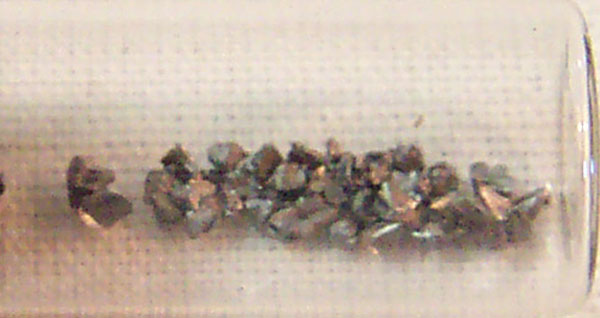
Tantalum is a chemical element with the symbol Ta and atomic number 73. It is classified among the transition metals and appears as a hard, blue‑gray metal. Tantalum resists corrosion and oxidation in many environments because it forms a stable protective oxide film; this behaviour underpins much of its industrial value. For a general reference to elemental properties see elemental data.
Image gallery
9 Images





Physical and chemical properties
Tantalum is notable for a combination of mechanical and chemical characteristics: it is dense yet ductile and can be drawn into wire and thin foil. It has a very high melting point (well above 3,000 °C), excellent thermal conductivity for a metal of its density, and good electrical conductivity. Chemically, tantalum is highly inert to most acids and alkalis at ordinary temperatures; the thin surface layer of tantalum pentoxide (Ta2O5) protects the underlying metal from further attack. At cryogenic temperatures it also shows superconducting behaviour.
Occurrence and discovery
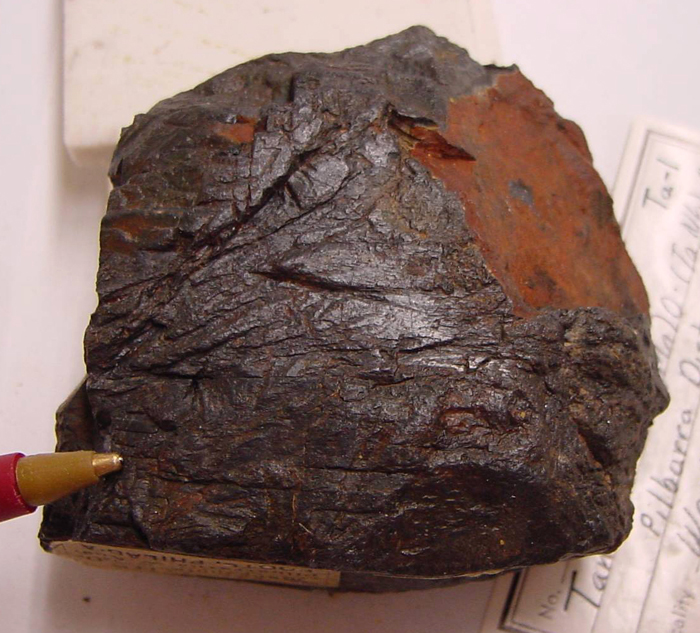
Tantalum is naturally scarce and most commonly found in oxide minerals such as tantalite and columbite (often occurring together as coltan), and in pyrochlore. Major commercial sources have included deposits in Australia, Brazil and parts of Africa. The element was first identified in the early 19th century; early work produced some confusion with the similar element niobium until they were clearly distinguished later in the 19th century. Mineral information is often listed alongside related minerals such as tantalite.
Uses and importance
Tantalum's resistance to corrosion, its stability as a thin oxide, and its ability to form capacitors with high capacitance per volume make it valuable across several industries. Common uses include:
- Electronic components: tantalum capacitors in mobile phones, laptops and automotive electronics.
- Alloys and superalloys: small additions of tantalum improve strength and heat resistance in turbine blades and rocket components.
- Medical and chemical equipment: its biocompatibility and corrosion resistance are useful for implants, surgical instruments and chemical reaction vessels.
- Specialty applications: sputtering targets, vacuum furnace parts, and hard‑wearing carbides.
Production, markets and concerns
Global production is limited by the rarity of economically exploitable deposits and by complex extraction and refining processes. Tantalum ores are often associated with other rare metals, and their mining has raised environmental and social concerns in some regions; these issues have led to regulations and industry initiatives for responsible sourcing. For summaries of market and sourcing topics see rare metal overview and transition metal resources. For safety and chemical handling refer to chemical safety.
Although not as widely consumed as iron or copper, tantalum has outsized technological importance because relatively small quantities enable critical functions in modern electronics, aerospace alloys and medical devices. Continued research explores improved recycling and substitutes to reduce supply risks.
Related articles
Author
AlegsaOnline.com Tantalum Leandro Alegsa
URL: https://en.alegsaonline.com/art/96312
Sources
- degruyter.com : "Atomic weights of the elements 2013 (IUPAC Technical Report)"
- doi.org : 10.1515/pac-2015-0305
- doi.org : 10.1107/S0567740873004140 · web.archive.org