
Taurine: roles, synthesis, dietary sources, and physiological functions
Taurine explained: its chemistry, synthesis from cysteine, dietary sources (meat, fish), and physiological roles in heart, muscle, retina, bile composition, osmoregulation and cellular signaling.
Taurine is a small sulfonic acid occurring naturally in animal tissues. Chemically known as 2-aminoethanesulfonic acid, it is classified as an organic compound and is present in substantial amounts in humans — up to about 0.1% of total body mass. Taurine is a major component of bile and is abundant in several organs.
Image gallery
3 Images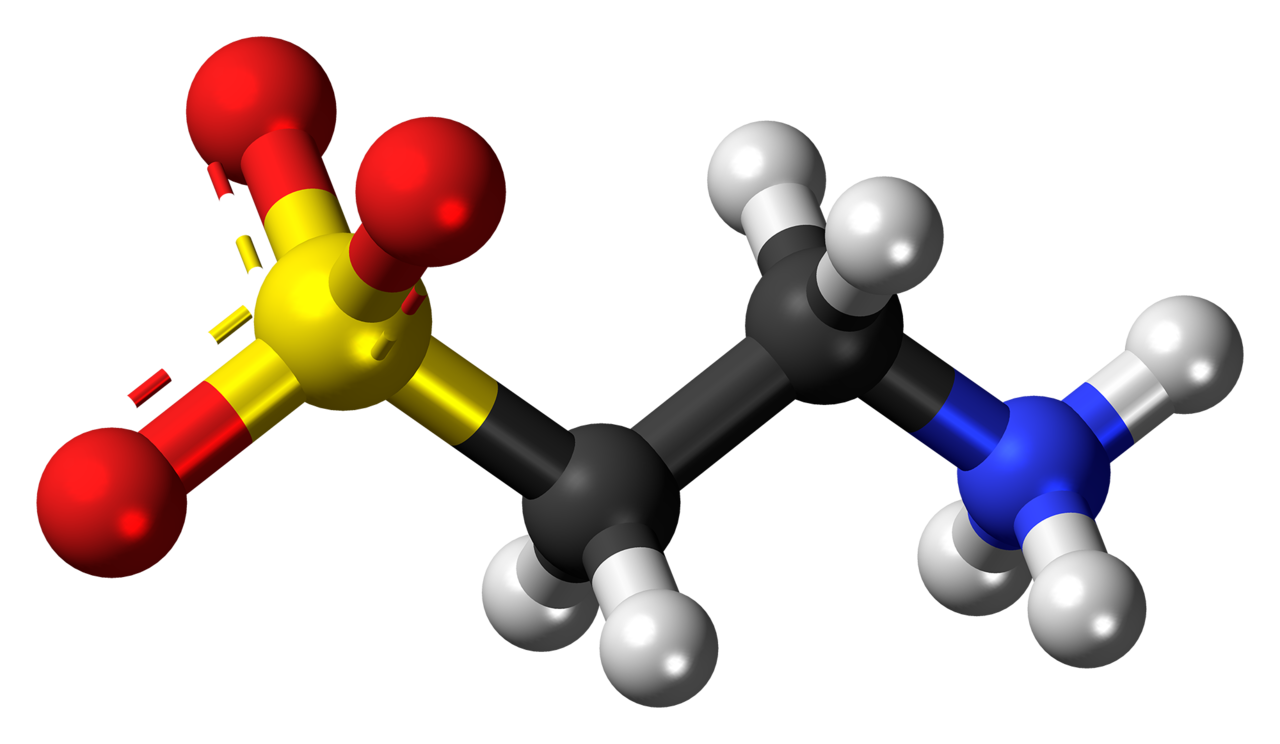


Biological roles
Taurine takes part in multiple physiological processes. It is important for the normal function of the heart, the skeletal muscles, the retina, and nerves. Other documented or proposed roles include:
- conjugation of bile acids and support of bile composition
- helping to regulate cell volume and electrolyte balance (osmoregulation)
- modulation of calcium signaling in some tissues
- possible antioxidant and membrane-stabilizing actions
Synthesis and dietary sources
Humans can produce taurine internally from the amino acid cysteine via oxidative pathways found in liver and other tissues. Enzymes in this pathway convert cysteine to intermediate compounds that are then decarboxylated to form taurine. In addition to endogenous synthesis, taurine is obtained from dietary sources; it is particularly concentrated in meat, fish, and other animal-derived foods.
History and name
The name "taurine" derives from the Latin word taurus, meaning bull or ox. It was first isolated from ox bile in 1827, which is the origin of its common name.
Questions and answers
Q: What is taurine?
A: Taurine is an organic compound found in the human body and is a main constituent of bile.
Q: How much of the human body weight does taurine makeup?
A: Taurine makes up to 0.1% of the total human body weight.
Q: Which parts of the body require taurine to function properly?
A: Taurine is essential for the heart, skeletal muscles, retina, and nerves to function properly.
Q: How is taurine synthesized within the body?
A: Taurine is synthesized from the amino acid cysteine within the body.
Q: What is the origin of the word "taurine"?
A: The word "taurine" comes from the Latin word "taurus", meaning bull or ox.
Q: From where was taurine first extracted?
A: Taurine was first extracted from ox bile in 1827.
Q: What is the importance of taurine for the human body?
A: Taurine is important for the proper functioning of many parts of the body, including the heart, skeletal muscles, retina, and nerves.
Related articles
Author
AlegsaOnline.com Taurine: roles, synthesis, dietary sources, and physiological functions Leandro Alegsa
URL: https://en.alegsaonline.com/art/96540
Sources
- ui.adsabs.harvard.edu : 1827AnP....85..326T
- doi.org : 10.1002/andp.18270850214
- doi.org : 10.1097/01.mco.0000247469.26414.55
- pubmed.ncbi.nlm.nih.gov : 17053427
- pubmed.ncbi.nlm.nih.gov : 16702333
- pubmed.ncbi.nlm.nih.gov : 1731369
- ec.europa.eu : "Opinion on Caffeine, Taurine and D-Glucurono — g -Lactone as constituents of so-called "energy" drinks"
- rockstar69.com : Original Rockstar Ingredients
- energyfanatics.com : "Nos Energy Drink – Review"