
T-ara: South Korean girl group — history, music, and legacy
T-ara is a South Korean girl group formed in 2009, known for dance-pop hits, strong visual concepts, major success in Korea, Japan and China, notable collaborations, member changes, and lasting influence on K‑pop.
T-ara (Korean: 티아라) is a South Korean girl group formed in 2009 that rose to prominence with a string of dance‑oriented pop singles and elaborate visual concepts. Built around catchy choruses, synchronized choreography and frequently changing styles, the group became one of the best‑selling and most visible female acts from Korea during the early 2010s. Their output spans Korean and Japanese releases, with significant promotion in China, and their career includes major commercial highs as well as well‑publicized lineup changes and controversies.
T-ara’s sound is largely rooted in upbeat dance‑pop, electropop and retro‑influenced club tracks. A key creative partner was producer Shinsadong Tiger, whose songwriting and production helped define many of the group’s hits. Visually, T-ara became known for concept videos and stage costumes that ranged from vintage and theatrical to futuristic and glam, allowing the group to present diverse images that matched each single’s mood. Strong hooks, repetitive choruses and memorable dance moves were central to their commercial approach.
The group debuted in July 2009 with the single "Lies" and released their first full album, Absolute First Album, in December of the same year. Early successes included collaborative singles and solo‑unit tracks such as "TTL (Time to Love)", the playful "Bo Peep Bo Peep" and the high‑energy "You Drive Me Crazy". In 2011 T-ara released "Roly‑Poly", a retro disco pop song that became one of the year’s best‑selling singles on the Gaon chart and reinforced their mainstream profile. That year also brought the Korean album Black Eyes, which produced several consecutive charting singles and extended the group’s momentum.
T-ara expanded overseas, notably into Japan, where they signed a lucrative distribution and management arrangement and released a Japanese studio album, Jewelry Box, which reached number one on Oricon’s weekly album chart. The group’s commercial deal in Japan was notable for its size at the time and underlined K‑pop’s growing international market. After initial domestic triumphs, the group shifted part of its promotional focus to China, where they cultivated a sizable fanbase and released localized material including a cover of the viral Chinese song "Little Apple".
The band’s trajectory was complicated by internal tensions and public controversy in 2012 that coincided with a decline in domestic popularity. Following disputes and media attention, member Hwayoung left the group; another member, Areum, departed a year later. These changes altered the group’s line‑up and public perception. By 2017 contractual renewals and departures further reduced T‑ara’s active roster: Soyeon and Boram did not renew, while Qri, Eunjung, Hyomin and Jiyeon extended their contracts and continued promotional activities. The quartet released the EP What's My Name? in June 2017 as a reorganized unit.
Despite controversies and fluctuations in chart performance, T-ara’s influence on early 2010s K‑pop is clear in their memorable choreography, commercial pop craftsmanship and international outreach. They achieved significant sales, staged tours in multiple territories and left a catalog of songs that continue to be cited by fans and industry observers. Members also pursued individual careers in acting, solo music and television, contributing to the group’s continued recognition in the broader Korean entertainment industry.
Image gallery
10 Images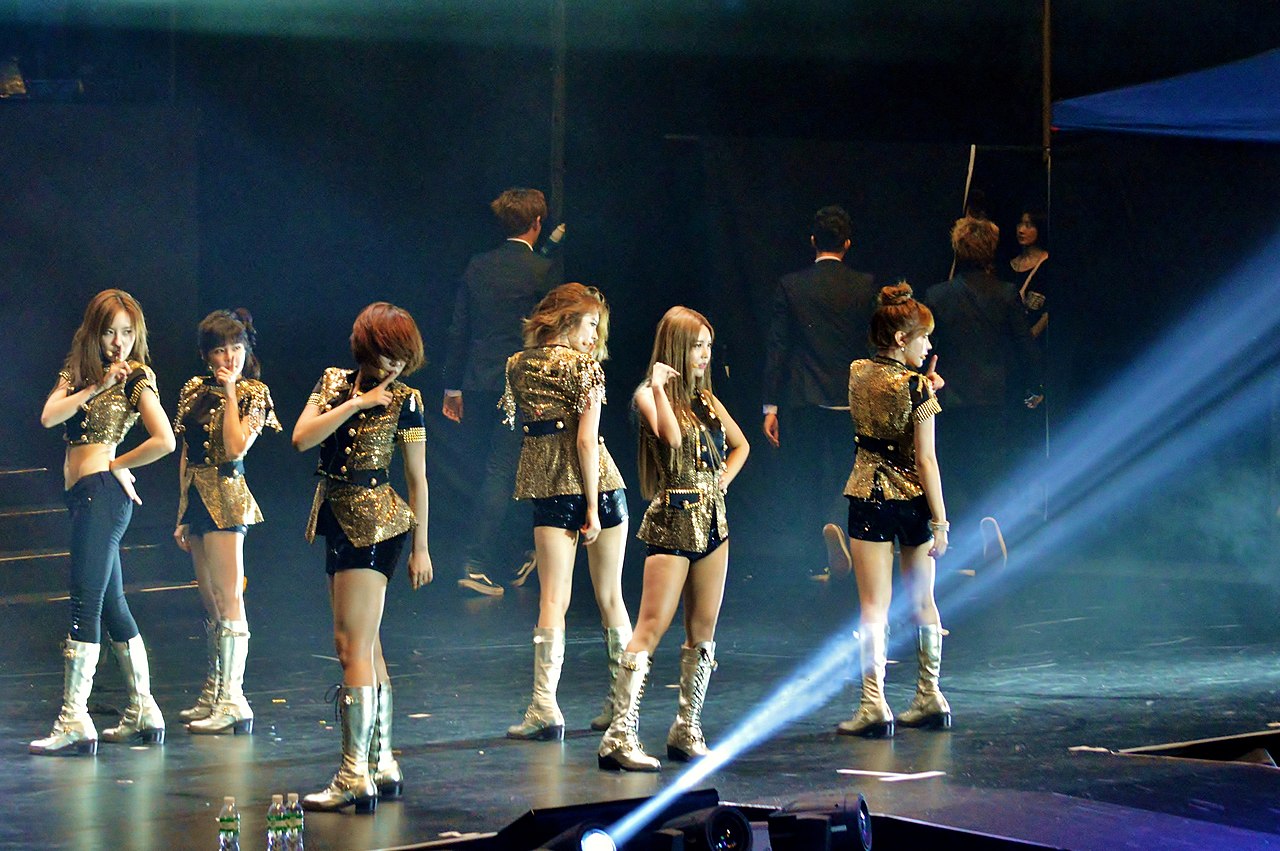






Quick facts
- Formation year: 2009
- Debut single: "Lies" (July 2009)
- Notable hits: "Roly‑Poly", "Bo Peep Bo Peep", "You Drive Me Crazy"
- Main musical style: dance‑pop / electropop
- Major markets: South Korea, Japan, China
- Frequent collaborator: Shinsadong Tiger
References and external links
- Korean name and native language sources
- Group overview and general profile
- Genre context: dance‑pop and related styles
- Producer Shinsadong Tiger and production credits
- Genre and production notes
- Gaon chart performance and year‑end rankings
- Japanese market activities and releases
- Details of international management and contracts
- Coverage of 2012 controversies and media reports
- Promotions and releases aimed at China
- K‑pop in China and regional impact
- Member profile: Qri
- Member profile: Eunjung
- Member profile: Hyomin
- Member profile: Jiyeon
- What's My Name? EP and 2017 release details
Questions and answers
Q: Who are T-ara?
A: T-ara is a South Korean girl group. They are one of the best-selling girl groups of all time.
Q: What type of music does T-ara make?
A: T-ara mainly makes dance-pop music due to their partnership with composer Shinsadong Tiger, who has favored that genre.
Q: When did T-ara debut?
A: T-ara debuted in July 2009 with the single "Lies".
Q: What was the name of their first studio album?
A: Their first studio album was called the Absolute First Album and it was released in December 2009.
Q: What song made them popular in Japan?
A: The song "Roly Poly" became the best selling single of the year on Gaon chart in South Korea and also made them popular in Japan.
Q: How much money did they make from their contract with J Rock agency for sales in Japan?
A: The contract with J Rock agency was worth USD 4.7 million which at that time was the most any Korean girl group had made from a foreign market.
Q:What happened to reduce members from 6 to 4 ? A: In 2017, Soyeon and Boram's contracts were set to expire while Qri, Eunjung, Hyomin and Jiyeon extended theirs which resulted in reducing members from 6 to 4 .
Related articles
Author
AlegsaOnline.com T-ara: South Korean girl group — history, music, and legacy Leandro Alegsa
URL: https://en.alegsaonline.com/art/95750
Sources
- itv.com : "Ten best selling girl groups of all time"
- popdust.com : "T-ara Storms The K-pop Charts With Comeback Single, "No. 9""
- news.naver.com : '아이돌 작곡가' 신사동호랭이, 트렌드를 버렸다?(인터뷰①)
- media.daum.net : "[MD인터뷰①] 티아라 "김광수 사장이 곧 리더, 2번이나 재계약""
- star.mt.co.kr : "티아라 "소시·원걸에 주눅들었지만 우린 카멜레온"- 스타뉴스"
- newsen.com : 전영록 딸 전보람, 티아라 새 멤버 합류! ‘가수 3대 집안’ (T-ara gets a new member)
- newsen.com : 티아라, 50억 근접 역대 최고가 전속계약..일본 J-ROCK과 47억
- isplus.live.joins.com : "A detailed analysis of T-ara's immense popularity in China"
- starn.hankyung.com : "T-ara's China debut becoming a hot issue"
- billboard.com : "T-ara Delays Album Release as Two Members Bow Out"
- billboard.com : "T-Ara Revamps as a Quartet with Individuality-Focused 'What's My Name?' EP"
- hankyung.com : "화제의 그룹 `티아라`, 26일 얼굴 공개"
- newsen.com : "티아라-티맥스, 이름의 뜻은? "가요계 여왕+최고 되겠다""
- star.fnnews.com : 걸그룹 이름 뜻, 네티즌 “온 몸이 오글거리는 속 뜻” · web.archive.org