
Symphony No. 8 (Mahler) — "Symphony of a Thousand"
Gustav Mahler's Symphony No. 8 in E-flat major is a vast two-part choral symphony that pairs a Latin Pentecostal hymn with Goethe's Faust; celebrated for its scale, spiritual themes and demanding forces.
Overview
Gustav Mahler's Symphony No. 8 in E-flat major is one of the most ambitious works in the orchestral and choral repertoire. Written in 1906 and premiered in 1910, it departs from conventional multi-movement form and unfolds as two large, contrasting parts that together explore ideas of creation, love and redemption. Because of the enormous performing forces often engaged for its presentation, it has commonly been nicknamed the "Symphony of a Thousand," a label that Mahler himself did not affix.
Image gallery
9 Images




Structure and scoring
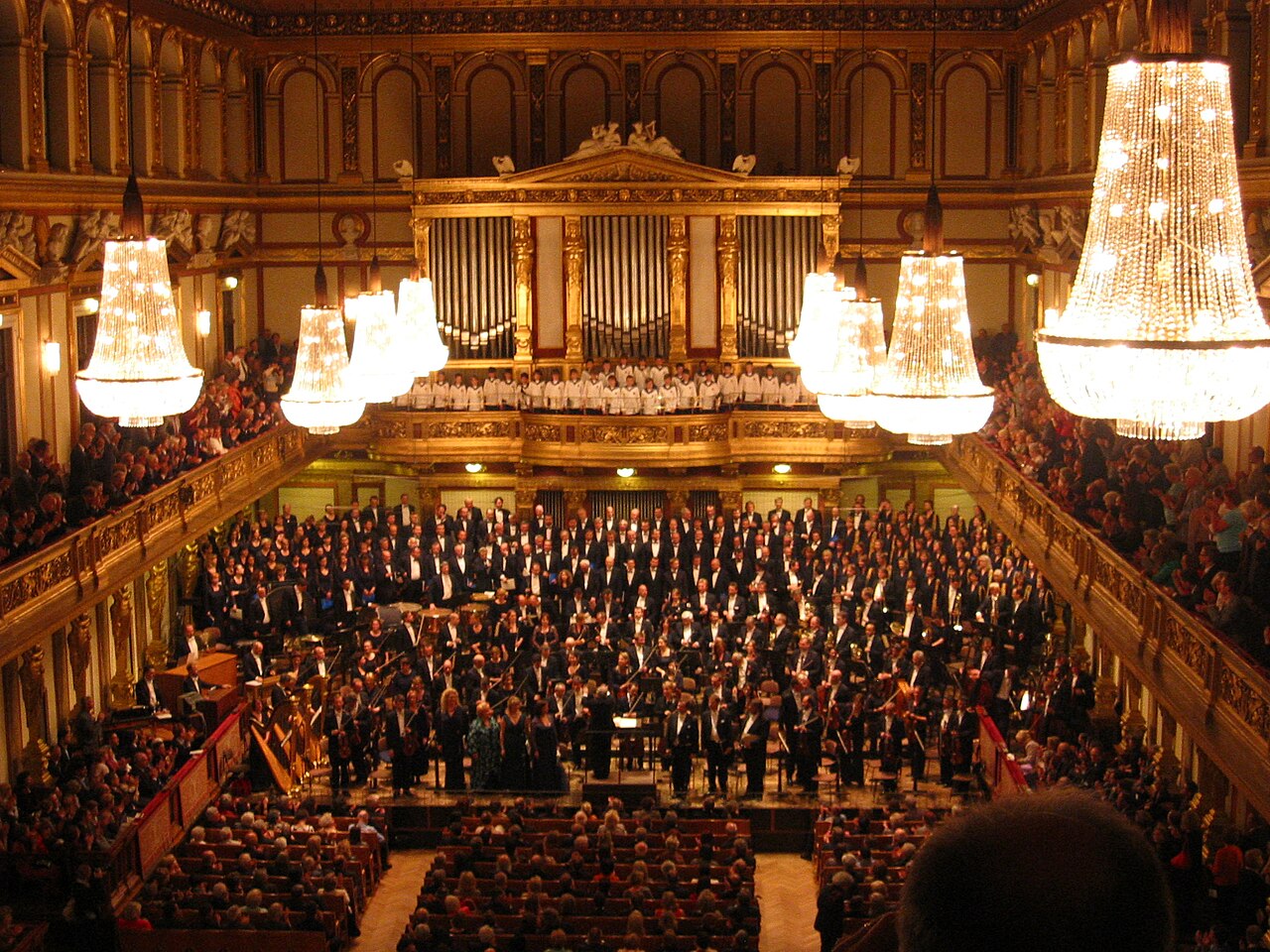
The symphony is cast in two continuous sections rather than the usual three or four movements. Part I sets the medieval Latin hymn Veni creator spiritus, an invocation of the creative Spirit associated with Pentecost, while Part II sets the closing scene of Johann Wolfgang von Goethe's Faust, sung in German and culminating in a vision of salvation. Mahler scores the work for an expanded orchestra, large mixed chorus, multiple vocal soloists and additional choirs and offstage forces in many performances, producing a monumental sound world and many contrasting textures.
Historical context and composition
Mahler composed the work at his summer retreat in Maiernigg, completing it in a relatively brief, intense creative period in 1906. At that time he was an established conductor and composer, and he drew on a long tradition of combining voices with symphonic form—an idea that traces back through Beethoven's Ninth and reappears in Mahler's own earlier choral symphonies (Nos. 2, 3 and 4 contain vocal writing). The premiere took place in Munich on 12 September 1910, and it was the last Mahler work to receive a first performance during his lifetime.
Themes, language and musical ideas
Despite the contrasting source texts—Latin liturgy and German Romantic drama—the two parts are linked by a common programmatic thread: the redeeming power of love and the affirmation of the human spirit. Mahler achieves unity through recurring motifs, shared harmonic colors and orchestral gestures that recur across both parts. The music moves between intimate devotional moments, triumphant choruses and richly scored orchestral episodes that often require spatial placement of singers and instrumentalists for dramatic effect.
Reception, performance challenges and legacy
Early reaction to the symphony ranged from ecstatic praise to skepticism; critics and listeners have long debated the work's aesthetic stance and emotional directness. Practical considerations also affected its performance history: the sheer number of performers and the acoustic demands of the piece make it expensive and logistically complex to stage, and it benefits from very large concert halls. Nevertheless, the work has taken a secure place in the repertory and is regarded by many musicians and audiences as one of the great choral-symphonic achievements of the early twentieth century.
Notable facts and distinctions
- Key and form: E-flat major; two large parts rather than conventional movements.
- Texts: Part I: Veni creator spiritus (Latin hymn); Part II: final scene from Goethe's Faust (German).
- Forces: expanded orchestra, multiple soloists, large mixed chorus and often additional choirs or offstage ensembles.
- Nickname: "Symphony of a Thousand"—a popular but unofficial sobriquet referring to typical performing forces.
Further reading and resources
- Score and full instrumentation overview
- Historical program notes and commentary
- Orchestration details and parts list
- Biographical material on Mahler and Maiernigg
- Premiere in Munich: contemporary accounts
- Chronology of Mahler's later works
- Date and venue of the first performance
- Discussion of the symphony's atypical form
- Context: sonata form and symphonic traditions
- Text of Veni creator spiritus (Latin)
- Historical background of the hymn
- Pentecost liturgy and musical settings
- Liturgical connections and symbolism
- Goethe's Faust: the closing scene text
- Goethe and musical adaptations
- Themes of love and redemption in the score
- Mahler's spiritual and philosophical influences
- Acoustic and venue considerations for large-scale works
- Notable centennial and anniversary performances
- Major recordings and conductor perspectives
- Royal Albert Hall and large-hall presentations
- Broadcasts and festival premieres
- Critical reception over time
- Comparisons with other choral symphonies
Questions and answers
Q: Who composed Symphony No. 8 in E-flat major?
A: Gustav Mahler composed Symphony No. 8 in E-flat major.
Q: What is the symphony often called?
A: The symphony is often called "Symphony of a Thousand".
Q: When was it first performed?
A: Symphony No. 8 was given its first performance in Munich on 12 September 1910.
Q: What tradition did Beethoven start with his Ninth Symphony?
A: Beethoven started the tradition of having singing in symphonies with his Ninth Symphony, which includes the Ode to Joy in its last movement.
Q: How does Mahler express the idea of being saved through love musically?
A: Mahler expresses the idea of being saved through love by sharing tunes throughout the symphony.
Q: Why is it expensive to perform this symphony?
A: It is expensive to perform this symphony because it requires a large orchestra and choir and needs to be performed in a large concert hall.
Q: What are opinions about this work divided over?
A: Opinions about this work are divided over whether or not the optimism expressed in the music is convincing enough.
Related articles
Author
AlegsaOnline.com Symphony No. 8 (Mahler) — "Symphony of a Thousand" Leandro Alegsa
URL: https://en.alegsaonline.com/art/95644