
Swallow (Hirundinidae): overview of aerial insectivorous passerines
Swallows and martins (family Hirundinidae) are agile, aerial-feeding passerine birds known for their streamlined bodies, forked tails, migratory habits and close relationships with human settlements worldwide.
Overview
Swallows and martins belong to the bird family Hirundinidae, a group of small to medium-sized passerine birds adapted primarily for catching insects on the wing. The common English name "swallow" is often used loosely; in some regions, and especially in Europe, it serves as a familiar name for the barn swallow (barn swallow is a widespread example). The family contains many species and genera worldwide, with sources commonly citing around 83 species divided among multiple genera.
Image gallery
10 Images




Key characteristics
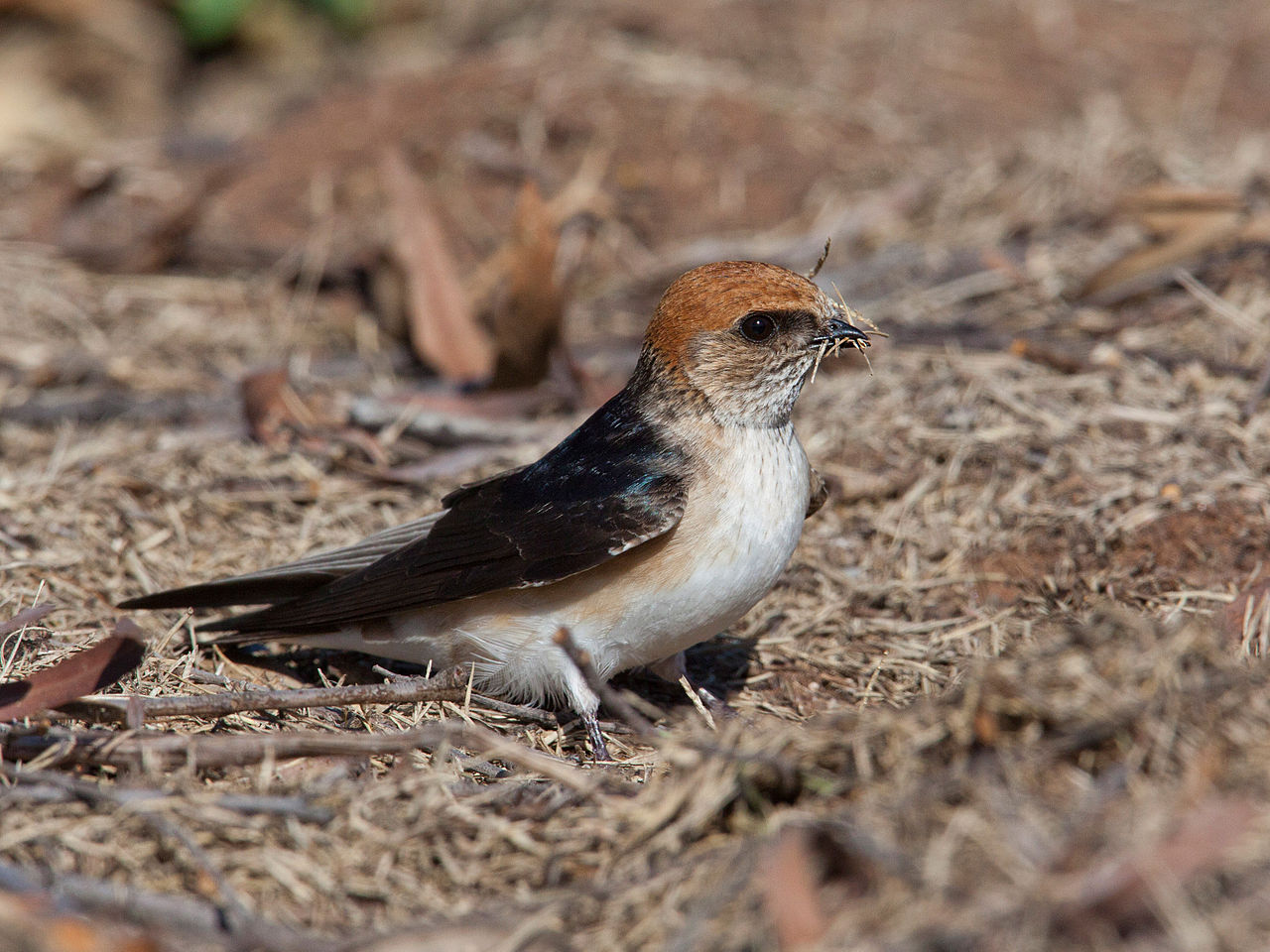
Members of Hirundinidae share a suite of features that reflect strong aerial feeding specializations. Typical traits include:
- Streamlined bodies with long, pointed wings that enable fast, agile flight.
- Short bills but very wide gapes to capture insects midair.
- Tail shapes that vary from deeply forked to more squared, a difference that historically led to common names such as "swallow" (fork-tailed) and "martin" (squarer-tailed), though this is not a firm scientific distinction synonym.
- Relatively short legs and feet, adapted more for perching than walking.
Behavior, breeding and life cycle
Swallows are typically gregarious birds that may nest in loose colonies. Nesting strategies vary: some species build mud-cup nests on buildings or cliffs, others nest in burrows or cavities. Both parents usually help incubate eggs and feed chicks. Many species undertake seasonal long-distance migrations, using aerial insect prey as fuel and timing their movements with insect availability.
Representative species
- Barn swallow (Hirundo rustica) — cosmopolitan and familiar in many human landscapes.
- House martin (Delichon spp.) — often nests under eaves or cliffs.
- Sand martin (Riparia riparia) — nests in riverbank burrows.
- Purple martin (Progne subis) — noted for communal nesting in North America.
Distribution, conservation and human significance
Swallows occupy a wide range of habitats worldwide, often near open water, farmland or settlements where flying insects are abundant. They are valued for natural pest control and feature in folklore and literature as harbingers of spring and symbols of homecoming. At the same time, many populations face pressures from habitat loss, reduced insect prey due to pesticides, and changing climate patterns that affect migration timing. Conservation efforts focus on preserving nesting sites, reducing pesticide use, and monitoring population trends.
Related articles
Author
AlegsaOnline.com Swallow (Hirundinidae): overview of aerial insectivorous passerines Leandro Alegsa
URL: https://en.alegsaonline.com/art/95410