
Sub-Saharan Africa
Region of Africa located mostly south of the Sahara, covering diverse landscapes, cultures, histories, languages and economies; definitions and boundaries vary.
Overview
Sub-Saharan Africa commonly denotes the portion of Africa lying to the south of the Sahara Desert. The term is geographic and political rather than strictly continental: boundaries are not fixed and different scholars, organizations and maps use varying definitions. For example, the status of Sudan is contested in some classifications, and cultural affiliations can blur the line with North Africa.
Image gallery
1 Image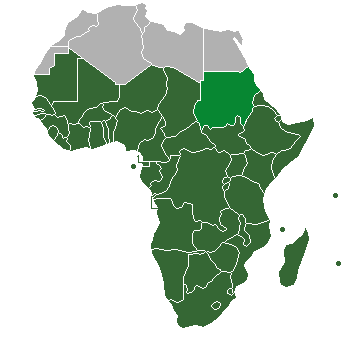
Geography and environment
A vast range of ecosystems occurs across the region, from tropical rainforests in the Congo Basin to savannas, montane highlands, semi-arid Sahel and coastal wetlands. Major geological features include the Great Rift Valley and extensive river systems such as the Niger, Congo and Zambezi. Biodiversity is high: the region supports unique megafauna and important centers of endemism, but many habitats face pressures from deforestation, climate variability and human development.
People, languages and societies
Populations in Sub-Saharan Africa are culturally and linguistically diverse. Indigenous language families such as Niger–Congo, Nilo-Saharan and Afroasiatic coexist with colonial languages—English, French and Portuguese—that often serve as official or lingua franca. Urbanization and youthful demographics shape contemporary social trends, and traditional governance, religion and cultural practices vary widely between communities.
History and development
The region's history includes ancient kingdoms and trade networks, long-distance commerce across the Sahara, complex empires, and later European colonization. The 20th century brought decolonization and the formation of modern states. Today Sub-Saharan Africa encompasses a range of economic situations: rapidly growing cities and technology sectors exist alongside persistent challenges in health, infrastructure and governance.
Distinctive notes and examples
- Sub-Saharan Africa is often contrasted with North Africa, which has closer historical and cultural ties to the Arab world.
- Some countries are geographically within the Sub-Saharan band but also identify with Arab culture or institutions, such as Somalia, Djibouti, Comoros and Mauritania—showing the region's complex identities and overlaps.
- Definitions frequently reference how territories lie geographically relative to the Sahara rather than following strict political lines.
Sub-Saharan Africa remains a dynamic and varied region whose importance to global biodiversity, culture and economy continues to grow. For further reading and regional studies see specialized sources and comparative maps.
Related articles
Author
AlegsaOnline.com Sub-Saharan Africa Leandro Alegsa
URL: https://en.alegsaonline.com/art/94452