
Djibouti: Republic on the Horn of Africa
Compact overview of Djibouti: geography, people, history, economy, and international role. Covers origins, society, strategic importance and membership in regional and global organizations.
Overview
Djibouti, officially the Republic of Djibouti, is a small country on the eastern coast of Africa at the southern entrance to the Red Sea. Its capital and largest city shares the same name, Djibouti. The nation's position on the Bab-el-Mandeb strait gives it outsized strategic importance for international shipping and maritime security. The population is under one million, composed mainly of two Afro‑Semitic groups, the Somali and the Afar, and the majority of inhabitants practice Islam.
Image gallery
10 Images



Geography and environment
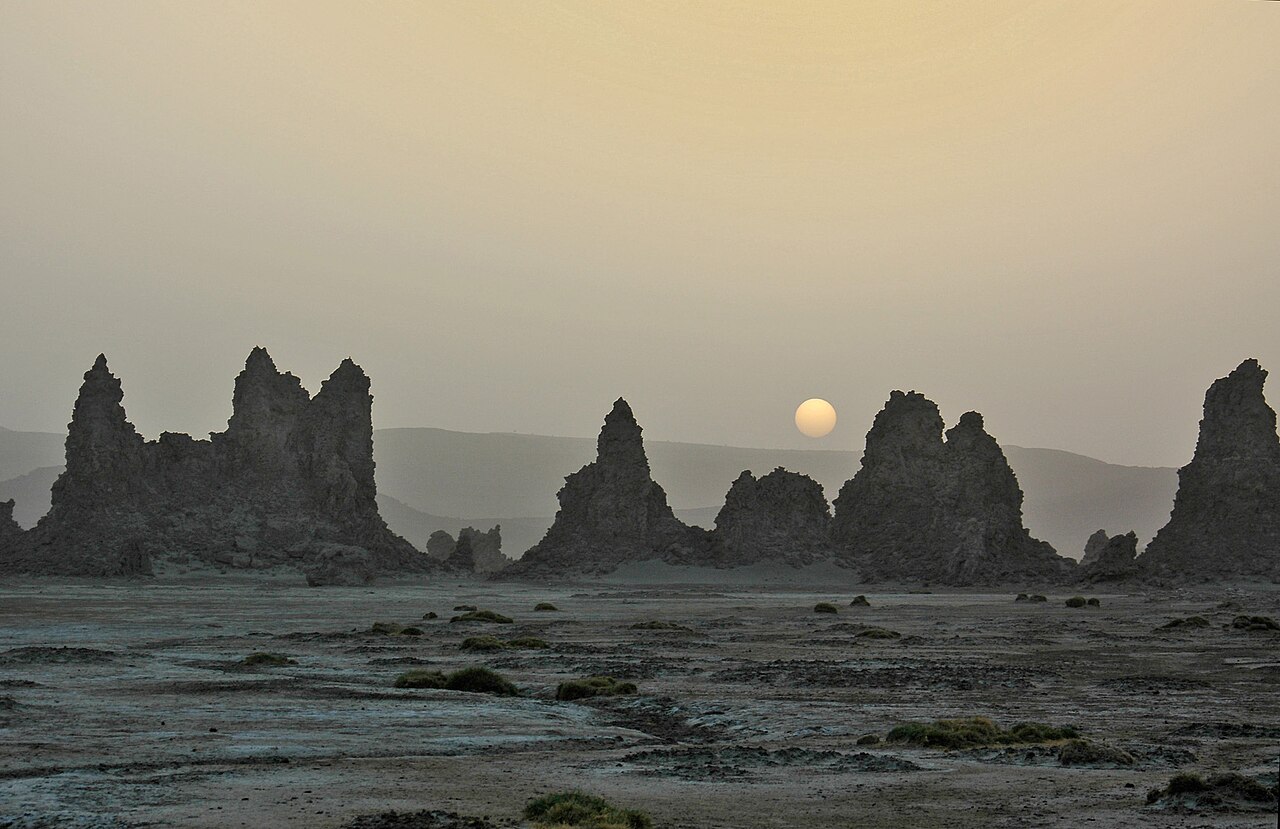
Djibouti occupies a largely arid, hot landscape of plains and plateaus, with coastal lowlands along the Gulf of Aden and the Red Sea. The climate is typically desert, with very high temperatures and scant, irregular rainfall. The country is notable for dramatic geological features, including salt flats, volcanic formations, and the deep inland Lake Assal. Its location on the Horn of Africa places it at the crossroads between Africa and the Arabian Peninsula.
People, languages and culture
Two ethnic groups — the Somali and the Afar — make up the majority of the population, and their languages are widely spoken alongside the official languages, French and Arabic. Djiboutian society blends traditional pastoralist and urban cultures. Islam is the dominant religion, and cultural life reflects long-standing ties across the Red Sea and the wider Horn of Africa region.
History and statehood
The modern state emerged from French colonial rule. The territory was administered by France in the 19th and 20th centuries under names such as French Somaliland and later the French Territory of the Afars and the Issas. Djibouti gained independence on June 27, 1977 and joined the United Nations on September 20 of the same year. Its capital, Djibouti City, developed from a colonial port into the republic's political and commercial center.
Government and international relations
Djibouti is a republic with institutions inherited and adapted from its colonial past. It maintains active diplomatic and economic ties with regional and global partners. The country is a member of the United Nations and regional bodies; it participates in the African Union and belongs to intergovernmental groups focused on East Africa and development. Djibouti is also a member of the Arab League and the Intergovernmental Authority on Development, reflecting its political and cultural connections across neighboring regions. See memberships: African Union, Arab League, regional organizations.
Economy and strategic role
Djibouti's economy is dominated by services linked to its ports, logistics, and supporting activities for regional trade. The country's deep-water port facilities and proximity to major shipping lanes make it a natural hub for maritime transit and for servicing landlocked Ethiopia's imports and exports. Djibouti also hosts international military and naval facilities from several countries, which contribute to the economy and to regional security cooperation.
Key facts and distinctions
- Capital: Djibouti City.
- Independence: June 27, 1977 from France; formerly known as French Somaliland and the French Territory of the Afars and the Issas (colonial history).
- Population: under one million (around 2020 estimates).
- Languages: French and Arabic (official); Somali and Afar widely spoken.
- International links: United Nations (UN profile), regional partnerships (Horn of Africa, Red Sea), and bilateral agreements with major trade and security partners (capital relations, Arab ties).
Because of its strategic location, small size, and mixed cultural heritage, Djibouti plays a distinctive role in regional geopolitics and international maritime trade. It balances relationships with neighboring states, international institutions, and foreign partners while sustaining a service-oriented economy centered on its ports and logistics capabilities. For more detailed information, consult official country resources and regional analyses hosted by international organizations and research institutes (UN, government portals, maritime studies).
Related articles
Author
AlegsaOnline.com Djibouti: Republic on the Horn of Africa Leandro Alegsa
URL: https://en.alegsaonline.com/art/28044
Sources
- cia.gov : "Djibouti" · web.archive.org
- imf.org : "Djibouti"
- worldcat.org : 936070939
- hdr.undp.org : hdr.undp.org/sites/default/files/private/documents/2015humandevelopmentreportpdf_1.pdf · web.archive.org
- hdr.undp.org : "Human Development Report 2019"
- data.worldbank.org : "World Bank country data Djibouti (2009) (number rounded)"
- historyorb.com : "Today in Djibouti History"
- un.org : "United Nations member states"
- doi.org : 10.1029/96JB01185
- geonames.org : "Highest Mountains Djibouti"
- fifa.com : "Teams - Djibouti"