
Steering wheel (ship)
The ship's steering wheel is the helmsman's control for changing rudder angle and course. This article covers its function, components, historical development, operation, and integration with modern steering systems.
Overview
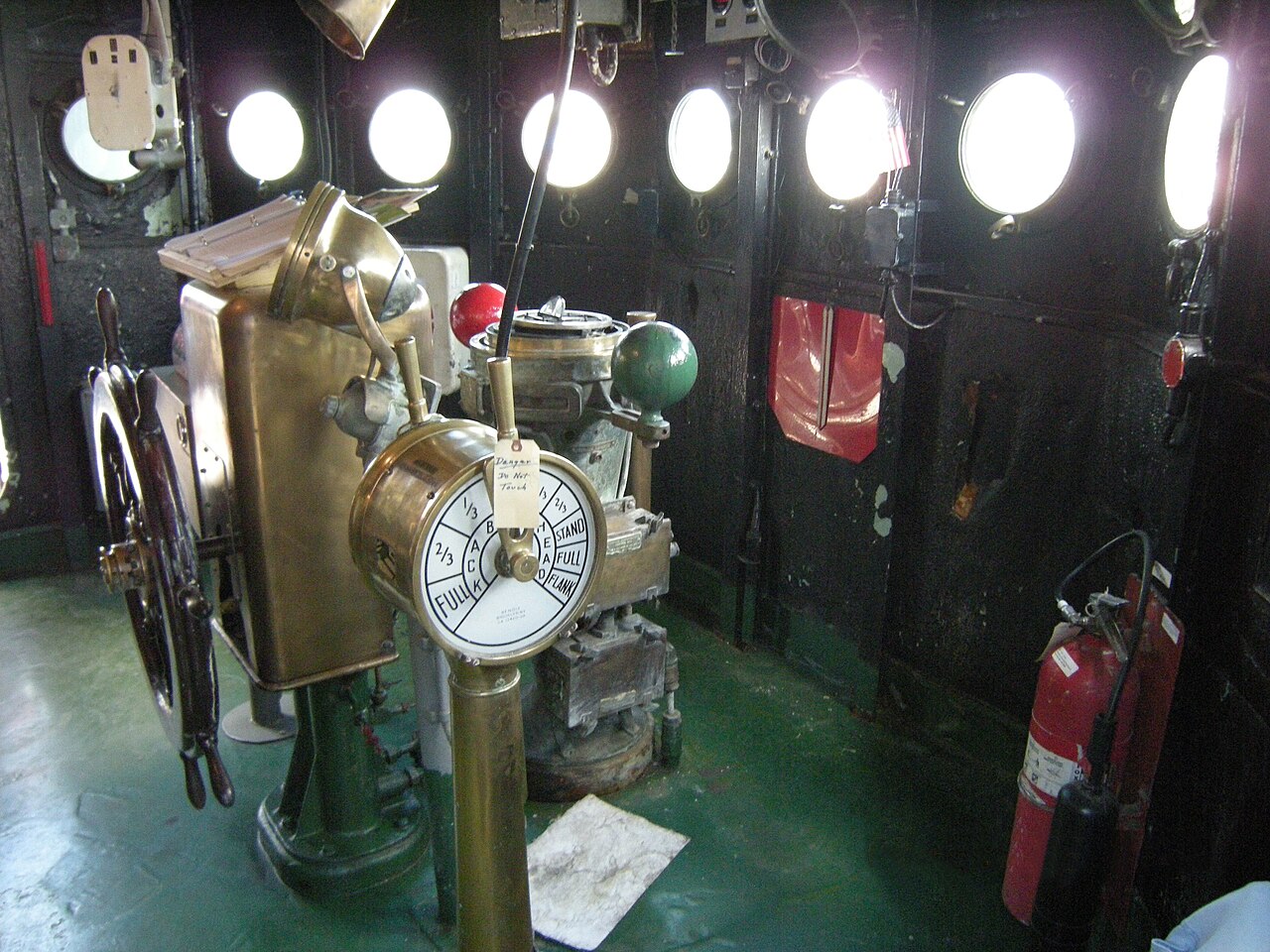
The wheel of a vessel is the principal human interface used to change the angle of the rudder and thus alter the heading of a ship or boat. By turning the wheel the helmsman transmits a rotary input to a steering train that converts that motion to the rudder stock or control surface. On small craft the linkage can be direct and simple; on larger vessels the wheel is one element of a larger steering arrangement that includes power units, indicators and multiple control stations.
Image gallery
10 Images






Design and components
A conventional ship wheel typically consists of a wheelrim with spokes mounted on a shaft or pedestal. Common associated components include the shaft and bearings, gearing or chain drives, a quadrant or tiller arm on the rudder stock, and actuators. Actuators may be mechanical, hydraulic or electric, depending on vessel size and design. Modern bridges often include a wheel, a joystick or bypass controls connected to the same control system.
Mechanical and assisted systems
Historically, wheels were linked by ropes, chains or gear trains to the rudder. These mechanical linkages provide direct feedback and a clear sense of how much the rudder moves. As ships increased in size, assisted systems were introduced so a helmsman need not exert excessive force. Hydraulic power units and electro-hydraulic drives allow smooth, controllable movement and can be integrated with autopilot and other bridge systems.
Operation and bridge integration
Turning the wheel to starboard or port results in a commanded rudder angle and a consequent change in course. Modern steering systems integrate the wheel with autopilot, heading sensors and the ship's navigation equipment so commands can be given manually or by electronic control. Redundancy is common: multiple steering pumps, duplicate control stations and emergency tiller provisions help ensure steerage in the event of equipment failure.
History and influence
Before wheels became widespread, vessels were steered with a tiller or earlier devices such as the whipstaff. The wheel became common as sailing ships grew and required greater mechanical advantage to move larger rudders. The appearance and function of the ship's wheel also influenced terrestrial vehicle control: designers of early tractors and automobiles adopted a circular hand control that evolved into the modern steering wheel.
Safety, maintenance and terminology
Routine maintenance covers bearings, linkages, hydraulic lines and electronic interfaces. Practices such as regular tests of backup systems and clear procedures for handing the helm are widely recommended. Terminology varies by region and vessel type: the wheel, the helm and the entire steering station are sometimes used interchangeably; older or specialized usage may also refer to parts of the mechanism by traditional names.
Cultural and symbolic role
Beyond its practical role, the ship's wheel is a long-standing symbol of command and navigation. It appears in insignia, logos and decorative contexts to represent seamanship and guidance. Despite changes in technology, the basic concept—a rotational control used to change rudder angle—remains a central, enduring element of vessel steering.
Further reading
- Predecessor devices: tiller and whipstaff explanations and how they led to the wheel
- Power systems: comparison of mechanical, hydraulic and electric steering
- Bridge procedures: standard helm orders, redundancy and emergency steering
For more information consult technical manuals and seafaring references that describe specific steering arrangements for different classes of vessels and regulations governing redundancy and testing.
Related articles
Author
AlegsaOnline.com Steering wheel (ship) Leandro Alegsa
URL: https://en.alegsaonline.com/art/93648